
When U.S. spy planes start flying close enough for Havana to feel the vibration, the real message isn’t what they’re collecting—it’s that they’re letting you watch them collect it.
Story Snapshot
- At least 25 U.S. intelligence-gathering flights have operated off Cuba since February 4, 2026, a sharp change from prior patterns.
- Aircraft tracked include the P-8A Poseidon, RC-135V Rivet Joint, and MQ-4C Triton—platforms built for maritime surveillance and signals intelligence.
- Flights reportedly approached within about 40 miles of Havana and Santiago de Cuba, an unusually close and conspicuous posture.
- The timing lines up with President Trump’s tougher public stance, expanded sanctions, and a full oil blockade aimed at Havana’s lifelines.
Recon Flights That Want to Be Seen Send a Different Kind of Signal
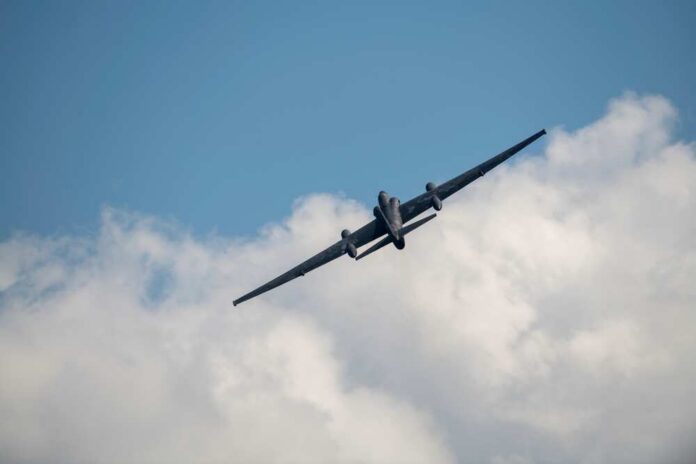
Public flight-tracking data show a surge in U.S. reconnaissance missions off Cuba beginning on February 4, 2026, with at least 25 flights by May 10.
The remarkable detail isn’t the hardware—America runs surveillance worldwide—but the visibility. These aircraft can often reduce how much the public sees, yet the pattern appeared repeatedly near Cuba’s most sensitive population and command centers. That suggests a two-track objective: collect intelligence and communicate intent.
Those close approaches matter because distance is a form of discretion in military affairs. Operating farther out can still gather plenty, but pushing nearer compresses the target’s decision time and heightens the sense of being “under the glass.”
If the data is right, flights ran near Havana and Santiago de Cuba often enough to look like a sustained posture rather than a one-off reaction. Cuba’s air defense operators would see it, and so would Cuba’s leadership.
Why These Aircraft Matter: Poseidon, Rivet Joint, and Triton Are Not Symbolic Props
The platform mix points to practical intelligence goals. The P-8A Poseidon hunts submarines and tracks surface vessels while vacuuming up maritime-domain awareness—who is moving, where, and with what escort.
The RC-135V Rivet Joint specializes in signals intelligence, mapping emitters, communications, and radar behavior. The MQ-4C Triton loiters high and long, building persistent pictures that expose patterns. Together, they can cross-check what Cuba broadcasts, hides, and changes.
U.S. military intelligence-gathering flights have surged off Cuba's coast in recent months, with at least 25 such missions tracked since Feb. 4, according to an analysis of publicly available aviation data. https://t.co/Kob1N5gnWm
— NEWSMAX (@NEWSMAX) May 11, 2026
That combination also puts pressure on an adversary to make mistakes. Air defense systems that switch on to track aircraft reveal frequencies and procedures. Command networks that chatter about “the Americans offshore” generate communications to intercept.
Even routine movements become meaningful when watched repeatedly: which coastal units rotate, when patrol boats launch, how quickly bases react. Intelligence work thrives on normality because normality produces patterns, and patterns produce warnings—especially when a crisis is brewing.
The Timing: Oil Blockade, Sanctions, and Rhetoric Turn Flight Paths Into Politics
The surge didn’t arrive in a vacuum. Reporting ties the increased flights to President Trump’s escalated posture in late January and early February: a full oil blockade and expanded sanctions, plus rhetoric portraying Cuba as a national security problem and hinting at the idea of a “free Havana.”
In foreign policy, timing becomes meaning. When coercive economic measures arrive alongside close-in reconnaissance, the target must assume they are part of a larger plan.
From a logic perspective, the pressure isn’t mysterious. Cuba sits close to Florida, and U.S. leaders have legitimate reasons to watch hostile intelligence footprints in the hemisphere.
If rival powers gain listening posts or military access, Americans pay the price first. Surveillance itself is not an act of war; it’s a protective habit of serious nations. The question is whether the visibility is meant to deter, to set conditions, or to test Cuba’s reactions.
The Venezuela and Iran Parallels: When Patterns Repeat, Observers Start Counting Days
Analysts highlighted an uncomfortable rhyme: surges in visible U.S. reconnaissance before heightened pressure campaigns elsewhere, including Venezuela and Iran, during Trump’s earlier term.
Similar aircraft types and operational intensity can signal pre-crisis “shaping”—figuring out what the target can do, what allies are present, and what escalation ladders look like. Parallels don’t prove an invasion plan, but they do justify why Havana would treat the flights as more than routine patrols.
That’s where public tracking becomes a strategic amplifier. When ordinary people can watch spy planes approach a country on a commercial website, the operation stops being only military and becomes psychological.
Cuba can tell its population the U.S. threatens them; U.S. hawks can argue the regime deserves pressure; both sides can use the same visible dots on a map to harden their narratives. Transparency, here, increases volatility rather than calming it.
The Risk Nobody Likes to Discuss: Miscalculation Close to Shore
The flights reportedly came within about 40 miles of Cuban shores—near enough to feel personal, far enough to remain in international airspace if properly conducted.
That’s exactly the kind of spacing that invites brinkmanship: Cuba can shadow with aircraft, illuminate with radar, or stage maritime responses; the U.S. can maintain calm and continue the pattern. The danger sits in the middle, where a pilot misreads intent or a local commander overreacts under political pressure.
READ NOW: US Spy Flights Surge off Cuban Coast — U.S. military intelligence-gathering flights have surged off Cuba's coast in recent months, with at least 25 such missions tracked since Feb. 4, according to a new report of publicly available…https://t.co/ANj82yCkj5
— Top News by CPAC (@TopNewsbyCPAC) May 10, 2026
No public reporting in the provided research indicates Cuban interceptions, shoot-down attempts, or official U.S. announcements explaining the surge. That silence can be deliberate.
Governments often prefer ambiguity when they want flexibility—especially when sanctions, blockades, and intelligence operations move in parallel.
Sources:
US Spy Flights Surge On Cuba, Mimicking Pre-Venezuela Action
US surveillance flights surge near Cuba