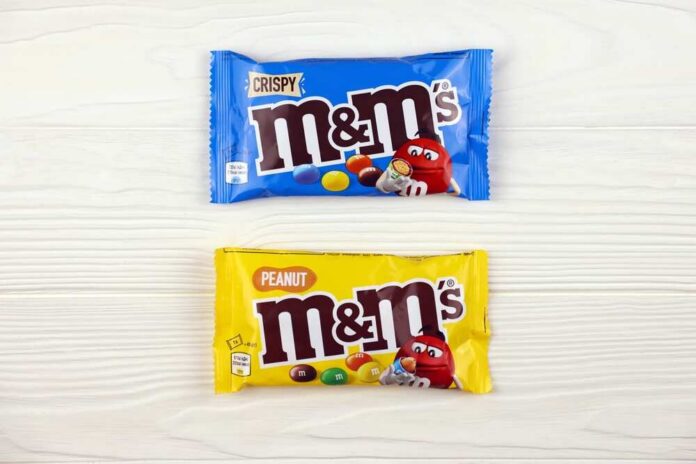
Blue and brown M&M’s just vanished from a brand-new bag of candy, and Mars did it on purpose.
Quick Take
- Mars launched dye-free versions of M&M’s, Skittles and Starburst, sold first on Amazon starting this week.
- The new colors come from beet juice, turmeric, spirulina and beta-carotene instead of synthetic dyes.
- The first batch of M&M’s skips blue and brown pieces because those colors are harder to make naturally.
- Classic candy with artificial dyes stays on shelves everywhere else, at least for now.
What Mars Actually Put On Shelves
Mars Wrigley confirmed new versions of M&M’s Chocolate, Skittles Original and Starburst Original hit Amazon this week without artificial food dyes. Extra Gum Spearmint is part of the same plan, though it launched separately.
This marks the first time in 85 years these candies have appeared without the synthetic colors that made them instantly recognizable on store shelves nationwide.
Some of the country's most recognizable candies are getting a makeover.
Starting Thursday, new versions of M&M's, Skittles and Starburst made without artificial food dyes are available to consumers on Amazon. https://t.co/FZfuqmNznz
— ABC News (@ABC) August 13, 2026
The company first announced the plan back in July, telling reporters it would offer “product options” free of Food, Drug and Cosmetic colors by 2026. That early statement gave Mars room to test the waters before fully committing shelf space to a reformulated lineup nationwide.
Why The Candy Giant Changed Its Colors
Mars is putting real money behind this shift. Reports describe roughly 100 employees working across plants in New Jersey, Tennessee and Kansas to build a version of M&M’s with zero artificial color additives.
That kind of investment signals Mars sees this as more than a marketing gimmick tied to a passing health trend among shoppers worried about synthetic ingredients.
The new colors read like a produce aisle ingredient list. Beet juice creates red, turmeric makes yellow, and a blend of turmeric, beet juice and spirulina produces green.
Beta-carotene and carotenals round out the palette. Parents who scan labels for artificial dyes now have a name-brand option that swaps chemistry-lab colors for kitchen-pantry ones.
The Missing Colors And The Online-Only Catch
Here’s the catch shoppers should know before hunting for these bags in a store. The first dye-free M&M’s batch leaves out blue and brown pieces entirely, since those shades proved tougher to replicate with natural ingredients. Mars plans a four-color set eventually, but for now, buyers get a partial rainbow instead of the full classic mix.
Distribution is narrow too. Multiple reports confirm the initial launch runs through Amazon rather than grocery store shelves. That online-first approach lets Mars gather sales data and customer feedback before deciding whether to expand into physical retail nationwide, a common strategy for companies testing a reformulated product line.
Your Classic Candy Bag Isn’t Going Anywhere
Traditional M&M’s, Skittles and Starburst with artificial dyes remain on store shelves everywhere. Mars has been clear these dye-free versions are additional choices, not replacements for the originals.
Nobody’s forcing a switch here, which fits how a free market should work: give customers options and let them decide which bag lands in the cart.
This move also lines up with growing pressure on food makers to drop synthetic dyes voluntarily rather than wait for government mandates.
Mars appears to be getting ahead of that curve on its own terms, offering a tested alternative while keeping the classic recipe intact for loyal customers who don’t want anything to change about their favorite candy.
Sources:
abcnews.com, facebook.com, saudifoodtech.sa, ts2.tech, instagram.com