A “criminal” antitrust label can turn a quiet Washington inquiry into an existential threat for an industry built on four giants and thousands of captive sellers.
Quick Take
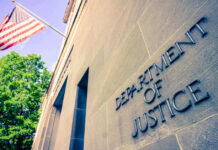
- The Justice Department’s antitrust division is reportedly running a criminal investigation into Tyson Foods, Cargill, JBS, and National Beef.
- The criminal designation signals prosecutors may be looking for intentional coordination like price fixing, collusion, or bid rigging, not just aggressive business conduct.
- The probe reportedly centers on cattle-purchasing contracts and a pricing benchmark ranchers say can be manipulated.
- Four firms control about 85% of U.S. grain-fattened cattle processing capacity, leaving ranchers with limited leverage and consumers with limited competition.
Why “Criminal” Changes Everything for Big Beef
The Wall Street Journal’s reporting that the DOJ probe is criminal, not merely civil, matters because it changes the government’s posture from referee to prosecutor.
Civil antitrust often ends with settlements and behavioral promises; criminal antitrust is designed for punishment and deterrence, with investigators seeking evidence of intentional agreement among competitors. That distinction raises the temperature in boardrooms, among lenders, and among trading partners long before any charge ever appears.
The U.S. Department of Justice's antitrust division is criminally investigating the conduct of large meatpackers, the Wall Street Journal said on Monday, citing people familiar with the matter.
Last year, President Trump accused meatpacking companies of driving up U.S.… pic.twitter.com/1txNOS6ujJ
— Yahoo News (@YahooNews) April 21, 2026
The meatpackers named in the reporting—Tyson Foods, Cargill, JBS, and National Beef—sit atop a supply chain where timing and perishability crush bargaining power.
A fed steer can’t be stored like wheat. When a rancher needs to sell, the “market” can effectively shrink to whichever plants are buying that week within hauling distance. That reality helps explain why allegations about contract benchmarks and procurement practices hit like a personal insult in cattle country.
The 85% Reality: Concentration That Feels Like a Cartel Even Without Proof
Market concentration is not a crime in itself, but it can create conditions in which lawful dominance appears indistinguishable from unlawful coordination to those living under it.
Reporting cited an eye-popping figure: the four targeted companies control roughly 85% of U.S. grain-fattened cattle processing capacity.
Ranchers have complained for years that they get squeezed from both sides: the prices they receive for cattle feel artificially low while grocery-store beef remains expensive.
That “spread” can happen for many reasons—input costs, processing bottlenecks, consumer demand—but ranchers argue the structure invites manipulation.
The current probe reportedly zeroes in on cattle-purchasing contracts and a benchmark that gets embedded into deals, making it the kind of plumbing a determined actor could game.
What Investigators Typically Chase in Criminal Antitrust Cases
Criminal antitrust is narrow and old-fashioned: prosecutors usually need to show an actual agreement among competitors to restrain trade, such as price fixing, market division, or bid rigging.
That’s why the criminal designation is such a big deal; it implies investigators believe the facts might support intent and coordination rather than parallel behavior.
The DOJ has not publicly confirmed details, and no charges have been filed, so the public still lacks the “what, who, when” specifics.
That uncertainty is the point of leverage. A criminal investigation forces companies to preserve documents, conduct employee interviews, and assess legal risks, which can disrupt ordinary operations.
It also pressures individuals, not just corporations, because criminal enforcement can involve personal exposure depending on evidence and roles.
For an industry that thrives on predictable throughput—cattle in, boxed beef out—uncertainty becomes a cost. Even a probe that ends quietly can change how contracts get written and how bids get made.
Trump’s Pressure Campaign Meets a Supply Chain That Voters Understand
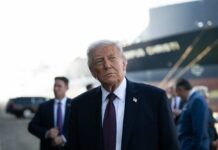
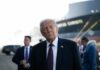
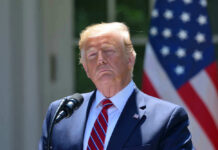
President Donald Trump publicly called for federal action in November 2024, accusing beef processors of suppressing cattle prices to ranchers while charging consumers more. That argument holds because it mirrors what families notice: smaller checks for producers and bigger bills for shoppers.
Trump also characterized the issue as involving “majority foreign-owned meatpackers,” which seems overstated given that the reported target list includes U.S.-headquartered Tyson and Cargill alongside Brazil-based JBS and National Beef. Political pressure does not prove wrongdoing, but it can set priorities.
That’s why this story has unusual crossover appeal: ranchers want fair bids, consumers want relief at the register, and voters want proof that government can still police the basics without turning into a permanent micromanager. The open question is whether prosecutors can separate emotionally satisfying narratives from evidence that meets criminal standards.
What Could Change for Ranchers and Shoppers—Even Before Any Verdict
Texas Agriculture Commissioner Sid Miller praised the investigation as long-overdue and framed it as accountability for consolidation and potential anti-competitive practices.
That kind of endorsement matters because it signals state-level political oxygen for federal action, especially in places where ranching is identity, not just business.
If the DOJ uncovers wrongdoing, outcomes could range from fines to structural changes that alter how cattle are bought and how prices are set across regions.
Best-case scenario for the public is simple: more genuine competition for cattle and less unexplained spread between what ranchers earn and what consumers pay. Worst-case scenario is also simple: years of legal fog, no charges, and a deeper cynicism that “the big guys always win.”
Sources:
https://igrownews.com/doj-latest-news/
https://www.thebeefsite.com/news/doj-probes-major-us-beef-packers
https://www.ksstradio.com/2026/04/u-s-department-of-justice-investigates-meat-packing-companies/