

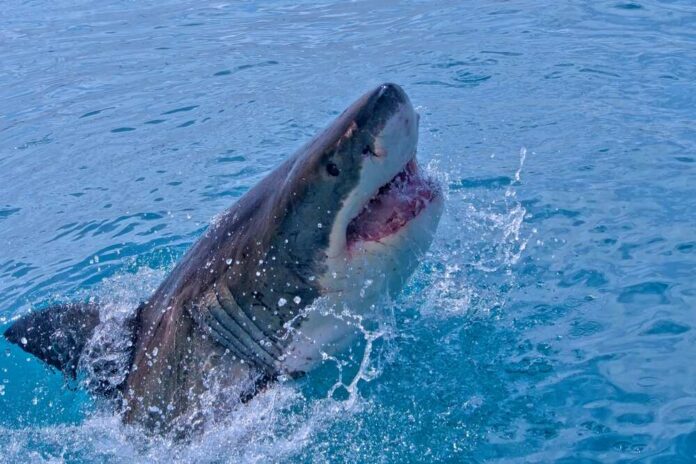
One moment a 39-year-old father from Cairns was stalking fish on a sunny reef; the next, his friends were dragging his shattered body from blood-red water on the Great Barrier Reef as a shark reminded everyone who really owns the ocean.
Story Snapshot
- A 39-year-old spearfisher from Cairns was killed by a shark while diving with friends at Kennedy Shoal on the Great Barrier Reef.
- The attack delivered catastrophic head injuries, and his friends raced him more than an hour back to shore, but paramedics could not save him.
- This was Australia’s second fatal shark attack involving a spearfisher in just over a week, and the third shark fatality of the year.
- The case reignites debate over personal risk, shark control measures, and how far government should go in managing nature’s dangers.
A routine spearfishing trip that turned into a nightmare
Sunday on the Great Barrier Reef began like countless other Queensland fishing stories: four mates on a boat, clear water, and a shallow reef system known as Kennedy Shoal about 40 to 50 kilometers offshore between Cairns and Townsville.[1][4]
The 39-year-old Cairns spearfisher slipped beneath the surface with a friend, targeting reef fish around structure where baitfish and predators mingle.[1][3] Conditions were good enough that nobody expected trouble beyond the usual reef hazards.
Shark kills spearfisher in front of friends in Australia: "Terrifying thing to see" https://t.co/LLVfE7X9jr
— CBS News (@CBSNews) May 25, 2026
The attack came quickly and violently. Police later confirmed the man “had been spearfishing when he was attacked and died from a critical head injury.”[3][4]
One of his friends was in the water and saw the mauling; the others watched in horror from the boat.[2][3] Local reports described “catastrophic” injuries to the head, the kind of trauma that leaves little room for optimism even before rescue is underway.[1][3]
In less than a minute, a recreational dive turned into a traumatic crime-scene-style retrieval.
The desperate hour-long race back to shore
After the shark released him, the friend in the water hauled the victim toward the boat while the others scrambled to drag him over the side.[3][4] The group made an emergency call and then pointed the bow toward the mainland, racing for the small community at Hull Heads, roughly an hour away at speed.[1][4]
Ambulance crews staged at the boat ramp, but paramedics later said he had “sustained injuries not compatible with life” by the time they arrived.[3] Every measure that could be done in the field was done, and still it was not enough.
Queensland Police and ambulance services both stressed that the group did exactly what authorities recommend: remove the victim from the water, apply pressure, evacuate as fast as possible.[1][3][4]
Yet the distance from Kennedy Shoal and the severity of the head wounds meant survival was unlikely from the moment the shark struck.
For anyone who loves remote offshore fishing, this is the uncomfortable tradeoff: solitude and pristine reef, paid for with long transit times when seconds matter most.
Shark behavior, spearfishing risk, and what we still do not know
Officials have not confirmed the shark species, though operators in the region regularly see bull sharks and tiger sharks near reef structures and fishing activity.[1][3]
Bull sharks, in particular, are notorious around river mouths and reef edges, where blood, bait, and struggling fish signal an easy meal. Spearfishing stacks the odds: wounded fish, clouded water, and divers focused on their quarry instead of scanning for silhouettes approach the threshold of calculated risk.[1] That risk does not absolve authorities of responsibility, but it does make personal choice central.
Spearfisher Killed in Shark Attack on Great Barrier Reef Off North Queensland https://t.co/Sroh16gsTv
— diverdowndeep (@diverdowndeep) May 25, 2026
This was not an isolated one-off. Just eight days earlier, a 38-year-old Perth spearfisher, Steven Mattabonni, died after a suspected great white attack near Rottnest Island off Western Australia.[1][3][6]
The Great Barrier Reef death marked Australia’s second fatal shark attack in just over a week and the third shark fatality of the year.[1][3][6] Australia’s long-term average sits at just over three fatal shark attacks annually, so 2026 is tracking right on an uncomfortable, but established, trend line.[3]
The pattern gives activists ammunition on both sides of the culling debate.
Freedom, risk, and the recurring argument over shark control
After every attack, calls flare for stronger shark control: more drumlines, more nets, more targeted culls. Coastal states already use lethal shark-control tools off popular beaches, but remote reefs like Kennedy Shoal sit far outside any realistic netting program.[1][3]
From this viewpoint, personal responsibility must carry real weight. When adults choose high-risk recreation—spearfishing deep offshore, solo rock fishing, backcountry skiing—they accept that the state cannot bubble-wrap every hazard nature presents.
That does not mean government has no role. Transparent data on shark incidents, clear emergency protocols, and honest public messaging about risk are basic obligations.[3]
What strains credibility is the argument that every tragic encounter must produce another regulation, another layer of control on wild ecosystems.
Sharks are not criminals; they are apex predators doing exactly what they have done for millions of years. The ocean off Queensland is shark habitat first and human playground second, no matter how many tourism brochures suggest otherwise.[1][3]
How this tragedy will shape future debates and decisions
Investigators are preparing a report for the coroner, and police have classified the death as non-suspicious, meaning no human foul play is suspected.[1]
The friends who watched their mate die now live with images they will not easily erase, and a regional community gains another cautionary tale that will be retold at ramps, pubs, and tackle shops for years.
For policymakers, the lesson is sharper: respect the public’s right to assume risk, focus on accurate information, and resist emotional overreach that punishes nature for being wild.
Sources:
[1] Web – Spearfisher mauled in Australia’s second fatal shark attack in a week
[2] YouTube – Spearfisherman killed in Great Barrier Reef shark attack | 7NEWS
[3] YouTube – Spearfisherman dies after shark attack at Kennedy Shoal
[4] Web – Australian spearfisher killed in shark attack off Great Barrier Reef – …
[6] Web – Shark kills spearfisher in front of friends in Australia: “Terrifying …