One quick turn in New York Harbor left two people dead, a baby among them, and put the boat’s operator under arrest within hours.
Story Snapshot
- Police say Manuel Hernandez, 46, was arrested and charged with 13 counts of reckless endangerment after the capsize.
- The boat overturned near Liberty Island and left a 27-year-old woman and a 5-month-old girl dead.
- Twelve other people were rescued and taken to hospitals with minor injuries.
- The Coast Guard said it was investigating whether the boat was being used as an illegal charter.
The Capsize That Triggered the Case
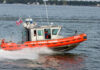
The boat capsized near Liberty Island in New York Harbor after a 911 call came in about an overturned vessel. Authorities said the craft was a 22-foot Bayliner and that the accident set off a major rescue response. The deaths of Sara Sanchez and Antonella Garcia turned the incident from a boating emergency into a criminal case almost at once.
That speed matters. The arrest came about four hours after the capsize, which means investigators believed they already had enough to treat the event as more than a tragic accident. But the public record still stops short of showing the full basis for the charge.
The reports confirm the arrest and the deaths, but they do not spell out the specific act or mistake that led police to call the conduct reckless.
Why Police Focused on Reckless Endangerment
Police identified Hernandez as the boat’s captain and said he faced 13 counts of reckless endangerment. That charge suggests officers believed someone on board faced a serious and avoidable risk.
Grim video and photos show authorities pulling from the water the doomed small white motorboat that capsized off Liberty Island in New York Harbor late Saturday, killing a mom and her infant daughter. https://t.co/VmZRw7hFNT pic.twitter.com/HN9SP9FWEq
— New York Post (@nypost) August 9, 2026
The presence of a baby sharpened the public reaction. The victims were described as a 27-year-old woman and her 5-month-old daughter, and the remaining passengers were rescued from the water and treated for minor injuries.
In stories like this, the emotional force can outrun the evidence. That is why the charge should be read as an early legal step, not a final verdict on what caused the capsize.
The Illegal Charter Question
The Coast Guard said it was looking into whether the boat was being used as an illegal charter. That phrase has a narrow meaning. In the reports, it refers to a passenger-for-hire vessel that lacks required Coast Guard credentials, safety gear, or a certificate of inspection.
That question could matter as much as the capsize itself. If the vessel was operating outside the rules, the case becomes about more than a bad night on the water.
It becomes a test of whether someone put paying or invited passengers on a boat that was not properly set up for that duty.
What the Current Record Does Not Prove
The public record is strong on the outcome and thin on the mechanics. It shows a fatal capsize, a quick arrest, and an active investigation.
It does not show the criminal complaint, the Coast Guard file, or the facts that would make the reckless-endangerment charge easy to test in court. That gap leaves room for many possibilities, including operator error, overload, weather, wake, or a mechanical problem.
There is also a practical reason to be cautious. Early reports often become the first draft of public memory. Once people hear “arrested” and “illegal charter,” they may assume the whole case is settled. It is not.
The arrest shows police judgment at that moment. The full truth will depend on records that have not yet been released in the material provided here.
Why This Case Draws So Much Attention
New York Harbor already carries a heavy symbolic weight. Any disaster near Liberty Island lands hard because the setting is familiar, crowded, and visible to the public.
A capsize there feels instantly larger than a routine marine mishap. Add a baby victim, a fast arrest, and talk of an illegal charter, and the story takes on the shape of a warning about how quickly casual boating can turn deadly.
For now, the facts are plain enough to be sobering. Two people died, 12 others were rescued, and the operator was arrested on reckless-endangerment charges. What remains open is the part that matters most in court: whether the law can prove that Hernandez’s conduct, and not some other cause, pushed that boat over the edge.