

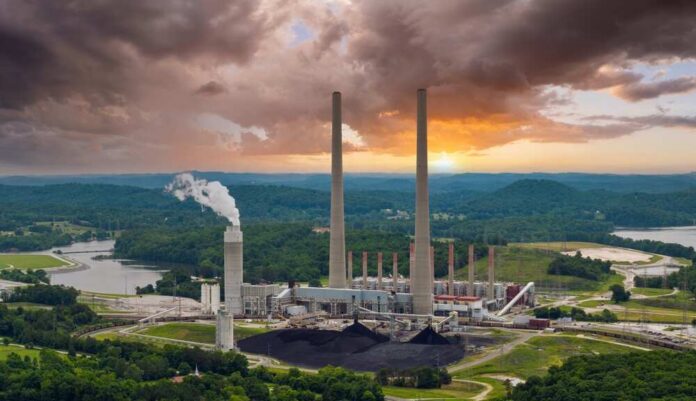
EPA is moving to erase federal carbon limits for power plants, betting courts and pocketbook math are on its side.
Story Snapshot
- EPA proposed repealing all power-plant carbon standards under the Clean Air Act’s Section 111.
- The agency says repeal will cut compliance costs by about $1.2 billion per year.
- Opponents say the law still requires limits and that repeal risks steep climate and health costs.
- The Supreme Court’s West Virginia v. EPA ruling narrowed EPA tools and looms over the fight.
What EPA Is Doing And Why It Matters
The Environmental Protection Agency proposed to repeal every federal greenhouse gas limit for coal- and gas-fired plants under Section 111 of the Clean Air Act. The agency says the 2024 standards overshot its legal authority and forced costly shifts across the grid.
EPA projects about $19 billion in avoided costs over two decades, or roughly $1.2 billion per year, if it finalizes the repeal. The rule is moving through White House review, the final step before release.
The US Environmental Protection Agency is expected to formally rescind carbon pollution standards for fossil fuel-fired power plants as soon as Monday, sources say https://t.co/5cxFsfrRBR
— Bloomberg (@business) September 13, 2026
This repeal effort sits inside a larger legal shift. In 2022, the Supreme Court’s West Virginia v. EPA decision held that EPA cannot use “generation shifting” to set limits for existing plants under Section 111(d).
That ruling elevated the “major questions” doctrine and told agencies to stick to clear congressional direction for rules with big economic effects. EPA now argues the prior standards crossed that line and lacked firm statutory ground.
The Legal Edge After West Virginia v. EPA
Courts drew a bright line between plant-level controls and broad system redesign. Section 111 allows standards based on the “best system of emission reduction,” but the Court said that cannot mean reordering the grid or forcing fuel switching without clear congressional text.
That framing favors narrower, inside-the-fence measures at individual units. EPA’s new posture hews to that limit and treats the 2024 program as unlawful because it relied on system-wide effects to drive deep cuts.
Critics counter that EPA still has a duty to set meaningful limits for carbon dioxide from power plants. They cite past rulings that greenhouse gases endanger health and welfare and point to Congress’s direction to curb harmful pollution.
A House Sustainable Energy and Environment Coalition letter urged EPA to abandon the repeal and issue strong standards to protect public health and family budgets. Expect fast lawsuits the moment the final rule posts.
Costs, Emissions, And The Kitchen-Table Test
EPA says repeal means lower compliance costs, fewer premature plant closures, and steadier electricity prices for consumers and small businesses.
Many co-ops and smaller utilities, which cannot print capital, have pressed for relief and more time to replace aging units without blackouts or rate spikes. Grid reliability is not a talking point; it is a bill that comes due on the hottest and coldest days.
Opponents argue plant savings do not offset costs to the public. Resources for the Future modeled higher cumulative carbon dioxide emissions by 1.2 to 5.8 billion tons by 2050 if repeal goes through, and damages four to eight times larger than compliance savings on their assumptions.
The Center for Climate and Energy Solutions said EPA’s own analysis shows 123 million more tons of emissions in 2035, with $23.4 billion in annual harm at a $ 190-per-ton social cost of carbon. Those are strong claims, but they turn on judgment calls about discount rates, damage functions, and future technology.
What Conservatives Should Watch For Next
Three tests now matter. First, the legal test: does the repeal track the Supreme Court’s limits under Section 111 without overreading them? West Virginia v. EPA sliced off generation shifting but did not bar plant-level controls.
A court will check if EPA drew that line carefully. Second, the consumer test: do power prices and reliability improve or at least hold steady after repeal? If bills fall and the lights stay on, voters will notice.
The Environmental Protection Agency is poised to formally repeal carbon pollution standards for coal- and gas-fired power plants, Bloomberg News reported Sunday, citing people familiar with the matter.
Report: EPA Poised to Repeal Power Plant Carbon Standards…
— Elena (@helen44767171) September 14, 2026
Third, the federalism test: can states and utilities keep cleaning up with tools that fit their grids, rather than a one-size national mandate? Many states already cut emissions by adding gas, nuclear, and renewables, and by upgrading turbines and heat rates.
A leaner federal posture can still punish fraud and reward real efficiency while respecting local choices. That balance—clear law, reliable power, and honest math—will decide whether this repeal sticks.
Sources:
epa.gov, blogs.law.columbia.edu, nypost.com, kirkland.com, reuters.com, catf.us, rff.org, thenews.coop