President Trump told a roaring Irish Open crowd he will remove the U.S. tariff on Irish whiskey, and he said it as a promise, not a maybe.
Story Snapshot
- Trump pledged to lift the U.S. tariff on Irish whiskey at the Irish Open trophy ceremony.
- He said the push came from Ireland’s leader and players like Shane Lowry.
- Reports described the tariff at roughly ten percent at the time of his remarks.
- He later said the move targets Irish whiskey only, not other European Union goods.
What Trump Said, Where He Said It, And How The Crowd Reacted
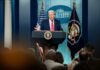
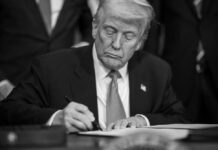
Trump stood on the closing-day stage at the Irish Open in County Clare and told fans the United States will remove tariffs on Irish whiskey.
He said people had been asking him to do it, then delivered the line that set off cheers: “On behalf of the United States of America, I am going to take the tariffs off.” The moment landed as a clear pledge. Outlets on site reported loud applause and a celebratory mood across the gallery.
Trump plans to remove a 15% tariff on Irish whiskey https://t.co/k2fo2jvLU1 pic.twitter.com/LXwiV6G7dH
— New York Post (@nypost) September 14, 2026
He tied the request to named voices. He cited appeals from Ireland’s head of government, Taoiseach Micheál Martin, and from golfers, with Shane Lowry highlighted in one report. The scene mattered.
A sports stage softened the politics, but the message was policy. Cameras rolled. Reporters took down the quotes. The crowd heard a decision, not a debate. That instant feedback loop is often how trade signals start in real life.
The Tariff In Question And Why It Matters
Reports placed the duty on Irish whiskey around ten percent at the time of the announcement, though some coverage referenced a higher figure in other contexts. A tariff at that level reaches the shelf. Importers pay it. Distributors bake it in. Consumers feel it in the final price.
Whiskey is a proud Irish export, and the United States is a top market. Even small percentage changes can shape sales, jobs, and investment. When a president says “off,” people in the supply chain listen hard.
Spirits tariffs rarely stand alone. They live inside bigger trade chess matches. Washington and Brussels have traded blows over aircraft, metals, and tech. Whiskey and wine often become bargaining chips in these fights.
Governments also use public vows to set the table for talks. Speeches come first. Paperwork and customs updates come later. That is the rhythm. The crowd hears the policy headline; agencies later write the footnotes.
Scope: Irish Whiskey Only, Not Wider European Goods
Trump told reporters after the ceremony that the plan covers Irish whiskey only. He drew a line between this move and wider European Union products. That boundary matters for producers and for trade partners who watch for spillover effects.
A targeted lift avoids opening broader loopholes and keeps leverage on other fronts. It also narrows the win to a single, high-profile category with political and cultural punch on both sides of the Atlantic.
The setting added a twist. The pledge came during a trophy moment at a course tied to Trump’s family brand. Some media framed the timing as showmanship.
The crowd cheered because they understood the plain meaning. Cheaper Irish whiskey in America helps drinkers, bars, and distillers. That is common sense pocketbook math.
What Happens Next In The Trade Playbook
Trade changes follow steps. The White House sets direction. The United States Trade Representative coordinates. Agencies align the legal text. Customs officers apply the rule at ports. That sequence often trails the headline by days or weeks.
The pattern shows up again and again across past tariff shifts. Announcements shape expectations, move talks, and warn markets where policy is headed. The mechanics land after the message, but the message still moves behavior first.
Sláinte! Trump Scraps 10% Tariff on All Irish Whiskey as Parting Gift ~ https://t.co/3DGFexnZlM
— MikeKirby (@mikekirbyone) September 14, 2026
Here is the practical impact if the removal proceeds as described. Import entries of Irish whiskey would clear without the added duty. Distributors and retailers would see lower landed costs. They could pass savings to prices, promotions, or new placements.
Distillers could expand shipments and plan investment with less fear of sudden hits. Consumers would see more choices and likely sharper deals. That is how a single policy lever can ripple from a golf green to a grocery aisle.
Sources:
thegatewaypundit.com, aljazeera.com, politico.com, ajc.com, essentiallysports.com, forth.news, finance.yahoo.com, reuters.com, rte.ie