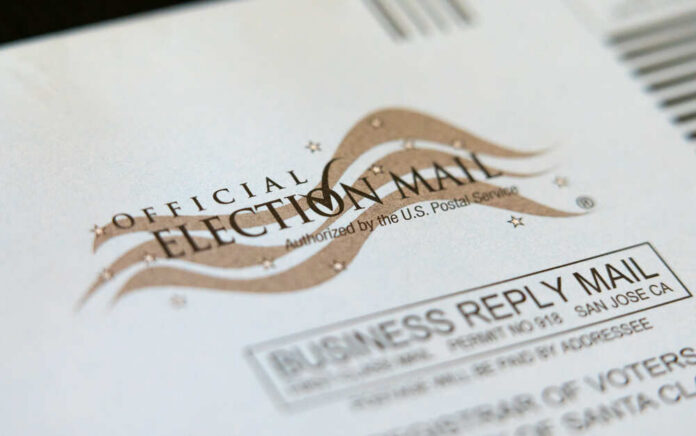
Mail ballots are leaving print shops while courts argue over who gets to receive them.
Story Snapshot
- President Trump’s March order directs federal agencies to tighten mail-ballot rules and verification.
- The Supreme Court allowed parts to proceed for now, leaving final legality open.
- States and advocacy groups sued, saying the order violates state control of elections.
- Conflicting rulings and tight timelines create confusion as ballots enter the mail stream.
What The Order Actually Does And Why Timing Matters
The executive order tells the Department of Homeland Security to assemble state-by-state lists of eligible adult United States citizens. It tells the Department of Justice to prioritize cases against officials who issue ballots to ineligible voters.
It tells the Postal Service to deliver ballots only to people on approved lists. The White House frames this as verification and fraud prevention. Ballots are now mailing, so every day of legal delay raises the risk of mixed rules in the field.
Midterm elections have begun in the United States in a fog of confusion over mail-in voting, with ballots already going out as President Donald Trump presses courts to let him impose sweeping new restrictions on how they are handled.https://t.co/8S07JiNtez by @frankietaggart pic.twitter.com/ar0iYJZzMU
— AFP News Agency (@AFP) September 5, 2026
The Supreme Court granted temporary relief in late August in Trump v. California. That order removed a major block and let parts of the plan move forward, but it did not decide the merits.
Agencies can act for now, but the Court could still limit or strike the policy later. That split result keeps pressure on local officials who must lock procedures while they face changing federal guidance and ongoing lawsuits.
The Pushback From States And Voting Groups
Twenty-three states and the District of Columbia challenged the order. They argue the Constitution gives states and Congress, not the president, control over election rules.
A federal judge in Boston agreed in June on key sections, calling parts “legally void” and beyond executive authority. That ruling targeted the federal voter lists and Postal Service limits, signaling real separation-of-powers concerns rather than a mere policy spat.
Advocacy groups warn the directives could confuse voters and election staff. They say last-minute changes risk lost ballots or rejected votes if lists are wrong or incomplete.
A separate court order blocked the Postal Service from enforcing part of the plan before the election, citing likely harm and chaos. These cases claim the order would disenfranchise voters who rely on mail ballots, especially seniors, military families, and people with disabilities.
The Administration’s Case For Verification And Enforcement
The administration says standard checks protect every legal vote. It argues that matching federal data to voter rolls is common sense. It claims the Postal Service must avoid moving ballots to people who are not eligible.
It also says prosecutors should focus on officials who ignore the rules. Supporters see this as basic accountability, not suppression. They also point to the Supreme Court’s stay as proof that implementation can proceed while courts finish the job.
The Trump administration has again asked the Supreme Court to allow new mail-ballot restrictions before the midterm elections. https://t.co/XGziHO5vht
— FOX 2 Detroit (@FOX2News) September 6, 2026
Many will note the practical angle: clean lists, clear custody, fair delivery. That aligns with equal treatment and rule of law. But courts have flagged a core issue: whether a president can order federal agencies to reshape state election systems without new laws from Congress.
On that question, the temporary Supreme Court relief is not the final word. A later merits ruling will draw the line between needed guardrails and federal overreach.
What To Watch As Ballots Move
State election offices will keep mailing ballots on state calendars even while the federal rules see tweaks. Expect fast guidance memos, hotline scripts, and new training to manage edge cases.
Watch for court filings on list accuracy, error rates, and any returned or undelivered ballot spikes. Track whether prosecutors announce standards for cases tied to ineligible mailings. The next major signal will be any appellate timetable that forces a durable rule set before peak voting windows.
Sources:
pbs.org, cnn.com, thehill.com, npr.org