
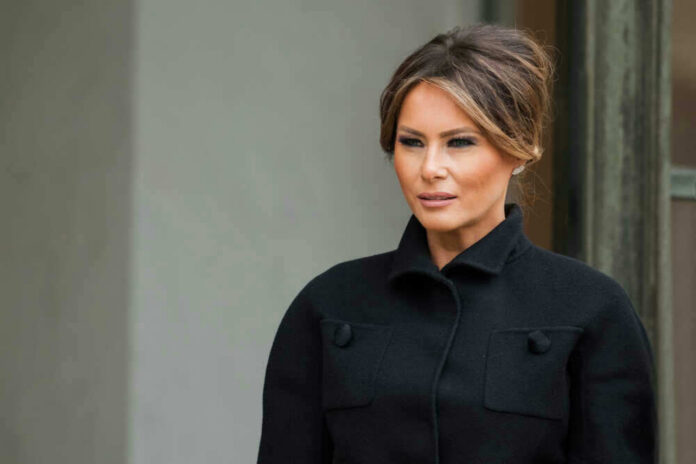
Melania Trump’s office let a CNN reporter into her New York event days after President Trump banned the network from the White House, and that split-screen matters.
At a Glance
- Melania Trump’s office approved CNN’s Betsy Klein for a New York event tied to the United Nations.
- President Trump’s ban targets CNN, MS Now, and Politico at the White House, not all venues.
- The approval highlights separate credential channels beyond the White House press pool.
- The clash unfolded as networks paused pooled coverage after CNN lost its pool turn.
A First Lady Exception That Shows How Access Really Works
Melania Trump’s office approved CNN White House reporter Betsy Klein to cover the First Lady’s “Fostering the Future Together” event in New York City during the United Nations week.
Reporters framed the move as a notable exception after President Trump’s White House ban took effect days earlier. The event sat outside the White House complex and used a separate credential lane. That detail is the hinge: not every press gate is controlled by the same doorkeeper.
Melania makes eyebrow-raising CNN decision as Trump's media ban sparks White House chaos https://t.co/hWc7L0O6OB
— Daily Mail (@DailyMail) September 21, 2026
President Trump had announced a ban on CNN, MS Now, and Politico from the White House, and his team enforced it by stripping CNN from a scheduled television pool duty.
Major networks then suspended pooled coverage in solidarity, which raised the stakes on who could get in where. The First Lady’s approval did not reopen the White House gates. It showed that different offices, venues, and hosts can set their own access rules even in the same news cycle.
The United Nations Backdrop Changed the Rules of the Day
United Nations coverage runs on United Nations accreditation, not White House badges. CNN and other outlets said their reporters covering the United Nations sessions used United Nations credentials, which let them report on the trip despite the White House pool freeze.
President Trump told a CNN anchor at the United Nations she should not be there. That was a political message, not a revocation of United Nations media rules on the spot. The distinction explains how cameras kept rolling outside Washington.
CNN reported that the suspension of pool coverage did not change how networks would cover the New York and United Nations events on their own. That line maps to the First Lady’s event, which sat beside the United Nations calendar and followed its own credential checks.
The Associated Press also reported that Melania Trump’s office accepted CNN’s request for Klein to attend the program focused on youth and opportunity. The timeline places the greenlight after the ban, which helps explain the headlines.
What This Signals About Power, Process, and Prudence
The White House press pool exists to ensure the public sees the presidency, even when space is tight or schedules move fast. When the White House removed CNN from its pool role, the other networks paused pooled coverage.
That decision underscored how one choke point can affect the flow of information for everyone. The First Lady’s carve-out hints at a different lesson: decentralization can blunt a choke point. Separate gates let some coverage continue while the main gate is locked.
Critics say the ban is a blow to press freedom and a bad way to handle unfavorable coverage. Rules should be clear, consistent, and tied to security or logistics, not to feuds.
Process discipline protects both the office and the audience. The Melania approval did not undo the ban; it exposed how muddled systems invite drama and confusion.
The Open Questions That Decide What Happens Next
Reporters cite unnamed officials for the approval, not a posted policy or a signed memo. That leaves gaps. The public still lacks the written terms of the White House ban, any implementation guidance, and the First Lady event’s media policy.
Those documents would settle where one office’s authority ends and another’s begins. Without them, readers see a tug of war through leaks, clips, and venue maps. Lawsuits filed over the ban will test where discretion turns into unlawful viewpoint punishment.
CNN reporter Betsy Klein has been granted credentials to cover First Lady Melania Trump’s New York event. The approval comes just after President Donald Trump barred CNN and two other outlets from the White House. The event, titled ‘Fostering the Future Together’, is being held… pic.twitter.com/sXhtly36Xc
— India Today Global (@ITGGlobal) September 22, 2026
Practical steps could cool this down fast. First, publish the operative ban text and the criteria for exceptions. Second, state who decides credentials at non-White House venues that involve senior officials and spouses.
Third, restore a neutral pool rotation with transparent rules the networks accept. The First Lady’s New York approval shows there is room for orderly access even amid conflict. Order, not improvisation, is what keeps the public informed and the presidency accountable.
Sources:
bbc.com, cnbc.com, thedailybeast.com, axios.com, thehill.com, pbs.org