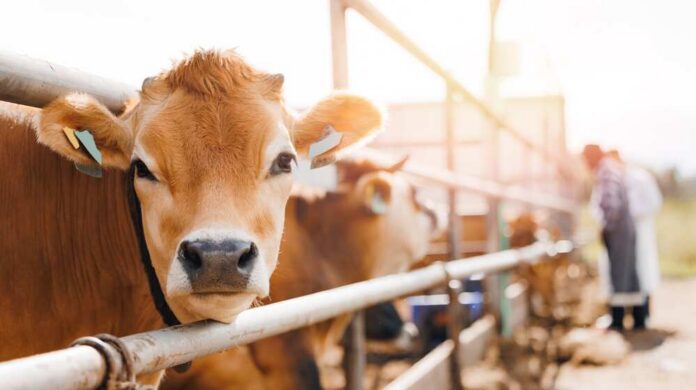
A single three-week-old calf in South Texas just turned a long-eradicated “flesh‑eating” parasite from a history lesson into a live-fire biosecurity test for America’s cattle industry.
Story Snapshot
- First confirmed U.S. animal case of New World screwworm since the 1960s, in a newborn calf in Zavala County, Texas.
- This parasite’s larvae literally eat living tissue in open wounds of warm-blooded animals, often killing livestock.[1][2]
- Outbreaks are exploding across Mexico and Central America, with more than 170,000 animal cases reported.[3]
- Federal and state officials have launched quarantines, aggressive surveillance, and sterile-fly air campaigns to slam the door before it opens wider.[1][3]
A parasite that eats animals alive, and why one calf matters
Texas officials confirmed that a three-week-old calf in Zavala County was infected with New World screwworm, the first documented U.S. livestock case since the eradication of the insect in the 1960s.[1]
New World screwworm is not a minor nuisance; it is a fly whose eggs hatch into larvae that burrow into open wounds on living, warm-blooded animals and consume living flesh rather than dead tissue.[1][2]
Left untreated, infestations can kill cattle, wildlife, pets, and occasionally people.[1][3] That is why one sick calf commands national attention.
Texas A&M animal-health experts explain that screwworm flies target any open wound: a brand, a dehorning site, a tick bite, or the umbilical stump of a newborn calf.[1]
Larvae rapidly multiply, expanding a wound into a crater of rotting, painfully damaged tissue while the animal remains alive.[1][2]
Texas wildlife officials warn that deer, feral hogs, and other wildlife are equally vulnerable, turning every fawn or injured buck into a potential incubator and long-distance transport vehicle for the pest. That biological reality makes early detection and aggressive control non‑negotiable.
From eradication success story to renewed southern border risk
The United States, working with the U.S. Department of Agriculture’s Agricultural Research Service, beat this parasite once already using the “sterile fly” technique.[1]
Federal scientists in the 1950s developed a way to rear screwworm flies in bulk, sterilize males with radiation, and release them so that wild females mated but produced no viable offspring.[1]
Over decades, coordinated releases across the Southwest and into Mexico pushed the screwworm south; by about 30 years ago, it had been eradicated from the United States.[1] That victory saved cattle producers billions and became a global textbook example of applied science.
Flesh-eating parasite New World screwworm confirmed in Texas, USDA says https://t.co/ZEy1Mwe6D0 https://t.co/ZEy1Mwe6D0
— Reuters (@Reuters) June 4, 2026
The picture changed again after 2023, when outbreaks surged in Panama and Costa Rica, then spread across every Central American country and into Mexico.[3]
The Centers for Disease Control and Prevention reports more than 171,700 animal cases and nearly 2,000 human cases in the region as of May 2026.[3]
Texas A&M notes that since 2023, screwworm has reestablished itself north of the Panama Canal and moved as far as Veracruz, Mexico, placing a growing reservoir of infection within striking distance of the U.S. border.[1][3]
Against that backdrop, a single U.S. calf case looks less like a fluke and more like the first ember from a regional wildfire.
How authorities are responding and what it signals
Federal and Texas officials are treating the Zavala County case as a serious livestock health incident, even as they emphasize that the food supply remains safe.[1][2][3]
Guidance to producers stresses “early detection and reporting,” instructing ranchers to immediately isolate suspect animals, call a veterinarian, and report to the Texas Animal Health Commission without delay.[2]
Veterinarians are legally required to collect larvae and submit them to the U.S. Department of Agriculture’s National Veterinary Services Laboratory for confirmation, creating a tight diagnostic pipeline.[1][3] That level of formality is not used for a trivial pest.
The operational playbook borrows directly from prior eradication campaigns. Officials have erected movement-control zones around the affected area, limiting livestock transport while inspectors fan out to examine nearby herds and trap adult flies.[1]
At the same time, the U.S. Department of Agriculture is deploying the sterile-insect technique in South Texas, releasing large numbers of sterile screwworm flies so wild females waste their reproductive effort on dead-end matings.[1][3]
How big is the threat really, and who decides when to worry?
Industry voices understandably push back against headlines that imply the U.S. cattle business is on the brink. Trade outlets and cattle groups emphasize that the case appears contained, that cattle outside the defined zone can move, and that one calf does not equal statewide catastrophe.[3]
That perspective reflects legitimate concern about overreaction: broad, prolonged movement bans could punish ranchers far from South Texas. American instincts toward limited, targeted intervention align with the requirement of hard evidence before imposing sweeping economic costs.
New World screwworm has been officially confirmed in the U.S., @USDA officials confirmed. The affected Texas animal is a three-week-old calf and NWS larvae were identified in its umbilical area. NWS can cause serious damage to #livestock and economic losses. More information ⬇️
— FarmWeekNow/RFD Radio (@FarmWeekNow) June 4, 2026
At the same time, the biology and the regional outbreak data argue against complacency. A bad screwworm outbreak, if it took hold in Texas, could cost the state’s beef industry nearly two billion dollars, according to some federal estimates, and the parasite is already inflicting massive losses just across the border.[1][2][3]
The sensible middle ground mirrors past eradication success: demand transparency about quarantines, lab results, and sterile-fly schedules; insist that any restrictions be narrowly tailored and time‑limited; but support aggressive, science‑driven action inside those bounds.
Waiting until screwworm shows up in deer across half the state would not be fiscal conservatism; it would be penny-wise and pound-foolish.
Sources:
[1] Web – Flesh-eating screwworm returns to U.S. after 60 years, threatening …
[2] Web – What is the New World screwworm, and why does it matter to Texas?
[3] Web – New World screwworm – Texas Farm Bureau