

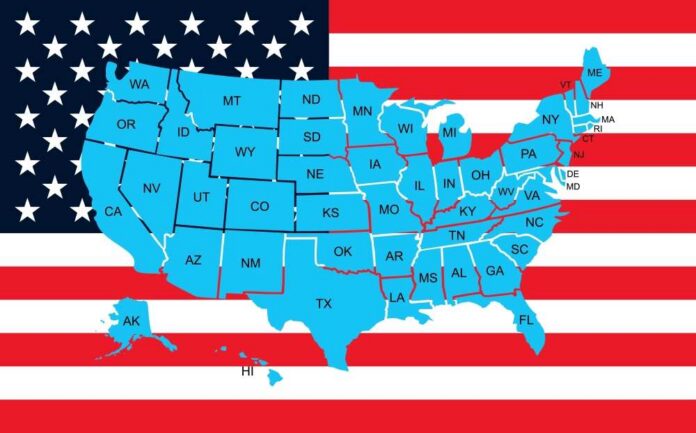
Democrats now hold full control of government in at least six states, a legislative sweep that quietly reshapes the map heading into the next round of redistricting fights.
Story Snapshot
- Democrats won complete control of the legislature and governor’s office in Arizona, Michigan, Minnesota, Pennsylvania, Nevada, and Wisconsin.
- Wisconsin’s flip followed new legislative maps ordered after the state Supreme Court tossed out Republican-drawn districts in 2024.
- Arizona Democrats took full control for the first time since 1966, with major gains in both the House and Senate.
- Full control of a statehouse does not automatically hand a party the power to redraw congressional lines.
Democrats Lock Down Six Statehouses
The Associated Press reported that Democrats took full control of both legislative chambers and the governor’s office in at least six states, including Arizona, Michigan, Minnesota, Pennsylvania, Nevada, and Wisconsin. That means one party now writes the budget, passes the laws, and signs them, with no check from the other side of the aisle in those statehouses. It’s a clean sweep, and it didn’t happen by accident.
Democrats have six new state government "trifectas" pic.twitter.com/x4Nk5XoTjn
— Politics Watch (@politics_watch1) November 8, 2026
For Republicans, the losses sting worse because several of these states were considered competitive just a cycle ago. Holding a trifecta means a party controls every lever of state government at once. Losing one, especially in a swing state, signals more than a bad election night. It signals a shift in who shapes the rules for years to come.
Wisconsin’s Maps Tell the Real Story
Wisconsin’s flip didn’t happen in a vacuum. NBC News reported that Democrats took both legislative chambers partly because new maps replaced the Republican-drawn lines the state Supreme Court struck down back in 2024. Democrats needed to flip two Senate seats and five Assembly seats to take control, and they reportedly cleared that bar with room to spare. New lines, same voters, very different outcome.
That’s the uncomfortable truth for Republicans who spent over a decade benefiting from favorable Wisconsin districts. Once a court orders new boundaries, the political math resets fast. A chamber that looked safely red under old maps can flip blue under new ones, even without a dramatic shift in how people actually vote.
Arizona’s First Trifecta Since the Vietnam Era
Arizona’s result carries its own historical weight. The Washington Examiner reported Democrats moved from 13 to 20 of 30 Senate seats and from 27 to 36 of 60 House seats, blowing past the three Senate and four House seats they needed for majorities. That’s not a narrow squeaker. That’s a state that hadn’t had unified Democratic control since 1966 suddenly handing over the keys.
Michigan’s path looked different but ended at the same destination. Heading into the cycle, Democrats held the state House by a razor-thin 56-54 margin after independent redistricting replaced the old Republican-drawn maps. Michigan Democrats had already built a trifecta in 2022 before Republicans clawed back the House, a reminder that these majorities tend to be fragile rather than permanent.
Why Full Control Doesn’t Mean Full Power
Winning a trifecta sounds like total control, but redistricting authority is a separate fight with its own rules. Michigan’s maps come from an independent commission, not the legislature, and Wisconsin’s current lines exist because of a court order, not a legislative vote. A party can run every branch of state government and still not hold the pen when district boundaries get redrawn.
History backs that caution up. After the 2010 census, Republicans ran the “REDMAP” strategy, flipping roughly 660 state legislative seats and building 20 trifectas compared to just 11 for Democrats. That wave gave Republicans outsized control over drawing both congressional and legislative lines for a full decade. The same dynamic can now cut the other way, but only where legislatures, not commissions or courts, hold the pen.
Conservatives watching these results should take the losses seriously without panicking over predictions of permanent change. Narrow majorities, like Michigan’s 56-54 split, can flip again in a single bad cycle. The real test isn’t who won in November. It’s whether these new majorities can actually convert statehouse control into lasting policy and mapmaking power, or whether courts, commissions, and voters reset the board again before it matters.
What’s clear right now is the scoreboard, not the long-term consequences. Democrats banked real wins in states that matter for national politics, and Republicans lost ground they’d held for years in places like Wisconsin and Arizona. What happens next, in courtrooms, redistricting commissions, and the next election cycle, will decide whether this sweep becomes a lasting shift or just another turn of the wheel.
Sources:
apnews.com, en.wikipedia.org, law.marquette.edu, washingtonexaminer.com, abcnews.com, brennancenter.org