
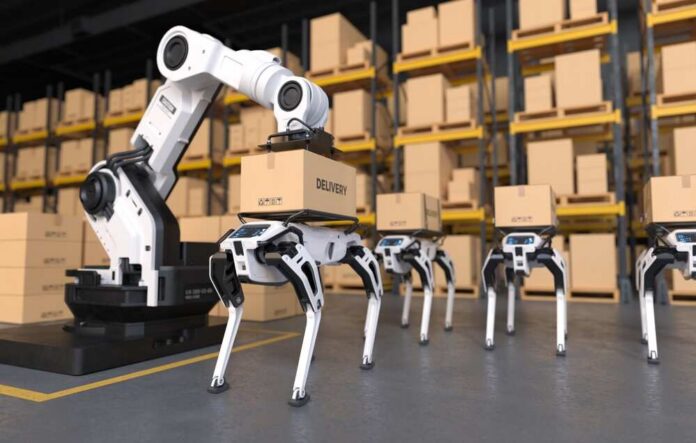
The United States just told the world that robot dogs and human-shaped machines are now a national security problem, not a science-fiction toy.
Story Snapshot
- The Federal Communications Commission banned new foreign-made humanoid and quadruped robots on security grounds.
- Chinese manufacturers are the main target, and Beijing is already threatening pushback.
- Officials say advanced robots and power inverters could let foreign actors spy on Americans or disrupt critical infrastructure.
- The rules hit future imports and authorizations, not the robots and devices Americans already own.
The robots that crossed a line from cool gadget to security risk
The Federal Communications Commission did not frame this as a quirky move about robot dogs wandering American streets. It formally added foreign-made humanoid robots, quadruped “robot dogs,” and certain connected power inverters to its Covered List of equipment considered too risky for authorization in the United States.
Under this step, new foreign-built advanced robots will almost never get the regulatory green light they need to be imported, sold, or marketed in America. That alone is a major line in the sand.
Officials say these machines are not harmless toys but rolling sensor platforms with cameras, microphones, and network links that never sleep.
A White House task force warned that foreign-built robots could create a cybersecurity risk that threatens critical infrastructure and the safety and security of United States residents.
When a robot can roam a factory, data center, or power station while streaming data back to its manufacturer, you do not need to be paranoid to see how intelligence services might be interested.
How the ban works and why it targets future dependence
The new rules focus on imports and authorizations going forward, not an immediate sweep of devices already here. Reports explain that the FCC’s decision applies to models that have not yet been authorized for sale in the United States, leaving previously approved robots and inverters untouched for now.
That is consistent with a risk-management strategy: cut off new foreign dependence at the gate rather than try to rip existing equipment out of homes, companies, and local governments overnight.
US MOVES to BAN Chinese HUMANOID ROBOTS
‘NATIONAL SECURITY THREATS’ — CNBC pic.twitter.com/f1IM7H1iPg
— RT (@RT_com) July 28, 2026
The Trump administration’s determination behind the ban argued that advanced robotic devices produced abroad pose supply chain vulnerabilities as well as cyber and national security risks.
A supporting national security document warned that modern robots are constantly connected, creating broad attack surfaces and making them vulnerable to data exfiltration, remote disruption of the physical robot, and unsafe over-the-air updates.
From Huawei to humanoids: the broader tech crackdown on China
This move extends a pattern, not a one-off panic. The FCC has already used national-security powers to restrict Chinese telecommunications giants like Huawei and ZTE and to block certain foreign-made power infrastructure on similar grounds.
Now, as Chinese robotics companies surge, the agency is treating humanoid robots and quadrupeds as the next front in that same campaign to keep cutting-edge Chinese technology out of sensitive American environments.
Lawmakers in Congress are also sharpening their knives. Months before this import ban, two senators proposed a bill to stop the federal government from buying humanoid robots and unmanned ground vehicles made in adversary countries such as China.
They argued these robots could transmit sensitive information back to China or be operated remotely from Chinese territory. That is a strong sign this is not just administrative box-checking but part of a larger push to keep foreign-controlled hardware out of government work and critical services.
What makes robots and power inverters so concerning
On paper, a robot dog in a warehouse and a box that connects solar panels to the grid do not sound like national-security flashpoints. The White House task force and FCC say the danger comes from how these devices mix physical access, constant sensing, and always-on connectivity.
Advanced robots gather data that malicious actors can use to surveil Americans, boost foreign intelligence services, or remotely take control of the robots themselves.
EVENT: The FCC added Chinese-made humanoid robots, robot dogs, and power inverters to its national-security equipment ban list, blocking imports of new models not yet authorized for sale.
— Noah by SAN (@noahintel) July 30, 2026
Connected power inverters matter because they sit where electricity flows between solar farms, batteries, data centers, and the wider grid. If hostile actors can compromise or control those devices, they could disrupt power delivery or quietly lay malware in key systems.
In this case, letting foreign-made hardware with remote-update pathways sit at the heart of American energy and digital infrastructure looks like asking for trouble.
China’s anger, accusations of protectionism, and the question of motives
China’s ministries and state media quickly claimed the United States is using security as a cover for protectionism and suppression of Chinese firms.
They argue the ban “severely damages” relations and unfairly blocks Chinese companies from a lucrative market. That line resonates with people who see every move in the U.S.–China tech rivalry as economic warfare first, security measure second. But those complaints do not directly answer the technical threat model laid out by the FCC and the White House task force.
The public record does have gaps. News reports do not point to a specific, proven incident where a humanoid or quadruped robot already caused a major U.S. security breach, nor do they reveal the full technical annex behind the ban. That lets critics say the danger is hypothetical or inflated.
Yet when the stakes are critical infrastructure and intelligence collection, a first approach tends to favor prevention over waiting for a disaster. Most readers would rather never learn the hard way that a foreign robot wandering a data center was quietly feeding pictures to an adversary.
What this means for American consumers, industry, and security
For regular Americans, this ban will not make robot toys vanish from store shelves tomorrow. The Covered List designation focuses on new devices seeking authorization and does not affect robots or inverters that already received approval and are in use.
Consumers and businesses can keep using what they already bought. The bigger impact is on future options: foreign firms, especially Chinese ones, will find it very hard to sell new advanced robots into the U.S. market. That reality carries a trade-off.
Domestic robotics and inverter makers gain breathing room, while buyers lose some lower-cost foreign choices. From this standpoint, that is a reasonable price if the payoff is stronger control over the hardware that powers American industry and guards American data.
If foreign-built robots someday want a second chance, the path is clear: open their code, submit to tough independent security audits, and prove they are tools for work, not eyes and ears for a rival state.
Sources:
cbsnews.com, nbcnews.com, theguardian.com, washingtonpost.com, aljazeera.com, thehill.com, bbc.co.uk, nytimes.com, npr.org