

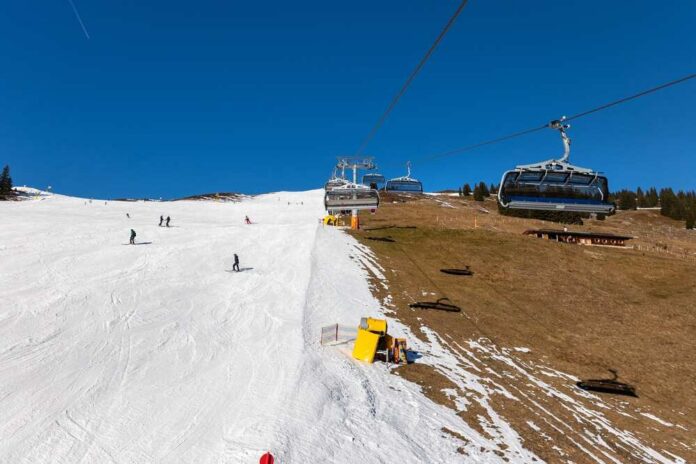
The West is staring down a “snow drought” so severe that even when storms arrive, much of the moisture is falling as rain—undercutting the natural water-storage system that millions depend on.
Quick Take
- Satellite and ground observations show record-low snow cover in early January 2026, with many basins near 20-year lows.
- Exceptional warmth is the main driver: precipitation has fallen, but it’s increasingly rain instead of mountain snow.
- Water supplies face added strain as spring runoff shrinks, with major Colorado River reservoirs already at low levels.
- Dry fuels from poor snowpack raise wildfire risk heading into spring and summer, especially if warmth persists.
Record-Low Snow Cover Signals a High-Stakes Water Year
Western snowpack entered Water Year 2026 in troubling shape, and early January delivered a stark marker: snow cover measured from space dropped to the lowest levels in the MODIS record dating back to 2001.
Reports tracked snow cover around 141,416 square miles on January 4, and roughly 142,700 square miles by January 15—far below typical mid-winter conditions. Those numbers matter because mountain snow isn’t scenery; it’s the region’s seasonal reservoir.
A record snow drought with unprecedented heat hits most of the American West, depleting future water supplies, making it more vulnerable to wildfires and hurting winter tourism and recreation. https://t.co/30bwuTGOjs
— NBC News (@NBCNews) February 10, 2026
Snowpack functions as a slow-release savings account for the arid West, feeding rivers and reservoirs when communities and farms need it most. Some Western states rely on snowmelt for a large share of their annual water supply.
When winter precipitation arrives as rain, it runs off quickly or soaks into thirsty soils rather than building a springtime water “bank.” That’s the core difference between a typical dry spell and a snow drought: you can have storms and still lose the storage.
Warmth, Not Just Lack of Storms, Is Driving the Deficit
Data compiled across major river basins points to a common culprit: unusual warmth through late 2025 and into winter. Multiple Western states saw record-warm Decembers, and experts repeatedly emphasized the same pattern—storms that would normally pile up snow instead delivered rain, especially at low and mid elevations.
Monitoring stations in several states reported snow-water equivalent at or below very low percentiles, indicating that the snowpack “balance sheet” is deeply negative even where precipitation totals look decent.
That distinction matters for policy and planning because it changes what “good news” looks like. A forecast for above-normal precipitation is helpful only if temperatures support snow accumulation in the right elevations.
Outlooks for late winter and early spring can point toward more moisture in the Pacific Northwest and Northern Rockies, but that does not automatically erase deficits already baked into the season. A warm pattern can continue to convert potential snowpack into short-lived runoff, limiting recovery even during active storm periods.
Colorado River Storage Levels Keep the Pressure on States and Families
Low snowpack adds to already tight reservoir conditions in key systems, especially the Colorado River basin, which supports tens of millions of Americans and large swaths of agriculture and power generation.
Public reporting cited the broader Colorado River system at reduced capacity, with Lake Powell and Lake Mead notably low. When the snow reservoir fails to refill, states face tougher trade-offs in allocating resources, and families see downstream effects through water restrictions, higher costs, and intensified political conflict over who must cut back.
Wildfire Risk Rises When Snowpack Fails to Protect Forests and Soils
Snow drought is also a fire story. Thin snowpack exposes grasses, brush, and forest floors earlier, allowing fuels to dry out sooner and lengthening the window for ignition.
Some areas may see short-term relief from rain, but rain-on-snow events can also melt what little snow remains, accelerating the transition to a drier spring landscape.
Research summarized by multiple outlets and expert commentary consistently flags this as a compounding risk: less snow means less slow-release into streams and more early-season drying.
Record snow drought in Western US raises concern for water shortages and wildfires https://t.co/IHnY3LkQOW
— KMET1490AM (@KMETRadio) February 10, 2026
For Americans tired of government mismanagement, the practical takeaway is straightforward: nature is delivering a tighter supply picture, and that makes competent, transparent water planning more—not less—important.
The available research emphasizes evolving conditions and the limits of early-winter snapshots, but the direction is clear: without sustained cold storms that build mountain snow, the West enters spring with less runoff potential and more fire vulnerability. Communities should watch basin-by-basin snow-water data, not just rainfall headlines.
Sources:
Snow Drought: Current Conditions and Impacts in the West (2026-01-08)
Worsening snow drought out West has cascading impacts, experts say
Seasonal Drought Outlook Summary
US Snowpack Update: Where do things stand heading into 2026?