
President Trump’s surprise decision to extend the Iran ceasefire “indefinitely” shows how quickly a hot war can pivot into high-stakes diplomacy—while U.S. forces and global shipping remain on edge.
Quick Take
- President Trump extended the U.S.-Iran ceasefire without a new deadline, saying it will last until Iran submits a proposal and talks conclude.
- The extension came at Pakistan’s request, as Iranian leadership reportedly struggles to present a unified negotiating position.
- The U.S. blockade of Iranian ports and vessels remains in place, a pressure point Iran has labeled a ceasefire violation.
- Iran has not issued a public official response, while the IRGC carried out vessel seizures in the Strait of Hormuz and showcased missiles in Tehran.
Trump’s indefinite extension resets the clock without lifting pressure
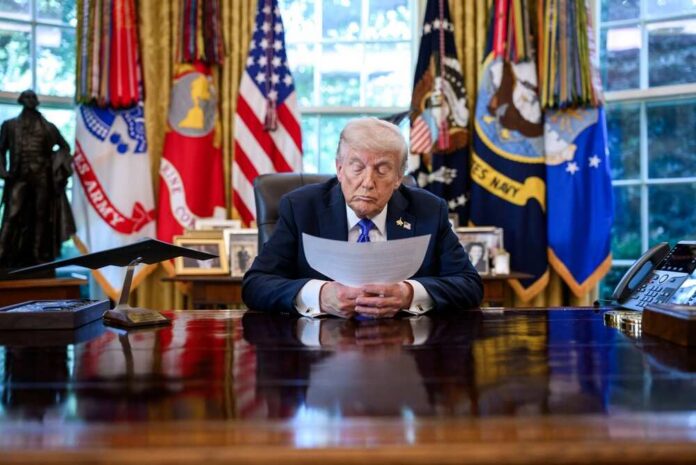
President Donald Trump announced April 21 that the United States will extend the ceasefire with Iran indefinitely, tying the pause to the submission of an Iranian proposal and the completion of discussions.
The move came just as the prior two-week ceasefire window was nearing expiration. At the same time, the administration is keeping the U.S. blockade of Iranian ports and shipping, preserving leverage while holding U.S. forces ready if talks collapse.
The immediate political friction is that the extension reads like an about-face compared with Trump’s earlier public posture against prolonging deadlines. Supporters can reasonably see it as a negotiating tactic: stop short of new strikes while maintaining the hardest economic and military pressure.
Critics can reasonably see mixed signals. The one clear fact is that the White House did not trade away the blockade, which remains central to U.S. leverage.
Pakistan’s mediation highlights how regional players shape U.S. options
Pakistan’s leadership played a direct role in the announcement, with Trump citing a request from Pakistani officials to give Tehran time to consolidate its negotiating position. That matters because it shows the diplomacy isn’t only Washington versus Tehran; it runs through regional capitals that have their own interests in preventing escalation.
Pakistan’s incentive is straightforward: a wider conflict threatens trade routes, domestic stability, and relations with multiple partners across the region.
Iran’s internal politics are a key variable, with reporting describing the Iranian government as fractured and struggling to produce a unified proposal. That kind of disarray can cut both ways. It can slow serious talks to a crawl, but it can also increase the risk of miscalculation if hardline factions act independently.
For American voters wary of endless wars, the practical question is whether an “indefinite” ceasefire becomes a bridge to an enforceable deal—or a holding pattern that drifts.
The Strait of Hormuz remains the pressure valve for escalation
Even as the ceasefire continues, events in and around the Strait of Hormuz show how fragile the situation remains. On April 22, the Iranian Revolutionary Guard Corps seized vessels in the waterway, and Iranian forces publicly paraded missiles in Tehran.
Those actions function as signaling: they project strength at home and warn adversaries abroad. For global markets, Hormuz is the risk chokepoint where shipping disruptions can quickly feed energy price spikes.
The blockade-and-ceasefire combination also creates dueling narratives that complicate negotiations. U.S. officials present the blockade as a tool that brought Tehran to talks and keeps pressure on during diplomacy. Iranian figures argue the blockade violates the spirit of a ceasefire and refuse to negotiate while it stays.
With no public official Iranian response to Trump’s extension, outside observers are left reading signals—seizures, parades, and media statements—rather than clear commitments.
What the “about-face” means for Americans who distrust Washington
Trump’s shift from a looming deadline to an open-ended pause will be read through America’s deeper mistrust of institutions and foreign-policy elites. Some conservatives will appreciate a posture that avoids new strikes while keeping maximum leverage through the blockade and readiness. Some liberals will see brinkmanship and instability.
What’s hardest to ignore is how little transparency ordinary Americans get about the actual terms on the table, especially when even the existence and status of talks can be disputed.
INDEFINITE CEASEFIRE: Trump Extends Iran Ceasefire Indefinitely, In an About-Face pic.twitter.com/OMKzhe5O42
— SEGAMI (@segamihcfund) April 22, 2026
For now, the strategic reality is unchanged: the United States can delay escalation without disarming its leverage, and Iran can raise costs through asymmetric actions at sea. The outcome hinges on whether Tehran produces a coherent proposal and whether negotiations can reconcile the blockade dispute.
If talks fail, the same infrastructure-targeting threats and maritime flashpoints that fueled this conflict are still sitting in plain sight—waiting for one side to decide the pause is over.
Sources:
https://www.cbsnews.com/live-updates/us-iran-war-trump-ceasefire-pakistan-peace-talks-ultimatum/