

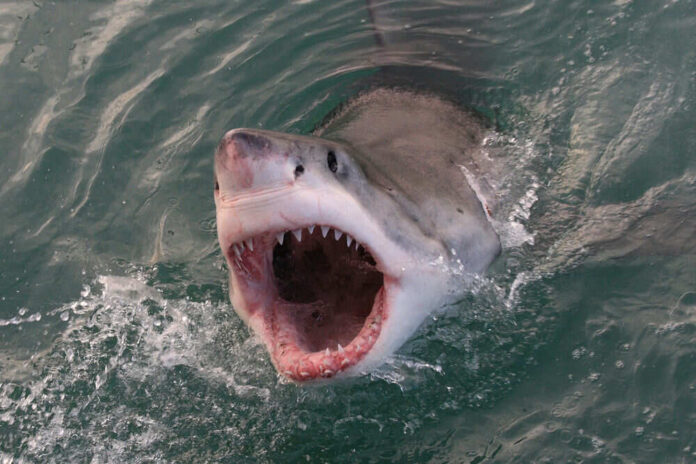
A 13-foot, 1,700-pound great white named “Contender” just pinged off North Carolina—reminding coastal families that nature doesn’t follow anyone’s agenda or talking points.
Story Snapshot
- OCEARCH detected Contender about 45 miles southeast of Cape Fear near Wilmington, North Carolina, on a Sunday night in early 2026.
- Contender is a mature male great white, measured around 13.8 feet and estimated at roughly 1,653–1,700 pounds, depending on rounding.
- Tracking relies on a dorsal fin satellite tag that only transmits when the shark surfaces during short satellite “windows,” so pings can be intermittent.
- Other tagged sharks were also pinging near Cape Fear and farther south near Charleston, showing the region is an active migration corridor.
Contender’s North Carolina Ping Puts a Familiar Migration Route Back in Focus
OCEARCH’s tracker recorded Contender—an adult male great white—roughly 45 miles southeast of Cape Fear, placing the animal off the Wilmington area.
The ping arrived after months of detections around Florida, consistent with the seasonal push of great whites between winter waters in the South and feeding grounds farther north.
The update drew attention because Contender is unusually large for a tagged male, making it a standout in public tracking data.
Record-setting great white shark spotted off North Carolina coast https://t.co/w8AOkISty4 pic.twitter.com/yijg1ME34q
— New York Post (@nypost) February 12, 2026
For coastal residents, the key detail is what the ping represents and what it does not. Offshore detection does not automatically mean a beach emergency, and the research provided does not report attacks or unusual behavior linked to this specific shark.
What it does confirm is presence: a large apex predator is moving through a corridor that North Carolina families already share with fishing, boating, and tourism—especially as the seasons change.
How OCEARCH Tracking Works—and Why the Data Isn’t Constant
Contender’s location comes from a satellite tag mounted on the dorsal fin. The tag only sends usable location data when the shark surfaces and the transmission lines up with a satellite pass.
OCEARCH’s John Tyminski has explained that “confirmed” pings can require multiple messages during a brief window—about 13 minutes—while less precise detections can show up as broader “Z-pings.”
That limitation helps explain why a shark may appear to “vanish” for days.
This matters because Americans are often fed oversimplified narratives—panic when it’s convenient for clicks, complacency when officials want the public to ignore risk.
The practical takeaway is this: tracking is a helpful transparency tool, but it is not a guarantee of a live position.
If a tag doesn’t transmit, it doesn’t prove the shark left; it only proves the system didn’t receive the data needed to plot a precise point at that time.
Multiple Sharks Near Cape Fear Show the Coast Is a Shared Space
Contender was not the only shark appearing in the tracking corridor. The research notes other tagged great whites pinging near the same stretch of ocean, including juveniles and subadults detected east and south of Cape Fear, as well as several more near Charleston.
That clustering should not be treated as a “shark invasion” storyline; it is a sign that the area functions as a recurring route that researchers have observed before with other tagged animals.
For local leaders and residents, the best response is straightforward: treat offshore recreation as responsible adults treat any serious environmental issue—stay informed, keep perspective, and don’t wait for bureaucratic permission to use common sense.
The provided reporting emphasizes education and public engagement through the OCEARCH tracker, which allows families to see migration patterns rather than relying on rumors. That kind of transparent data is often more useful than political messaging.
Why This Data Still Matters: Safety Awareness Without Alarmism
In the short term, a high-profile ping can increase public attention and may influence how communities think about beach warnings and water activity, even if tourism doesn’t take a direct hit.
In the long term, the value is scientific: multi-year tracking builds migration datasets that can inform conservation, fisheries management, and predator-prey modeling.
The research provided frames the event as a routine but notable data point—big shark, normal pattern, useful tracking.
1,700-pound great white shark named Contender spotted off North Carolina coast. https://t.co/XIZBhzkPpt
— CBS News (@CBSNews) February 12, 2026
There’s also an important civic angle: when nonprofits publish real-time data to the public, Americans don’t have to rely solely on gatekeepers.
Whether you’re a fisherman, a parent planning a beach trip, or a taxpayer skeptical of bloated institutions, open information helps people make their own decisions.
Based on the sources provided, the Contender ping is less a crisis and more a reminder—nature is real, data can educate, and responsible communities stay alert without being manipulated.
Sources:
OCEARCH shark Contender North Carolina Cape Fear