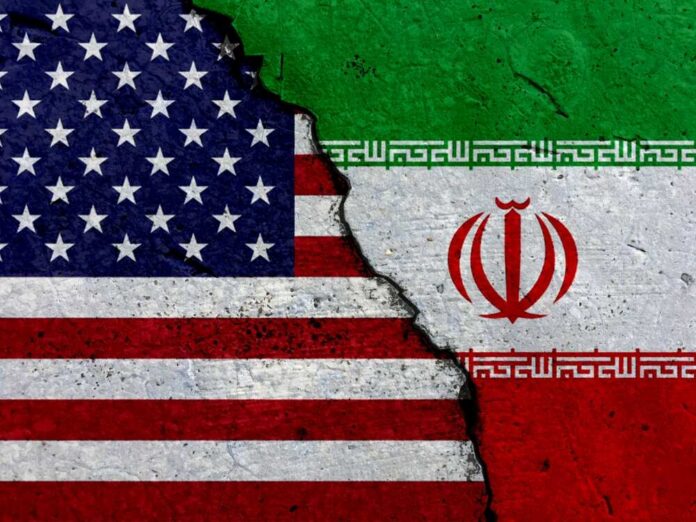
Iran fired a wave of ballistic missiles at American forces and their neighbors, and every single one missed or got shot down.
Quick Take
- United States Central Command (CENTCOM) says it intercepted an Iranian missile barrage aimed at American forces and regional allies, with no U.S. personnel harmed.
- American and Saudi forces struck Iran-backed militia sites in Iraq that CENTCOM says were used for more than 30 drone attacks in recent days.
- The strikes broke a short pause in fighting between the United States, Israel, and Iran.
- Jordan also reported intercepting missiles launched from Iran, showing the barrage hit a wide area.
- Iran has framed its attacks as retaliation, but no independent evidence yet confirms or denies the militia sites’ recent activity.
A Barrage Meets a Wall of Interceptors
The attack came in the middle of the night. Iran launched ballistic missiles toward American forces and neighboring countries, betting on surprise. Instead, CENTCOM says U.S. air defenses knocked down every missile aimed at American troops in Kuwait, with no injuries reported. Jordan separately confirmed intercepting five missiles fired from Iran, showing the strike spread far beyond one country.
The U.S. military says it successfully intercepted an Iranian missile barrage and worked with Saudi Arabia’s forces to strike sites in Iraq that Tehran-backed militias have used to launch attacks in recent days. U.S. Central Command in a statement Tuesd… https://t.co/IwQuhPd2Yi
— KSTP (@KSTP) July 29, 2026
Reports describe the assault as an attempted surprise attack that Washington says failed on nearly every front. Some missiles reportedly targeted Kuwait and Bahrain as well, with U.S. forces shooting down both missiles and drones in that exchange. The pattern matches years of similar Iranian barrages that promised massive damage but delivered mostly intercepted hardware.
Striking Back Inside Iraq
Hours after the missiles fell, American and Saudi forces hit back. They struck sites in Iraq that CENTCOM says Iran-backed militias have used repeatedly to launch attacks on U.S. positions. The command tied the strikes to more than 30 drone attacks it blames on Iran’s Revolutionary Guard in recent days, describing the targets as logistics and weapons sites tied directly to that campaign.
This was not a lone U.S. operation. Saudi Arabia joined the strikes, a notable shift showing a Gulf Arab power willing to act openly alongside American forces against Iranian-backed militias. That kind of joint action sends a clear signal to Tehran: its regional proxies no longer get a free pass from neighbors tired of being caught in the crossfire.
Why the Pause in Fighting Collapsed
Before this barrage, fighting between the United States, Israel, and Iran had briefly slowed. That quiet ended fast once Iran launched its missiles, and Washington framed the strikes in Iraq as a direct response to the broken calm.
President Trump has previously announced that “major combat operations” were underway against Iran during earlier flare-ups, and this episode fits that same pattern of strikes followed by retaliation followed by counterstrikes.
Iran has publicly cast its missile and drone campaigns as retaliation for prior American and Israeli actions, naming specific bases it says it targeted. That is Iran’s account, and it deserves mention.
But the available record does not include independent proof that the Iraqi sites the United States and Saudi Arabia hit were anything other than what CENTCOM described: active staging grounds for attacks on American troops.
A Familiar Test of Air Defense Systems
This is not the first time American systems have been asked to shoot down Iranian missiles in real time. U.S. destroyers and fighter jets have intercepted Iranian barrages aimed at Israel and Gulf allies multiple times over the past two years, sometimes downing over a hundred missiles and drones in a single night.
Each round raises the same question defense analysts keep asking: how long can American interceptor stockpiles keep pace with repeated large-scale launches.
So far, the interceptors have held. No American deaths have been reported in any of these barrages, and CENTCOM’s public statements consistently describe damage as minimal when it happens at all. That track record matters. It shows a costly but functioning deterrent, and it explains why Iran keeps testing it instead of walking away from these exchanges entirely.
What Comes Next for the Region
The bigger picture here is a cycle that keeps repeating: Iran or its proxies strike, American and allied defenses intercept most or all of it, and the United States responds with strikes on militia infrastructure.
Each round raises the odds of a miscalculation that finally breaks through. With Saudi Arabia now stepping into direct joint action, the coalition against Iranian-backed militias in Iraq looks more organized than it has in years.
Sources:
apnews.com, theguardian.com, goodmorningamerica.com, ctvnews.ca, wsj.com, x.com, defenseone.com