

Six people standing in a Humboldt Park street party suddenly became bullet victims in under a minute, and the way that story was framed tells you as much about modern crime politics as it does about the gunfire itself.
Story Snapshot
- Six adults were shot at a late-night Humboldt Park gathering, two left in critical condition.
- Reporters built the first public narrative almost entirely from Chicago Police Department statements.
- The “mass shooting” label landed before motives, suspects, or hard forensic facts were known.
- This case shows how urban violence, media framing, and public trust collide in real time.
What Happened On North Central Park Avenue
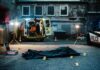
Chicago police say gunfire hit a crowd gathered near the 900 block of North Central Park Avenue just after two in the morning on a Sunday. The people were outside at what was described as a large gathering or party when an unknown shooter opened fire into the group.
Six adults were struck. Two men, ages thirty-five and thirty-six, were shot multiple times and rushed to separate hospitals in critical condition. Four other victims, men and women ages thirty-three to forty-six, were reported in good condition after treatment.
Reporters for local television and print outlets converged on the same core facts. NBC Chicago, the Chicago Tribune, and CBS Chicago all described the event as a mass shooting, cited the same victim count, and put the time in the early morning window.
One national outlet quoting a Chicago Police Department statement went further, calling it a drive-by shooting based on the initial police account. By sunrise, the basic story was locked in: a surprise burst of gunfire, six wounded, no arrest, investigation ongoing.
How The Mass Shooting Label Took Over The Story
The word “mass” carries weight, and editors know it grabs attention. In crime coverage, the informal journalistic rule is simple: four or more people hit by gunfire in one incident often earns the “mass shooting” tag. That standard is not a legal term in Illinois law, and police paperwork does not have a magic checkbox for it.
Here, newsrooms applied the tag fast, almost by reflex, once they heard six wounded and two critical. It framed public reaction long before deeper details emerged.
This early framing matters to anyone who values common sense and clear language. When every multi-victim incident becomes a “mass shooting,” the term starts to blur. Voters trying to sort out school attacks, gang shootouts, and party chaos get the same headline for very different events.
That flattening helps national activists pushing broad gun-control talking points, but it can bury local facts that matter for real solutions: who did the shooting, why this block, what kind of weapon, and what police or neighbors saw beforehand.
Police Sources, Missing Facts, And Trust Problems
Almost everything the public knows about this Humboldt Park shooting comes from Chicago Police Department statements filtered through local newsrooms. Reporters did not yet have incident reports, radio logs, body camera footage, or shell casing counts. Hospitals had not publicly named victims.
There was no suspect description beyond “unidentified offender,” no motive, and no answer on whether this was gang-linked, personal beef, or random spray fire. Yet the emotional frame—mass shooting, overnight chaos—was already cemented.
Six people were shot and injured, two critically, during a drive-by mass shooting early Sunday morning in Chicago’s Humboldt Park neighborhood.
The attack occurred around 2 a.m. in the 900 block of North Central Park Avenue. According to the Chicago Police Department, an… pic.twitter.com/2dXuwQ4P2B
— Matt Robinson (@mattrobinson) July 26, 2026
For many older Chicagoans who remember the Humboldt Park riot and decades of uneasy relations with police, this pattern feels familiar. Officials control the early story. Media echo the talking points.
Then the details either trickle out weeks later or never come at all. That does not mean police are lying here; the core facts of six wounded and two critical are well supported by multiple outlets and hospital updates. It does mean citizens are asked to trust a narrative built on very thin, early evidence.
Violence Fatigue And Why This Case Still Matters
This shooting did not happen in a vacuum. In the weeks around it, Humboldt Park saw other attacks: a man killed and another wounded on Washtenaw Avenue, and three people shot during an argument on West Division Street. Citywide, Chicago ran through its usual weekend tally of killings and injuries.
For many residents, each new alert blends into background noise. Six more wounded feel like one more drop in an ocean of bad news, not a call to dig into causes and accountability.
That is exactly why cases like this deserve sharper attention. When six adults can be hit at a party on a major avenue, with no suspect named, no clear motive, and no wider outrage, something deeper is off in the civic culture.
American instincts point to basic questions: Where was meaningful street policing before the crowd and gun showed up? What is the track record of prosecution in similar neighborhood cases? Are leaders focusing more on national gun debates than on local repeat shooters and broken families driving the violence?
What Careful Citizens Should Watch For Next
The smart move for engaged citizens is not to chase speculation, but to demand hard records. The Chicago Police Department incident report and detective summary can show whether witnesses described a car drive-by or someone on foot.
Dispatch logs and 911 audio can fix the real minute-by-minute timeline and reveal how fast officers responded. Hospital updates and court filings, if any suspect is caught, can confirm injury details and link this shooting to any gang or prior dispute.
In the meantime, one truth stands firm: six people went to Chicago hospitals because someone decided to fire into a crowd, and that is not a “statistics” problem, it is a human and moral one. Labeling it a mass shooting draws eyeballs for a day.
Facing the hard questions about family breakdown, street culture, policing priorities, and prosecutorial follow-through is how neighborhoods like Humboldt Park either stay stuck in the cycle—or finally start to break it.
Sources:
nbcchicago.com, chicagotribune.com, chicago.suntimes.com, cbsnews.com, abcnews.com, youtube.com, abc7chicago.com