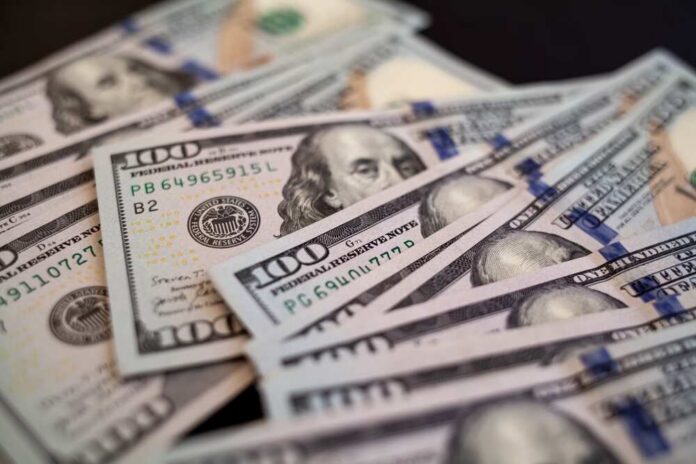
Bitcoin tore back to $85,000, its highest since January, and the market now has to decide if “winter” just cracked.
Story Snapshot
- Bitcoin hit $85,000 after a fast, flow-driven surge, reviving the bull vs. bear debate.
- Short sellers were squeezed as billions in bearish bets were forced out, fueling gains.
- Spot exchange-traded funds drew fresh cash, adding steady demand behind the rally.
- Skeptics say gains are narrow, with many smaller coins still lagging far behind.
Price cleared $85,000 as shorts were forced to buy
Bitcoin crossed $85,000 after months of chop, a level last seen in January, and did it fast enough to raise eyebrows. Market data showed the move fed on itself. Traders who bet against the price had to buy back in a rush as positions got liquidated.
That is a short squeeze. It does not prove a new cycle by itself, but it explains the speed. CNBC called out the magnitude: Bitcoin jumped more than 20% in a week, its best since 2023.
Bitcoin hits highest level since January at $85,000, as the market debates whether the 'crypto winter' is over https://t.co/zzfryIUUQw
— CNBC (@CNBC) September 21, 2026
The key question is what came first: real demand or forced buying. The answer here looks like both. The squeeze lit the fuse. Fresh cash kept the fire going.
That mix is what turns a quick pop into a meaningful advance. It also creates risk. Forced buyers do not repeat after the pain stops. Real buyers must step in to carry the next leg. That is why the next two weeks matter more than the last two days.
Spot ETFs added fuel and a floor
U.S. spot Bitcoin exchange-traded funds pulled in new money around the breakout, giving bulls a clear cash ledger to point to. These funds let regular investors and institutions buy Bitcoin exposure inside normal brokerage accounts.
When shares are created, the fund’s partners buy Bitcoin in the market. That is a direct demand engine. Reports cited hundreds of millions of dollars of net inflows over short windows, and a steady drumbeat across the week. That does not settle the “winter” debate. It does build a base.
Price without flow is hype. Flow without price is a waiting room. Both together change behavior. Rising prices draw headlines. Headlines draw fence-sitters. Exchange-traded fund inflows repeat on a schedule.
That turns choppy interest into habit. It also fits how savers act: prefer regulated wrappers, clear custody, daily liquidity, and no wallet drama. If this channel keeps pulling cash, pullbacks should find support faster than in past cycles.
Macro relief gave risk assets a tailwind
Falling U.S. Treasury yields and a softer dollar eased pressure across risk markets at the same time Bitcoin jumped. Lower yields reduce the drag on assets that promise growth later. A weaker dollar often lifts commodities and foreign assets.
Crypto trades like high beta tech during these stretches. When funding costs drop and liquidity hopes rise, traders take more risk. That set the table. The squeeze and exchange-traded fund demand served the meal. If yields back up again, appetites can cool just as fast.
Dispatch: BITCOIN HITS $85K, HIGHEST SINCE JANUARY; CRYPTO WINTER DEBATE INTENSIFIES
— VoltDispatch (@VoltDispatch) September 21, 2026
Seasoned investors do not take one good week as fate. They track whether the next dip is shallow on rising volume. They watch if strength broadens beyond the leader.
Those tells show if this is a base for a new advance or just a hot bounce in a cold room. If macro stays friendly, exchange-traded fund flows continue, and dips get bought, odds favor the former. If any of those three stumble, the path narrows.
Is the crypto winter over or just less cold?
Bitwise executive Matt Hougan framed 2025 and much of 2026 as a “full-blown” winter, but he also argued the end is near as institutions keep buying and retail sits out. That view aligns with the pattern: Bitcoin holds up, while many altcoins lag.
CNBC’s fresh print at $85,000 sharpened that split-screen and stoked claims that the worst has passed. Fidelity pushed back earlier this year, saying the market remained in a bear phase and that no one can time the turn with certainty. Both sides can be right in the short term.
Here is the common-sense read. Price led by short squeezes can fade. Price supported by repeatable cash usually sticks. The last leg up had both. But a full thaw needs breadth.
If only Bitcoin rallies while smaller coins, venture tokens, and crypto stocks stay weak, the “winter is over” banner will feel premature. For long-term savers, that is fine. You buy leaders and ignore fads. For traders, narrow breadth is a caution flag, not a green light.
What to watch next to separate heat from light
First, track exchange-traded fund creations across multiple sessions, not one splashy day. Second, watch derivatives funding and open interest to see if leverage creeps back to froth. Third, look for higher lows during pullbacks near prior supply zones, especially $81,000 to $86,000.
Fourth, check breadth: do large caps beyond Bitcoin start to base and break, or do they bleed while Bitcoin grinds? If three of those four improve, the winter label will not last much longer.
Sources:
invezz.com, fxstreet.com, tradingview.com, theblock.co, crypto.news