
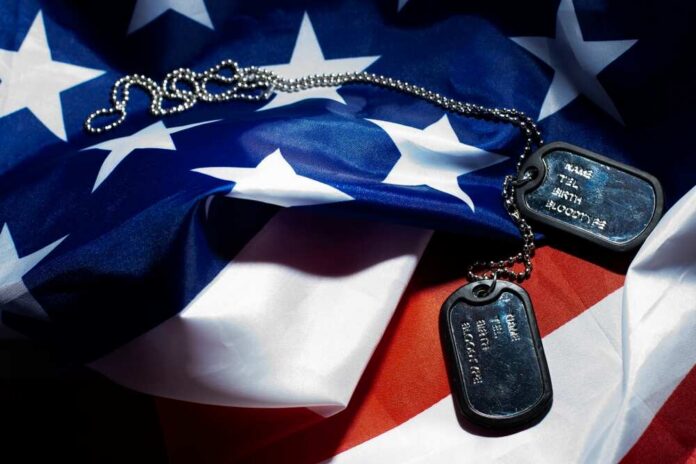
Iran’s Islamic Revolutionary Guard Corps killed two U.S. service members in Jordan on July 17, 2026, and the U.S. military hit back the same night — marking the deadliest day for American troops in the Middle East since March and pushing an already dangerous conflict into a new phase.
Story Snapshot
- Two U.S. troops were killed and one remains missing after Iranian ballistic missiles and drones struck a U.S. base in Jordan on July 17, 2026.
- The Islamic Revolutionary Guard Corps claimed the attack, calling it retaliation for prior U.S. strikes on Iranian targets.
- U.S. Central Command responded the same night, directly targeting the Islamic Revolutionary Guard Corps units behind the deadly strike.
- The U.S. retaliation marked the eighth straight night of American strikes against Iranian military targets.
Iran Hits a U.S. Base in Jordan, Kills Two American Troops
On the evening of July 17, 2026, Iran’s Islamic Revolutionary Guard Corps (IRGC) fired ballistic missiles and drones at the Al-Azraq Air Base in Jordan. Two U.S. service members were killed. A third went missing. U.S. Central Command (CENTCOM) confirmed the attack and the casualties the following day.
The IRGC publicly claimed the strike, saying it targeted fighter jet shelters and a large aircraft parking area, and boasted that it destroyed at least two U.S. fighter jets.
The U.S. conducted a new round of airstrikes early Monday targeting Iran after announcing the death of another American service member, hitting around a northwestern city believed to be home to underground missile bases. https://t.co/7MSQmyv3Da
— NBC10 Boston (@NBC10Boston) July 20, 2026
This was not an isolated incident. It was the deadliest day for U.S. forces in the Middle East since March 2026. The attack came during a wider Iranian campaign that, by one count, had already sent more than 500 ballistic missiles and 2,000 drones at U.S. and allied targets since late February.
The IRGC framed the Jordan strike as part of what it called “Operation Lightning,” a multi-stage retaliation for U.S. military action against Iranian territory.
The U.S. Strikes Back on the Eighth Consecutive Night
CENTCOM did not wait long to respond. On the night of July 18, U.S. forces launched another large wave of strikes against Iranian military targets. CENTCOM said its forces “successfully hit Iranian military coastal surveillance and air defense facilities, maritime capabilities, and missile and drone storage sites.”
The statement added that American assets “targeted Islamic Revolutionary Guard Corps forces that launched attacks against U.S. service members in Jordan on July 17.” The goal, CENTCOM said, was to “swiftly punish” the IRGC units directly responsible.
This was the eighth straight night of U.S. strikes against Iran. Earlier in the same week, the U.S. military had hit roughly 140 Iranian military targets in a single night in response to an IRGC attack on a commercial ship in the Strait of Hormuz.
The pace and scale of these strikes signal that the U.S. is not treating this as a one-off exchange. It is a sustained military campaign, and American commanders are making clear they intend to punish Iran for every American death.
Why the IRGC Struck Jordan Directly — and What That Means
The IRGC’s decision to strike a U.S. base in Jordan directly, rather than through a proxy group, is a meaningful shift. For years, Iran used proxy militias in Iraq, Syria, and Lebanon to attack U.S. forces while keeping its own fingerprints off the attacks. That playbook gave Tehran plausible deniability.
Now the IRGC is signing its name to the strikes. Between October 2023 and February 2024, there were 190 attacks on U.S. bases in Syria and Iraq, most claimed by Iran-backed proxy groups. What is happening now is different in kind, not just scale.
The IRGC’s public claims of responsibility serve a domestic purpose inside Iran. They signal strength to an Iranian population that has watched U.S. and Israeli strikes pound Iranian infrastructure for months. But that same boldness raises the risk of miscalculation.
When a nation’s elite military force openly kills U.S. troops and brags about it, the pressure on Washington to respond with overwhelming force grows fast. The U.S. response on July 18 was sharp and direct. Whether it is enough to deter the next strike is the question that matters most right now.
A Conflict That Keeps Escalating with No Clear Exit
The broader context here is sobering. The U.S. and Iran have been trading strikes for weeks. An interim deal to end the fighting was reportedly in progress when the Jordan attack happened. The IRGC’s missile strike on a base that houses U.S. personnel, killing two Americans, effectively blew up any near-term diplomatic off-ramp.
The U.S. cannot accept the killing of its troops without a hard response. Iran cannot back down without looking weak at home. That is the definition of a dangerous escalation spiral, and both sides are deep inside it.
The U.S. military’s stated goal is to degrade Iran’s ability to threaten commercial shipping in the Strait of Hormuz and to punish the IRGC for killing American troops.
Those are legitimate military objectives. But eight straight nights of strikes have not stopped Iran from launching new attacks. At some point, the question shifts from whether the U.S. should respond to whether the current strategy is actually working — and what comes next if it is not.
Sources:
apnews.com, usatoday.com, irishtimes.com, en.mehrnews.com, washingtonexaminer.com, caliber.az, english.news.cn, youtube.com, timesofisrael.com, reuters.com, axios.com, facebook.com, cbsnews.com, middleeasteye.net, cnn.com, en.wikipedia.org, wane.com, eagleintelreports.com, dawn.com, timesofindia.indiatimes.com, en.webangah.ir, iz.ru, theweek.in, instagram.com, state.gov, criticalthreats.org, cptik.org, omranstudies.org, csis.org, mwi.westpoint.edu, hstoday.us, securityscorecard.com, engelsbergideas.com, understandingwar.org