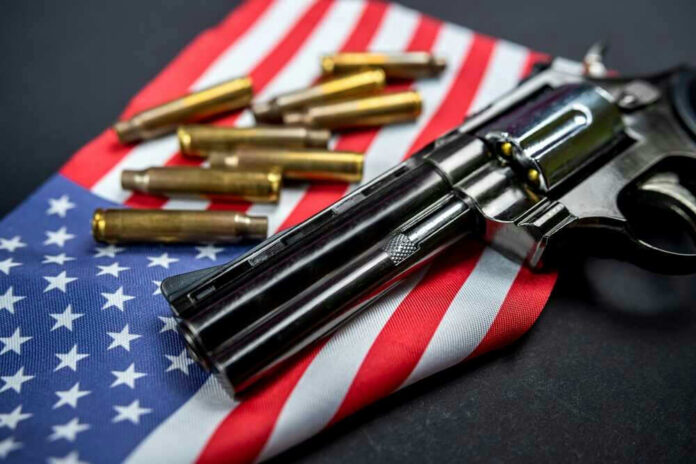
A Texas federal judge just pulled the plug on a 90-year-old gun law by yanking out its last legal power source.
Story Snapshot
- A Texas judge ruled key National Firearms Act rules on suppressors and some short-barreled guns can’t be enforced after Congress zeroed out the tax that once justified them.
- The decision turns on Congress’s taxing power, not a broad Second Amendment ruling.
- The order shields the plaintiffs and could ripple across other cases and states aligned with the challenge.
- Expect an appeal and fast moves from the Department of Justice and the Bureau of Alcohol, Tobacco, Firearms and Explosives.
The Ruling That Targeted the Law’s Power Cord
United States District Judge James Wesley Hendrix ruled that federal rules requiring registration and approvals for suppressors and certain short-barreled firearms cannot be enforced because Congress removed the tax that once justified them. He wrote that the provisions “can no longer be justified” under Congress’s taxing power after the levy dropped to zero.
This is a constitutional holding about enumerated powers, not a sweeping Second Amendment reset. The Associated Press reported the order and its link to last year’s tax change signed by President Trump.
Coverage explained that the court struck at the National Firearms Act provisions as applied to items tied to the now-eliminated tax, including suppressors, short-barreled rifles, and short-barreled shotguns. The judge did not erase the entire statute.
He focused the remedy where the tax hook once did the work. That makes the opinion both narrower and more durable on appeal. It says, in effect, if Congress uses a taxing power to regulate, it must keep a tax that actually taxes.
Texas judge rules that law regulating firearm suppressors and some guns can’t be enforced https://t.co/5Rije7aNh8
— O.C. Register (@ocregister) August 5, 2026
Why Tax Power Matters More Than Slogans
Congress long defended the National Firearms Act as a tax-and-registration scheme. When lawmakers reduced the tax to zero, they cut their own anchor line. The judge reasoned that you cannot call something a tax when it raises no revenue and exists only to police behavior.
That crosses the border from taxation to regulation, which must stand on a different, valid power. The court’s logic appeals to the Constitution’s structure, not novel theory.
Gun control advocates often say “longstanding laws get deference.” Longevity helps, but not if the legal footing erodes. A chair that stood for 90 years can still fall when you remove a leg. The court kept the analysis tight. It did not spill into culture-war claims.
Who Is Affected and What Comes Next
The order protects the named plaintiffs. It also signals to other courts that similar claims deserve careful review. A separate report noted that a coalition of states backed this challenge model, which increases the odds of parallel rulings and coordinated appeals across circuits.
The Department of Justice will likely seek a stay to pause the effect as it appeals. Dealers and owners should not assume nationwide relief until higher courts speak or agencies issue guidance.
States like Texas have already tested related ground with “made-in-state” suppressor laws, but those fights rose and fell on different issues, like standing and interstate commerce claims. Those earlier cases do not blunt this decision’s core tax-power logic.
That is why this ruling has more bite than past skirmishes. It ties the remedy to Congress’s own change and boxes in the government’s best defense without inviting a broad statutory rewrite.
The Conservative Lens: Limited Government, Clear Lines
The holding lines up with principles. If Washington uses a tax to justify recordkeeping and approvals, it must leave the tax in place and raise revenue. If it wants to regulate without a tax, it must point to a valid power and write a law that fits it.
That protects clarity and prevents agencies from stretching aging statutes to new purposes. Courts exist to say “enough” when the branches drift beyond their charter. This ruling did that with focus and restraint.
Practical Guidance While the Appeals Fly
Gun owners should not rush to ignore federal forms or rules. The decision’s scope is real but not universal yet. The Bureau of Alcohol, Tobacco, Firearms and Explosives can still enforce laws outside the ruling’s bounds, and the government may secure a temporary stay.
Retailers should keep current procedures unless and until formal guidance or appellate rulings expand relief. Watch the docket and agency updates. Caution now avoids legal trouble later, even as this win reshapes the legal map.
Sources:
apnews.com, usnews.com, youtube.com, thetexan.news