

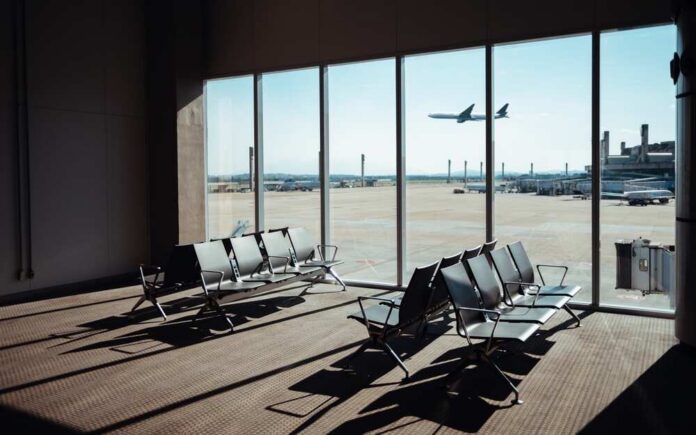
United Airlines planes sat stuck at gates Monday afternoon after a technology failure stopped the airline from sending flights out across the country.
Quick Take
- United confirmed a “widespread system outage” on November 16, 2026, hitting departing flights nationwide.
- The airline said flights already in the air and United Express flights were not affected.
- The outage came just three days after a rare Federal Aviation Administration (FAA) nationwide ground stop.
- United apologized to passengers and worked to restore service, though it never named the broken system or cause.
What United Told The Public As Planes Sat Grounded
United posted on social media platform X that it was “aware of the widespread system outage” and that teams were “working hard to get things back up and running as soon as possible”. The airline followed up by saying it was “troubleshooting a technology issue affecting departing flights,” language that multiple outlets independently confirmed matched the airline’s own account of events.
BREAKING: United Airlines is experiencing an outage preventing flights from departing, marking yet another major airline disruption.
Passengers are reporting delays, with at least one plane returning to the gate because crews couldn’t access critical performance data.
At LAX,… pic.twitter.com/Ql1JFLiVnr
— Fox News (@FoxNews) November 16, 2026
The Associated Press reported United confirmed it was having a “systemwide outage” that afternoon, a description the airline itself used rather than one assigned by reporters. That distinction matters. When a company volunteers blunt language like “widespread” or “systemwide” about its own breakdown, it’s not spin — it’s an admission serious enough to get ahead of the story before angry passengers did it for them.
What Kept Flying And What Didn’t
United drew a clear line around the damage. The company said “there is no impact on flights in progress, or on United Express flights,” meaning planes already airborne kept their flight plans and regional partner carriers kept operating normally. That’s an important boundary for travelers trying to figure out if their trip was at risk.
Flights not yet off the ground were the ones stuck. Coverage described United aircraft unable to take off while the airline worked through the problem, with departure boards backing up at hubs across the country. The outage didn’t ground the whole airline — it jammed the front door while planes already past it kept moving.
A Gap In The Story Nobody Has Filled In Yet
Reporters pressed for specifics, and United didn’t hand them over. It was “not immediately clear what parts of the airline’s systems were affected,” according to wire reporting from the day of the outage. No agency or company statement cited in coverage named the failed application, server, or vendor behind the breakdown.
United also gave no public timeline for how long the fix would take or how many flights, passengers, or departures got caught up in it. The company’s own statement promised restoration “as soon as possible” but stopped there, leaving the scale of the mess undefined even as it worked to resolve it.
Timing That Raised Eyebrows Nationwide
The outage landed just three days after the FAA ordered a rare nationwide ground stop tied to equipment failure in the agency’s network, an event that had already snarled flights across the country over the weekend. Two major aviation disruptions inside one week is the kind of coincidence that gets attention whether or not the systems were connected.
Reporting on the United outage did not establish a technical link between the two events. One network account described the incidents as separate but noted they weren’t confirmed to be related either. Back-to-back failures like this are a fair reason for the flying public to ask harder questions about how much of the system runs on aging, overstretched technology — a legitimate concern regardless of whether Monday’s glitch and Friday’s ground stop share a root cause.
Why This Keeps Happening To An Industry Built On Precision
Modern air travel runs on software stacked on software — check-in, dispatch, crew scheduling, weight calculations for departing aircraft, all linked together. When one layer breaks, it can freeze new departures even while planes already in motion keep flying safely under existing flight plans, which is exactly the pattern United described this time.
That asymmetry explains why “widespread” doesn’t mean “every plane everywhere.” It means the part of the system that clears flights for takeoff got stuck, while flights already cleared kept going. For passengers waiting at the gate, that distinction offers little comfort — but it does explain why the airline could call the outage serious without grounding its entire fleet.
United apologized to customers and asked them to check back for updates as crews worked the problem. The airline later said the issue was resolved, closing out a rough stretch for an industry that had barely finished digging out from the prior week’s ground stop before facing its next test of nerves.
Just days after a nationwide ground stop threw travelers, airlines and airports into chaos, United Airlines suffered an hour-long outage Monday, triggering a new wave of concern. The airline said it was not a cyberattack.
Still, as the Thanksgiving travel rush gets underway, the… pic.twitter.com/hKeWvk9rb8
— CBS Mornings (@CBSMornings) November 17, 2026
No cause, vendor, or technical breakdown has been publicly named for Monday’s outage. What’s clear is that United treated it as serious enough to flag immediately, apologize for, and work around the clock to fix.
Sources:
insiderpaper.com, ms.now, dispatch.com, cbsnews.com, nbcmiami.com