
DHS Secretary Markwayne Mullin says Iran pushes daily threats against President Trump and his family, and he is racing to close drone-defense gaps before one slips through.
Story Snapshot
- Mullin says daily intelligence flags Iranian threats during presidential briefings.
- He names President Trump and his family as Iran’s top targets.
- DHS is building a counter-drone push, but holes remain in stopping hostile drones.
- Iran’s plotting history against U.S. officials frames the risk as real, not abstract.
Mullin’s Warning Names Targets And A Tactic
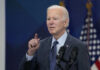
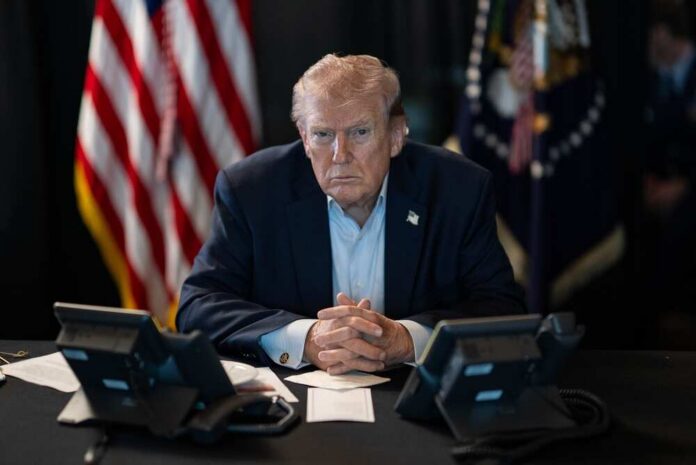
Homeland Security Secretary Markwayne Mullin said on national television that daily presidential briefings include Iranian “aspirational threats.” He stated that President Trump and his family are “target number one.” He tied those threats to worry over explosive drones and said his department had tracked the danger before it surfaced in public reports. He added that officials monitor the threats constantly and treat them as a standing risk to the president and those near him.
🚨 BREAKING: DHS Secretary Markwayne Mullin warns Iran is targeting President Trump and his FAMILY!
“Every single day” officials receive intelligence on Iranian threats.
Trump is reportedly TARGET NUMBER ONE.
These threats MUST be taken seriously.
PRAY FOR 47 AND HIS FAMILY!…
— Ryan Fournier (@RyanAFournier) November 15, 2026
Mullin did not confirm a specific alleged plot in the broadcast. He focused instead on a persistent flow of threat information, some of it chatter, and a clear priority list of targets. He framed the issue as two tracks that meet: intent from a hostile state and a cheap, hard-to-stop weapon that can be bought, built, or modified. He said his team takes no day off because the threat stream does not take a day off.
Counter-Drone Gaps He Wants Closed Fast
Mullin called countering unmanned aircraft his top issue and admitted there are holes in the ability to bring down real threats. He said those gaps show up not just around the president, but also at everyday events across the country. He listed high school football games, parades, and pro sports as soft targets where a small drone could cause harm if defenses fail or lack legal authority to act fast. He said DHS stood up a dedicated counter-drone effort to close those holes.
Federal watchdog and research records show why this is hard. Only certain federal agencies have special legal authority to detect and defeat drones, and that authority has limits set by law. State and local responders who secure most public events lack those tools today. Congress and agencies have been working to refine these powers since 2018, but coverage still varies by site, mission, and equipment in the field.
Why Iran’s Intent Matters For Today’s Risk
Iran’s leadership has a record of plotting against U.S. officials after the 2020 strike that killed Qassem Soleimani. The Department of Justice charged an Islamic Revolutionary Guard Corps member in 2022 for a plan to kill former National Security Advisor John Bolton, allegedly offering $300,000. Prosecutors tied the plan to revenge. That case, and related government briefings, place Iran’s intent on paper and in court filings, not just in television talk.
Recent reporting about air defenses stopping Iran-linked action overseas adds weight to the drone concern. Iranian forces and proxies have tested American and partner defenses in the region, and they study what works. A cheap quadcopter with a shaped charge is not science fiction. It is a battlefield tool. When a hostile state has motive, a history of plots, and access to evolving drone tech, homeland defenders must assume the next test could happen here.
Protection Doctrine Meets Everyday America
Secret Service methods around a president aim to stack layers: intelligence, distance, barriers, detection, and defeat. Drones strain each layer. They are quiet, small, and easy to mask as hobby gear. Mullin’s point about a Friday night stadium is a wake-up call. Security cannot live only inside a presidential bubble. The country needs rules, sensors, trained teams, and clear authority where crowds gather, or one missed quadcopter can change lives in seconds.
Conservative common sense favors action over theater: set clear lines, fund the tools, punish state sponsors, and empower the locals who will be first on scene. The record on Iran’s plots supports a hard line because deterrence needs teeth, not press releases. Mullin’s message fits that view. If Iran names our president and his family as prime targets, the right response is not panic. It is speed, unity, and a defense that works on a bad day, not just on a whiteboard.
Sources:
foxnews.com, iranintl.com, meridian.news, semasocial.com, newsprisma.com