

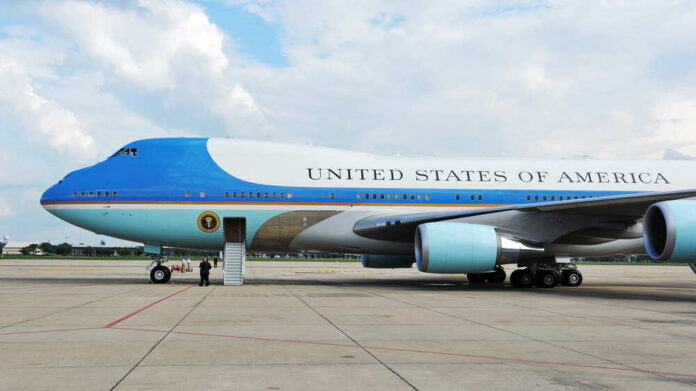
A presidential jet thundered low over Washington twice, and a Senate aviation watchdog now wants the paper trail.
Story Snapshot
- Flight-tracking showed passes as low as about 400 feet over central Washington.
- Federal Aviation Administration (FAA) rules set strict limits near monuments, with narrow exceptions.
- Ronald Reagan Washington National Airport paused operations; hundreds of flights faced delays, reports said.
- Senator Tammy Duckworth demanded records on approvals, notice, and safety coordination.
What Flew, How Low, and Why It Matters
Flight data reported by aviation outlets and major media placed the presidential aircraft between roughly 400 and 1,000 feet on two passes that traced the White House and the Washington Monument area. That range sits near, and at points below, typical minimums cited for flights over monuments, unless a specific authorization covers the operation. In the National Capital Region, airspace sits under special rules that demand advance clearance and tight control over who enters, how high they fly, and when.
https://x.com/MarioNawfal/status/2115944431740227928
The Federal Aviation Administration said the operation was coordinated with the agency, and controllers briefly halted traffic at Ronald Reagan Washington National Airport to make room for it. That pause matched normal handling for presidential movements, which get priority and can trigger ground stops by design to reduce conflict and workload for controllers. The question now is less about whether the FAA was in the loop and more about how it documented the plan, altitude windows, and timing.
Duckworth’s Oversight Push Focuses on Process
Senator Tammy Duckworth, who leads the Senate’s aviation subcommittee for her party, asked for a full accounting of approvals, safety assessments, and notice steps used for the October 29 flyover. Her letter pressed the FAA on whether it raised any objections, what waiver or exception applied, and how airline and passenger impacts were weighed. That frame avoids drama and targets the chain of command: who cleared what, when, under which rule, and with what safeguards for people on the ground and in the air.
Reports also noted that residents got short notice, around 15 to 20 minutes, and that startled calls to emergency services followed as the jet roared across the Mall corridor. One outlet pointed to a military public alert at 5:23 p.m., which, if accurate, shows there was at least some formal notice, though how far and fast it spread is a fair question for oversight. Clear, timely alerts build trust; vague, late alerts fray it, especially in a city that lives under tight security rules.
The Rules in Washington’s Skies
Washington’s Special Flight Rules Area covers a 30-mile ring with strict entry, equipment, and training demands for pilots and operators. On top of that, Temporary Flight Restrictions protect presidential movements under federal law, and they can change runway use and pause traffic to preserve security and safety. These tools exist to reduce risk. They assume close planning among the Secret Service, the Department of Defense, the FAA, and airport teams, with records to show how each step kept order.
News reports cited a general minimum of 1,000 feet above monuments and described the flyover as lower than that threshold at times. The FAA’s acknowledgment of coordination does not itself answer whether a waiver allowed that profile or whether the jet stayed within a special corridor. That is the heart of Duckworth’s ask: show the documents that link the plan to the rules, the rules to the risks, and the risks to the protections actually used.
Airport Impact and The Public’s View
The Hill reported more than 200 delays tied to the event, as Reagan National adjusted to the flyover window. Presidential traffic often creates these ripples, and the FAA’s manuals plan for it, but scale and timing still matter to passengers and crews. The White House said the FAA followed all needed protocols and cast the flight as a joyful Halloween moment for families. Commuters stuck on ramps and parents fielding panicked texts may remember it differently. Both can be true; good governance should square them.
What Accountability Looks Like Now
Three items will settle this cleanly. First, release the approval chain: requests, waivers, and any air traffic directives for October 29. Second, publish the altitude and route record that controlled the mission, not just public trackers. Third, show the notice timeline: who was warned, how, and when. These are standard products in Washington’s airspace system, not exotic asks. If the paperwork is tight, the public sees a fun flyover done by the book. If it is thin, fix the gaps before the next one.
Sources:
thehill.com, people.com, avweb.com, newsobserver.com, sacbee.com, hawaiitribune-herald.com, faa.gov