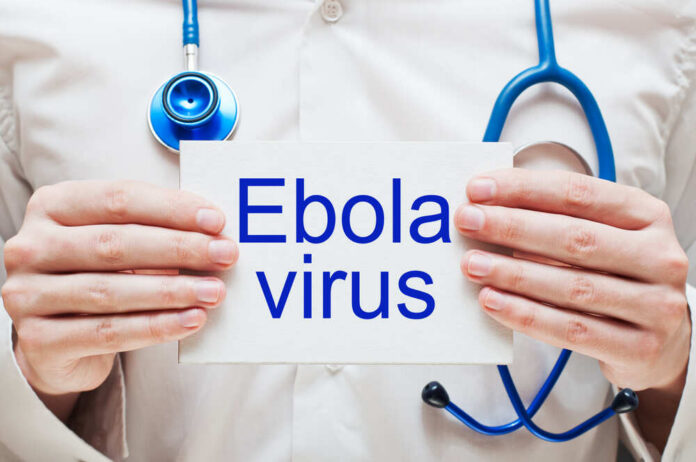
An American surgeon serving in a remote Congolese hospital became the face of a deadly Ebola outbreak overnight, and the way his story is being told says as much about Western health security as it does about a virus in the African bush.
Story Snapshot
- A U.S. medical missionary, Dr. Peter Stafford, tested positive for a rare Ebola strain after treating patients in eastern Congo.
- Mission leaders and public-health agencies coordinated a rapid evacuation to Germany, while his family and colleagues entered high-risk monitoring.
- Media and officials insist the risk to Americans is low, even as case and death counts rise in Central Africa.
- The documentation gaps and messaging spin reveal how crisis narratives are shaped long before the paperwork catches up.
An American Doctor, A Remote Hospital, And A Deadly Virus
Serge, an international Christian missions organization, went public first: its statement said American medical missionary and surgeon Dr. Peter Stafford had “tested positive for the Bundibugyo ebolavirus variant” while serving in Bunia, in the Democratic Republic of Congo, after exposure while treating patients at Nyankunde Hospital, where he has worked since 2023.[3]
That is a sober, specific claim, not a vague rumor. Bundibugyo Ebola is not the strain Americans remember from the 2014 West Africa headlines; it is rarer and, crucially, without a proven, ready-made vaccine.[2][3]
The timeline Serge lays out is the classic outbreak arc. The local cluster grows, Stafford continues surgical work in an area where bodily fluids are a daily reality, he develops symptoms, then seeks testing under the guidance of the Africa Centers for Disease Control and Prevention and the World Health Organization after recognizing they match Ebola.[3]
American network coverage and local Richmond television reports echo the same core story: a missionary doctor, deep in the field, gets sick while doing the work he went there to do.[1]
Evacuation To Germany And A Small Circle Of High-Risk Americans
The Centers for Disease Control and Prevention confirmed that at least one American working in Congo had tested positive for Ebola and that this individual, along with six other high-risk contacts, would be moved to Germany for care.
Broadcast reports identify Stafford as the patient, his wife, also a physician, and another missionary doctor as high-risk medical colleagues, with their four children likely rounding out the group of seven evacuees.[1][2]
The logic is straightforward: get the sick doctor to a high-containment facility, monitor everyone in his immediate circle, and cut transmission chains fast.
Public-health messaging quickly locked on to one phrase: “risk to the U.S. general public remains low.” That reassurance matters, and it likely reflects the reality that Stafford never boarded a commercial plane home, and that modern infection-control protocols for medical evacuations work. Yet buried under that calming headline is a sharper fact pattern.
At least six other Americans had enough exposure to trigger evacuation, quarantine, or intensive monitoring, and hundreds of Congolese cases with more than one hundred suspected deaths formed the backdrop.[1][2][3] The virus is not theoretical; it is already killing people where Stafford served.
Evidence, Gaps, And The Problem Of Outbreak Storytelling
Serge’s statement is detailed for a faith-based missions group, naming the specific Ebola variant, the hospital, the year Stafford started, and the role of Africa’s regional public-health body and the World Health Organization in testing.[3]
American television and online reports independently repeat the occupational exposure framing: he was treating patients at a hospital when he tested positive; his wife and another doctor are asymptomatic but quarantined.[1][2]
For an early outbreak case, that is a fairly tight narrative. It aligns with common sense: surgeons in outbreak zones sit near the center of risk.
Yet the public record available so far stops short of what a trial lawyer or forensic auditor would call proof. No laboratory report is visible. No assay printout, specimen accession number, or chain-of-custody document surfaces in these materials.[1][2][3]
Africa’s health authorities and the German referral hospital have not published exposure logs or intake summaries. From an evidence-minded perspective, that does not mean the diagnosis is false.
It means the public is being asked to trust a set of institutions whose reputations are mixed. That trust may be warranted, but it should never be blind.
Why The Stafford Case Matters Far Beyond One Hospital Ward
The pattern around Stafford’s case echoes what we have seen in every modern outbreak: a dramatic, human-scale story becomes the anchor for a sprawling narrative about global risk.[1][2][3]
A courageous doctor, a deadly virus, an airlift to European care—these are gripping images. They also help justify travel restrictions for anyone arriving from Congo, Uganda, or South Sudan within the past 21 days, at least for an initial 30-day window, as one broadcast summarized.[3]
Politically, that is classic caution-first border policy, something many Americans support when the stakes involve hemorrhagic fever rather than abstract theory.
Dr. Peter Stafford, a medical missionary with Serge, was exposed to Ebola while treating patients at Nyankunde Hospital in the DRC.
The organization said he sought testing after developing symptoms consistent with the virus.
— U.S. News | Washington Above (@WashingtonAbove) May 19, 2026
The deeper question is whether stories like this spur the right kind of vigilance at home. On one hand, they remind Americans that danger often lives far from our shores and that men and women of faith still volunteer to run toward it.
On the other, they expose how dependent we are on foreign labs, international agencies, and mission organizations for the earliest signals of biological threats.
This case holds that two things can be true: personal heroism deserves respect, and national interests require hard-nosed scrutiny of every institution from a Congolese operating room to an American suburb.[1][3]
Sources:
[1] YouTube – American doctor tests positive for Ebola in Africa
[2] YouTube – US missionary tests positive for Ebola as Australia weighs response
[3] Web – American Medical Missionary Safely Evacuated and … – Serge