
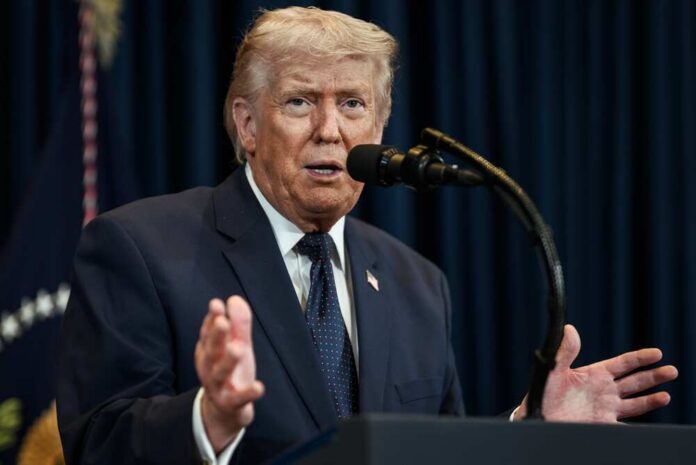
President Trump gave baseball legend Pete Rose a full pardon, more than two years after Rose died, wiping away the 1990 federal tax conviction that followed him for decades.
Quick Take
- Trump announced the pardon on Truth Social, calling Rose “a true Baseball SUPERSTAR & LEGEND.”
- The announcement came as Trump returned from a trip to Asia that included meetings tied to China’s Xi Jinping and Russia’s Vladimir Putin.
- Rose pleaded guilty in 1990 to two federal counts tied to filing false tax returns and served time in prison.
- The pardon does not touch Rose’s lifetime MLB ban or decide his Baseball Hall of Fame status, which rest with separate organizations.
What Trump Actually Announced
Trump posted his announcement, writing that he had given Rose a “Complete and Total Pardon.” The wording was reported consistently across major outlets including ABC News, NBC News, CNN, and the BBC, all quoting the same Truth Social statement. Rose, who died in September 2024 at age 83, became one of the rare Americans to receive a pardon after death.
I have just given a Complete and Total Pardon to the Late, Great Pete Rose, a true Baseball SUPERSTAR & LEGEND, whose record of 4,256 Hits in a Season will never be broken. In addition, Pete played 3,562 career games (Highest Ever!), had 1,314 Runs batted in, 160 Home Runs, a… pic.twitter.com/dgIXHkoMk2
— Commentary Donald J. Trump Truth Social Posts On X (@TrumpTruthOnX) November 19, 2026
Trump had floated this idea for nearly two years before making it official. The Hill reported the pardon had been something Trump discussed privately for a long stretch, and the Philadelphia Inquirer noted he had publicly said back in March 2025 that he intended to pardon Rose. The timing finally turned that promise into action, though reporting does not explain why he chose that particular week to announce it.
The Crime Behind The Pardon
Rose’s legal trouble dates to 1990, when he pleaded guilty to two federal felony counts for filing false tax returns. He served five months in prison. That conviction sat alongside a separate and far more famous punishment: Major League Baseball placed him on the permanently ineligible list in 1989 after an investigation found he bet on games, including ones involving his own team.
Those two matters are often confused but stay legally distinct. The federal pardon addresses only the tax crime. It carries no power over baseball’s internal discipline. Commissioner Rob Manfred reportedly softened the league’s permanent ineligibility rule for deceased players, a separate move that opened a door for Rose’s name to resurface in Hall of Fame conversations.
Why The Hall Of Fame Still Isn’t Settled
A presidential pardon forgives federal crimes. It cannot order a private organization like the Baseball Hall of Fame to induct anyone. The BBC reported plainly that the pardon is largely symbolic and does not change Rose’s Hall of Fame status on its own. That decision still belongs to the Hall’s voters and board, a point lost on some who assume a pardon settles everything.
This separation matters for anyone trying to size up what actually changed. Rose’s record 4,256 career hits remain untouched either way; no pardon or ban ever erased that number. Trump’s own post reportedly described the hits total as coming “in a Season,” an error quickly picked up by the Philadelphia Inquirer and recirculated online, overshadowing the achievement it meant to praise.
A Pattern In How Modern Presidents Use Clemency
Pardons like this one fit a broader trend researchers have tracked for decades. Historical studies show pardons grew more politically costly and far less routine by the late twentieth century, with presidents often saving high-profile grants for moments of maximum visibility. An economic model of pardons issued between 1900 and 2005 found presidents weigh both the recipient’s benefit and their own political payoff before acting.
Viewed that way, the Rose pardon follows a familiar modern script: a famous name, a sympathetic public memory, and an announcement timed for attention. Conservatives who value second chances and skepticism toward overreaching tax prosecutions may see this as simple fairness toward a man who already paid his debt. Others will note the pardon changes little practically, since baseball’s own rules govern Rose’s legacy, not the federal government.
What Comes Next For Rose’s Legacy
The pardon closes a federal chapter that lasted 36 years. It does nothing to force baseball’s hand on Cooperstown. Manfred’s earlier rule change about deceased players on the ineligible list remains the more consequential development for Hall of Fame consideration going forward. For now, Rose’s record stands exactly where it always has: most career hits in history, earned on the field, argued over everywhere else.
Trump’s trip through Asia, including stops tied to the APEC summit and meetings involving Chinese and Russian leaders, provided the backdrop for the announcement rather than its substance. Whether intentional or coincidental, the timing linked a domestic sports story to a high-stakes foreign trip, giving the pardon a bigger stage than a Tuesday afternoon announcement might have earned on its own.
Sources:
abcnews.com, abc7news.com, cnn.com, afp.com, floridatoday.com, nbcnews.com, trump-archive.com