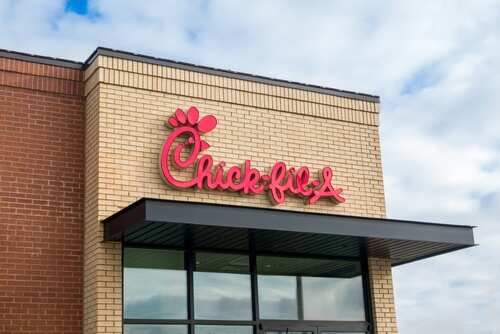
A Texas fast-food franchise now sits at the center of a federal fight over whether an employee must trade her Sabbath for a paycheck.
Story Snapshot
- The Equal Employment Opportunity Commission (EEOC) sued an Austin-area Chick-fil-A franchisee, alleging unlawful firing tied to Saturday Sabbath observance [1].
- The complaint says the employee disclosed her Sabbath needs at the time of hire, received an initial Saturdays-off accommodation, and then faced a schedule change [1][2].
- The employer allegedly offered a lower-paying delivery role with fewer hours and benefits as the alternative to Saturday shifts [1].
- The case turns on Title VII’s religious accommodation rules and the “undue hardship” standard following recent Supreme Court guidance.
A federal complaint puts Saturday on the stand
The Equal Employment Opportunity Commission filed a lawsuit in federal court in Austin against a Chick-fil-A franchisee, alleging the operator fired an employee after she refused to work on Saturdays due to Sabbath observance [1].
Coverage of the complaint states that the employee disclosed her Saturday needs during hiring, received an initial accommodation, and was then scheduled on Saturdays weeks later [1][2].
The agency reports conciliation efforts failed before filing suit, a sign it believes the facts merit courtroom testing under federal law [1].
News summaries describe a pivotal fork in the road: accept Saturday shifts or take a demotion to a delivery role with reduced pay, fewer hours, and diminished benefits [1].
That alleged choice—comply or step down—sits squarely in religious-accommodation law’s pressure point. The legal inquiry will probe the timing, alternatives such as shift swaps, and whether exempting one role from Saturdays would create material costs or safety risks, not just scheduling inconveniences.
The employer’s silence so far leaves that side of the ledger undocumented in public reports [1][2].
Title VII’s religion protections and the new hardship yardstick
Federal law prohibits firing someone because of religion and requires reasonable accommodation unless it causes an undue hardship on the business. Courts recently clarified that “undue hardship” means substantial increased costs or significant operational burdens, not minor coworker resentment or administrative hassle.
The facts at issue—advance notice, initial accommodation, subsequent schedule change, and a demotion offer—map directly onto that test. The agency will argue feasible alternatives existed; the defense, when presented, must show concrete burdens tied to Saturday staffing.
Judges often examine whether the employee proposed workable solutions and whether the employer tried them in good faith. Documentation will decide this case: schedule logs, timekeeping data, staffing analyses, and emails. If Saturdays are peak-volume service windows with thin staffing, the franchisee will need numbers, not generalities.
If Saturdays could be covered through swaps or modest schedule reshuffles, the agency’s theory strengthens. American values favor clear rules, honest contracts, and equal treatment; that lens rewards employers who set expectations early and stick to them.
Brand image versus courtroom evidence
Reports emphasize the symbolism that a company known for closing on Sundays faces a Sabbath case. That irony drives clicks but proves nothing in litigation. Juries respond to paper trails, not brand identities.
The public record here leans heavily on the agency’s complaint and a media paraphrase; it lacks the employer’s affidavit, scheduling models, or a detailed undue hardship analysis [1][2].
The narrative will rebalance once the defense files an answer, but early silence cedes perception to the allegations. It says facts should outrun headlines before judgment forms.
CHICK-FIL-A FRANCHISEE SUED OVER SABBATH FIRING CLAIM
A Texas Chick-fil-A operator is facing a federal lawsuit after allegedly firing an employee who refused to work Saturdays for religious reasons.
The EEOC says the company initially accommodated her Sabbath observance before… pic.twitter.com/nDtg1VpMPn
— NewsForce (@Newsforce) May 20, 2026
The most durable cases for employers show they accommodated as far as practicable, documented their attempts, and only said no when costs or coverage would suffer meaningfully.
The strongest cases for employees show early notice, consistent observance, and feasible alternatives the boss ignored.
This lawsuit will likely hinge on whether a single crew member’s Saturdays-off constraint breaks a busy kitchen’s staffing spine or could have been absorbed with ordinary managerial effort.
The law protects faith; it does not require businesses to implode. The evidence determines which side of that line this dispute occupies.
Sources:
[1] Web – Texas Chick-fil-A franchisee sued over alleged Sabbath discrimination
[2] YouTube – EEOC sues Austin Chick-fil-A operator over Saturday Sabbath …