
Trump’s claim that U.S. forces “obliterated” targets on Iran’s Kharg Island puts America one step closer to a wider Middle East war that could spike gas prices and test how far Washington will go to keep the Strait of Hormuz open.
Story Snapshot
- President Trump said U.S. strikes hit military targets on Iran’s Kharg Island, a strategic hub tied to Iran’s oil exports, while warning Iran’s oil infrastructure could be next if the blockade continues.
- U.S. Central Command confirmed strikes on more than 90 military targets as Iran signaled retaliation and regional attacks continued into the third week of fighting.
- Iran threatened U.S.-linked oil facilities while more than 16 vessels were reported struck in and around the Strait of Hormuz, a chokepoint for global energy flows.
- Oil prices surged to around $100 per barrel, raising immediate concerns for American household costs and economic stability.
What Trump Said the U.S. Hit—and Why Kharg Matters
President Donald Trump announced on Truth Social that U.S. forces carried out strikes on Iran’s Kharg Island, describing the operation as having “totally obliterated” military targets. Trump emphasized the strikes focused on military sites rather than oil facilities, even though Kharg is widely described as critical to Iran’s crude exports.
In conservative terms, the strategic message is deterrence: stop Iran’s blockade of the Strait of Hormuz or risk losing higher-value assets next.
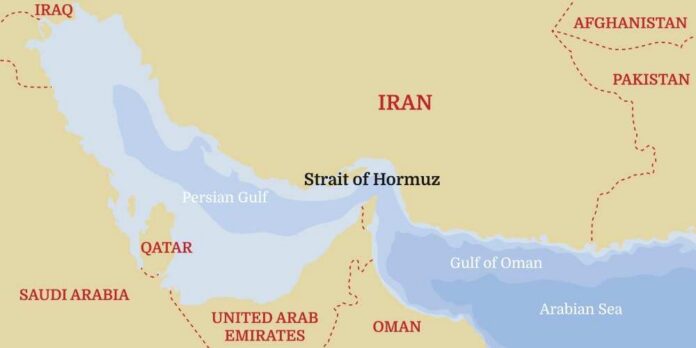
Kharg’s importance comes from geography and economics. The island sits in the Persian Gulf near the Strait of Hormuz, a corridor central to energy shipping that influences prices Americans feel at the pump. Reporting described the strait as a chokepoint for roughly 20–30% of global oil trade, and Kharg as Iran’s primary export terminal.
Even when the U.S. says it is limiting strikes to military sites, any fighting near major energy infrastructure can rattle markets quickly.
Escalation Signals: CENTCOM Target Count, Iranian Threats, and Shipping Strikes
Iranian media reported about 15 explosions on Kharg Island after the strikes, while U.S. Central Command confirmed attacks on more than 90 military targets.
The competing figures highlight a familiar wartime problem: outside observers rarely get immediate independent verification, and both sides shape narratives for domestic and international audiences. What is clear is the strike was framed as a major escalation, with Iran responding by threatening U.S.-linked oil facilities.
US President Donald Trump is threatening more strikes on Iran's Kharg Island and pressing allies to send warships to the Strait of Hormuz. Find out more on today's Reuters World News podcast https://t.co/cHInVJgduY pic.twitter.com/E92o8FuoL2
— Reuters (@Reuters) March 15, 2026
The pressure point remains maritime security. Reports indicated more than 16 tankers had been struck in and around the Strait of Hormuz as Iran tightened its blockade.
For conservatives wary of global instability driven by hostile regimes, this is the core reality: when a state actor tries to choke off a strategic waterway, the U.S. faces hard choices between restoring freedom of navigation or accepting higher costs and greater vulnerability. Trump also signaled interest in tanker escorts and allied naval support.
War Context: Three Weeks In, Wider Regional Fire, and Troop Movements
The Kharg operation landed in “week three” of a conflict rooted in long-running disputes over Iran’s nuclear program, ballistic missiles, and proxy warfare.
Reporting tied recent triggers to failed Geneva talks earlier in March, where progress on nuclear issues reportedly stalled over Iran’s refusal to discuss ballistic missiles—an issue Israel has pressed. Meanwhile, Iranian-linked attacks were described across the region, including strikes tied to proxies such as Hezbollah.
U.S. military posture is also shifting. Reports described preparations for thousands more troops, including a Marine expeditionary unit of about 2,500 Marines and the USS Tripoli.
In parallel, ongoing attacks and losses were reported, including deaths tied to an Iraq crash and damage to aircraft in Saudi Arabia. The Pentagon’s limited public detail reflects operational security, but the stated movement of forces underscores that the U.S. is planning for sustained operations, not a one-night exchange.
Energy and Domestic Stakes: Oil at $100 and the Cost of Instability
Oil prices near $100 per barrel became a defining data point, because energy shocks cascade into inflation and household budgets. Conservatives who lived through years of painful price spikes and fiscal mismanagement are right to focus on the basics: supply disruption and perceived risk drive prices up fast.
Even if the U.S. avoids hitting oil infrastructure, Iran’s threats and the ongoing shipping danger can keep markets nervous, raising the odds of continued pain for consumers and businesses.
*TRUMP SAYS US 'OBLITERATED' MILITARY TARGETS ON IRAN'S KHARG ISLAND OIL EXPORT HUB
🇺🇸🇮🇷 pic.twitter.com/aVYemDNvGK
— Investing.com (@Investingcom) March 14, 2026
The strike also raises the constitutional and strategic question many voters care about: what is the end state? Reporting included Trump’s open-ended framing—operations continuing “as long as necessary”—alongside expert skepticism that target counts alone decide outcomes.
Analysts cited in coverage described the Kharg strikes as a definite escalation against the “beating heart” of Iran’s oil system and questioned whether the U.S. can “hold” gains without an enduring commitment. Fog-of-war limits remain, especially around precise damage assessments.