

The most unsettling part of the Elias Rodriguez case is not only the brutality of the murders, but how openly political violence is now colliding with America’s harshest punishment.
Story Snapshot
- The Department of Justice is formally seeking the death penalty for Elias Rodriguez in the killing of two Israeli Embassy staffers in Washington, D.C.
- Prosecutors say the attack was a calculated, premeditated hate crime tied to anti-Israel ideology and the Israel–Hamas war.[3][4]
- The case tests how federal capital punishment is used when political motives and antisemitism are alleged.
- Media coverage is shaping public judgment long before a jury sees the full evidence.[1]
What Prosecutors Say Happened Outside A Washington Museum
Federal prosecutors allege that on an evening in May, 31‑year‑old Elias Rodriguez of Chicago waited outside the Capitol Jewish Museum in Washington, D.C., for an event hosting Israeli diplomatic staff to end.[4]
As Israeli Embassy employees Yaron Lischinsky and his fiancée, Sarah Milgrim, left the event, they were shot at close range and killed in what charging documents describe as intentional, execution‑style murders.[4]
The couple reportedly had been working for Israel in the United States only a short time.[4]
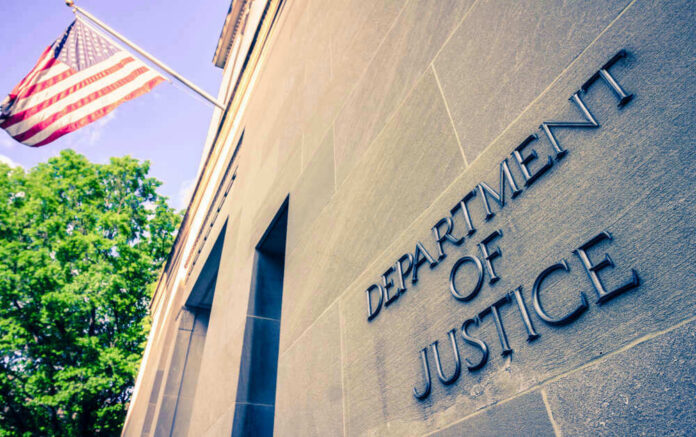
The United States Attorney’s Office for the District of Columbia, backed by the Department of Justice, has filed federal murder and hate‑crime charges against Rodriguez, along with parallel local murder counts.
Prosecutors characterize the attack as both calculated and ideological, saying it targeted the victims because of their nationality and because they represented the State of Israel.[4] Rodriguez has pleaded not guilty and remains entitled to the presumption of innocence while the case proceeds.[3]
Why The Justice Department Is Reaching For The Death Penalty
The Justice Department took an escalatory step when it filed a formal notice of intent to seek the death penalty, a requirement in federal capital prosecutions.
That notice, according to publicly available summaries, lists aggravating factors such as multiple intentional killings, targeting of victims because of national origin and religion, and extensive planning.
United States Attorney Jeanine Pirro publicly stated that her office “will seek death” for Rodriguez and warned that those who commit political violence in the capital will face “the full wrath of the law.”[3]
Justice Department to seek death penalty for man charged with killing 2 Israeli Embassy staffers https://t.co/dBoO9onzbI
— The Washington Times (@WashTimes) May 15, 2026
Federal capital punishment is rare and typically reserved for the most aggravated homicides, including terrorism, mass murder, and killings with clear hate‑crime elements.[2]
By invoking the death penalty here, the Department of Justice signals that it views this case as sitting in that small circle of worst‑of‑the‑worst crimes.
From a law‑and‑order perspective, using the heaviest available punishment when diplomatic staff are executed on American soil for ideological reasons aligns with the principle that the state must deter political assassination with unambiguous strength.
The Alleged Motive: “I Did It For Palestine, I Did It For Gaza”
Reports summarizing court documents say that during the shooting Rodriguez shouted “Free Palestine,” and that after the attack he entered the museum and told people, “I did it for Palestine, I did it for Gaza, I am unarmed.”[4]
Prosecutors further say he later repeated to police that he “did it for Palestine, [he] did it for Gaza,” statements they will likely use to prove motive and hate‑crime intent if the court finds them admissible.[3][4]
Those statements, if accurately recorded and contextualized, tie the murders directly to the Israel–Hamas conflict.
Prosecutors also allege that Rodriguez flew from Chicago to the Washington region with a handgun in his checked luggage, then attended or surveilled the event before attacking the couple as they departed.[4]
That travel narrative, if backed by airline and baggage records, supports the government’s claim of premeditation rather than spontaneous violence.
However, the public record so far consists mostly of summaries; the underlying interview transcripts, surveillance footage, and ballistics reports have not been broadly released.[4]
The Evidence We Have And The Evidence We Do Not See Yet
Media outlets describe surveillance video that allegedly shows Rodriguez approaching the victims, opening fire, and then firing again at close range, as well as his movements into the museum afterward.[2][3]
They also reference a detailed federal charging document and the formal notice outlining capital aggravators. What has not yet surfaced publicly are the full forensic reports, weapon trace results, airline logs, or the complete recorded interviews that would allow outsiders to verify how solid the government’s case truly is.[4]
Just In: The Justice Department will seek the death penalty for the man accused in the ambush killings of two Israeli Embassy employees outside downtown D.C.’s Capital Jewish Museum last spring. https://t.co/nYUcaHdrMw
— NBC4 Washington (@nbcwashington) May 15, 2026
There is also, so far, almost no detailed defense narrative in the public domain. The available reporting shows no filed defense affidavit rebutting the alleged confession, no motion to suppress the statements, and no alternative explanation of Rodriguez’s movements or intent.
That absence does not mean such arguments do not exist; it means the information flow is dominated by prosecutors. Americans who value both security and due process should recognize that early coverage often functions as a one‑sided opening argument before the trial even starts.
What This Case Reveals About Political Violence And American Resolve
This prosecution lands at the intersection of rising antisemitic violence, global polarization around Israel and Gaza, and long‑running debate about the death penalty itself.[4]
When a man allegedly executes two foreign diplomatic staff on American soil and proclaims that he did it “for Gaza,” the case stops being just another homicide file and becomes a test of whether the United States will treat such acts as intolerable political violence.
Seeking capital punishment sends a message that using foreign conflicts as a license to kill in America will draw our most severe legal response.[4]
Yet the country also stakes its moral authority on the integrity of its justice system. A rule‑of‑law approach demands both things at once: ruthless clarity that political murder and antisemitic terror will be crushed, and equal clarity that even the most despised defendant receives a scrupulously fair trial.
As this case moves forward, the real question is whether institutions can deliver both justice for Yaron Lischinsky and Sarah Milgrim and a verdict built on evidence rather than headlines.[4]
Sources:
[1] YouTube – Man who KILLED two Israeli Embassy staffers may face …
[2] YouTube – Justice Department to seek death penalty in killing of two …
[3] YouTube – Justice Department to seek death penalty for man charged with …
[4] Web – U.S. Justice Dept. To Seek Death Penalty For Man … – i24 News