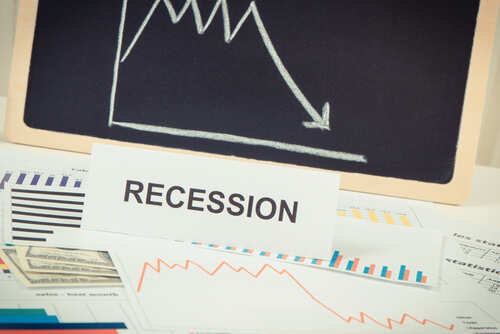
A top economist just put a number on the gut feeling many Americans already have: the odds of a recession are almost three times normal, even as Wall Street throws a party.
Story Snapshot
- Mark Zandi pegs the next‑year recession risk at 40%, versus a typical 15%, and calls that “very uncomfortable.” [1]
- He says job growth has cooled, real disposable income is flat, and many families are living paycheck to paycheck. [1]
- He argues stocks are riding a narrow artificial‑intelligence boom and are “disjointed” from the real economy. [1]
- He warns policy mistakes, oil shocks, and tariffs could turn a fragile soft landing into a full‑blown downturn. [3][4]
Why A “Forty Percent” Recession Odds Call Should Make You Sit Up
Mark Zandi, chief economist at Moody’s Analytics, is not some television pundit tossing darts at a chart; he is the economist who made his name by calling the 1969–1970 downturn and has spent decades building models that big institutions actually bet money on.
When he says the probability of a United States recession in the next 12 months is about 40%, versus a historical recession risk closer to 15%, that is not a vibe; it is a flashing yellow light. [1]
He stresses that 40% is not “doom,” but it is “very elevated, very uncomfortable,” his phrase to describe how close the country sits to the edge of contraction.
Translation for anyone over 40 who has lived through a few cycles: this is not 2008 panic or 2020 pandemic territory, but it is the kind of precarious balance where one or two bad decisions out of Washington, or a sharp shock in energy prices, can tip a wobbly table. That is why he keeps calling the economy “fragile.”
Top economist sounds alarm on America’s 40% recession risk, warns stocks are disconnected from reality https://t.co/57286XAjZr
— FOX Business (@FoxBusiness) May 20, 2026
The Labor Market Looks Fine—Until You Lift The Hood
Headline numbers still sound okay. The economy added about 115,000 jobs in April and the unemployment rate sits around 4.3%. Politicians point to those figures and declare victory.
Zandi’s view is more sober: job growth has “nearly stopped,” and once you adjust for the fact that fewer people are participating in the labor force, the unemployment rate would be closer to 5%.
From his perspective, that kind of soft, not collapsing, labor market is exactly what you tend to see just before a recession shows up on the scoreboard.
The composition of the labor force worries him as much as the totals. He points to foreign‑born workers, a group that had been growing the labor force at four to five percent a year, now actually shrinking.
That matters because fewer workers mean fewer paychecks and lower production, without any corresponding miracle in productivity. He also notes that the broader labor force has flattened or even dipped since the start of the year.
Common‑sense takeaway: a country that makes it harder for people to work, especially through heavy‑handed immigration restrictions, should not be surprised when growth sputters. [4]
When Your Paycheck Stalls While Stocks Soar
Jobs are only half the story. Zandi highlights real disposable income—your after‑tax pay adjusted for inflation—and says it is “no higher today than it was a year ago.” [1]
That means the average American’s purchasing power is stuck in neutral while rent, food, and insurance grind higher. He adds that lower‑ and middle‑income households are living more paycheck to paycheck, with little cushion to absorb a car repair, let alone an oil shock. [1]
That is not the backdrop for a sturdy, confident consumer‑driven economy.
He also points to real consumer spending, the inflation‑adjusted measure of what people actually buy, as basically flat this year. For a nation where consumption drives roughly two‑thirds of economic activity, flat is a warning, not a victory lap.
Zandi’s critics might argue that years of stimulus and easy money created an artificial sugar high that always had to fade. He would likely agree on the symptoms, but his conclusion is blunt: when income stalls and spending softens, recession probabilities go up, not down. [1]
Stocks Are Pricing Perfection While The Real Economy Wobbles
On television, the stock market looks like proof that all is well. Major indexes hit new highs, and portfolios have recovered from prior scares. Zandi wants investors to remember a simple truth: “The stock market’s not the economy.” [1]
He says bluntly that in his thirty‑six years as a professional economist, the stock market has never been more “disjointed” from economic reality. [1]
His case centers on how narrow this rally is, driven mainly by a cluster of artificial‑intelligence‑linked technology giants and chip makers. [1]
Stocks are pricing perfection while the economy looks shaky. Mark Zandi says markets are increasingly disconnected from fundamentals, AI hype is doing heavy lifting, and recession odds stay at 40% over the next 12 months. Risk is the story. #stocks #economy pic.twitter.com/kIPFURdDnz
— geekopedia (@geekopediax) May 20, 2026
Outside those “hyperscalers” and semiconductor firms, he sees a market that is far less euphoric and a real economy where households and small businesses must live with interest rates that remain elevated and credit conditions that are far from loose. [1]
Additionally, markets say prices should eventually reflect fundamentals rather than narratives. If earnings across the broader economy do not catch up with the fairy‑tale valuations of a handful of firms, a correction becomes not a question of if, but when.
Policy Choices, Oil Prices, And Whether America “Gets Out Of Its Own Way”
Zandi is careful not to declare a recession inevitable. His models still say a soft landing, where inflation cools without a deep downturn, is the single most likely outcome. [4]
But he insists that outcome depends on leaders avoiding “counterproductive” policy choices: broad new tariffs, heavy‑handed immigration crackdowns, and erratic foreign policy that keeps the Middle East on a knife-edge. [4]
In his judgment, those policy headwinds are “significantly raising the threat of recession.” [4]
Energy is where his warnings get especially concrete. Before the United States and Israel struck Iran in late February, he already believed recession risks were climbing. [3]
Afterward, with a war simmering in the Gulf and Brent crude oil hovering in the high ninety‑dollar range and briefly spiking to one hundred fifteen dollars, he warned that if oil averages around one hundred twenty‑five dollars a barrel in the second quarter, a recession becomes “more than likely” by year‑end. [3] For anyone who remembers the 1970s, that scenario needs no explanation.
What A 40% Recession Risk Means For Households Who Hate Drama
Most Americans do not live in probability models; they live in neighborhoods where the main questions are whether their job will hold, whether the mortgage rate will ever come down, and whether their retirement account will survive the next swing.
Zandi’s 40% odds are a reminder to treat the current calm like a warning siren, not a lullaby. [1] Families can respond with steps that mirror what a prudent business would do in uncertain times: reduce pricey debt, build cash buffers, and avoid betting the house on the latest stock fad.
From this perspective, his critique of policy is also a call for restraint and predictability. Government should not jerk the steering wheel with new tariffs every election year, undermine the independence of the Federal Reserve, or stumble into open‑ended conflicts that threaten energy supplies. [3][4]
A free market works best when the rules of the game stay stable, incentives reward work and saving, and citizens are not asked to finance another crisis born of overconfidence. On that score, a 40% recession risk is less a prediction than a stress test the country has not yet decided to pass.
Sources:
[1] Web – Mark Zandi puts U.S. recession odds at 40%, warns economy is ‘on …
[3] Web – Moody’s Mark Zandi: Risk of recession was increases prior to war in …
[4] Web – Recession Risk Is ‘Rising Significantly,’ but US Can Still Avoid It