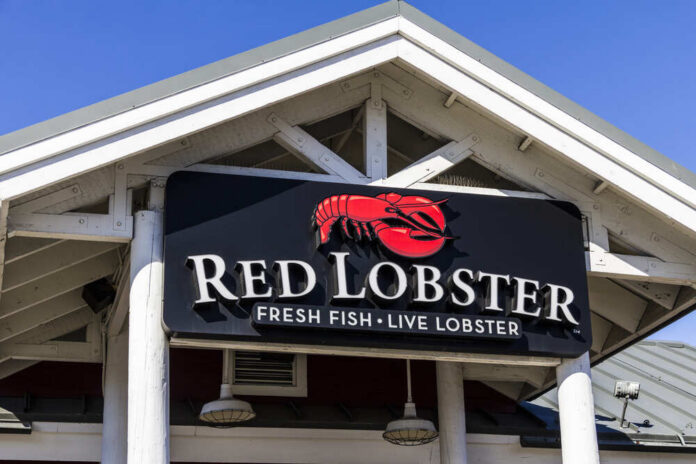
A three-story seafood chain in the center of Times Square just became one of the clearest case studies in what happens when big-city politics, construction chaos, and shaky corporate finances collide.
Story Snapshot
- Red Lobster’s Times Square flagship will shut its doors June 14 after 23 years serving tourists and theatergoers.
- The company blames years of scaffolding, blocked access, and a looming residential conversion for killing the store’s economics.
- Behind the polite press statement sits a chain in bankruptcy, rising rents, and a city that makes it hard for businesses to survive.
- The closure signals what many already feel: iconic midtown chains are not immune to policy-driven disruption and bad deals.
A giant seafood billboard in America’s crossroads goes dark
Red Lobster’s Times Square restaurant at 5 Times Square, a three-story glass box on the corner of 41st Street and Seventh Avenue, is scheduled to close June 14 after more than two decades in one of the most visible intersections on earth.[2][3]
The restaurant opened in 2003 and became one of the chain’s most recognizable locations, a place where families from Iowa ate cheddar biscuits under neon while looking out over Broadway marquees.[3][5] For a long time, it printed money.
Red Lobster to close Times Square restaurant after more than 20 years https://t.co/1XYXrwVQOm
— FOX Business (@FoxBusiness) June 1, 2026
The company now says that money is gone, drained by “extensive and prolonged construction at the building” that has “significantly impacted access, visibility and foot traffic.”[2][3]
Scaffolding wraps the exterior, obscuring the giant lobster logo and forcing the chain to hang “open during construction” banners just to remind people it still exists.[1] Red Lobster’s spokesperson calls operations there “no longer viable,” the polite corporate phrase for “this place is bleeding cash.”[1][3]
Construction chaos and a looming residential tower
The building that houses the restaurant is mid-transformation from heavily promoted office address to future residential tower.[1][2][3] New York’s Empire State Development agency is working with the city to convert empty office space in 5 Times Square into hundreds of apartments, part of a broader attempt to paper over remote-work hollowing out Midtown.[1]
That means long-term scaffolding, sidewalk detours, and uncertainty, the precise cocktail that kills impulse visits from tourists and theater crowds.
Red Lobster explicitly links the closure not only to lost access, visibility, and traffic, but also to the “planned conversion to residential use.”[2][3]
In plain English: the landlord wants a different, richer future tenant mix, and the seafood chain knows it will either be priced out or constructioned out. Reports note that in 2024 the owners were seeking roughly $2.2 million in annual rent from the chain.[5] That kind of number only works if the restaurant can operate at full visibility and high volume, not behind plywood.
Bankruptcy backdrop and the myth of the “one-off” closure
Red Lobster insists the Times Square shutdown is about construction, not a broader wave of closures.[2] On paper, the statement is technically correct: the direct reason for this specific address is the building’s condition and redevelopment plan.[2][3]
But zoom out and the picture changes. The company recently filed for bankruptcy, acknowledging more than a billion dollars in debt and the need to shutter dozens of locations on top of nearly fifty already closed.[4][5] More than 100 sites have disappeared in this retrenchment.[5]
This is where common sense kicks in. When a chain under court supervision is hunting for unprofitable leases to cut, a high-rent Times Square unit trapped behind scaffolding is a prime candidate. Construction is real, but it is also convenient.
It offers a tidy local explanation that saves the brand from saying what consumers already suspect: years of bad decisions, including disastrous promotions and aggressive lease deals, left the company fragile. Economic stress just shows up first where the numbers are worst.
Winners, losers, and what this says about the city
Red Lobster emphasizes that employees at the Times Square restaurant will be offered transfers to other locations and additional pay to support the transition.[2][3] That is decent corporate behavior, and it should be acknowledged. Yet nobody pretends those moves make these workers whole.
A host who counted on Times Square tips and subway access now faces longer commutes, weaker sales, or the choice to leave the company entirely. The people who messed up the chain’s balance sheet are not the ones taking the hit.
🚨 END OF AN ERA:
The Red Lobster in Times Square is closing after 23 years in operation.
The iconic Midtown location will reportedly shut its doors due to ongoing construction impacts in the area.#NYC #TimesSquare #RedLobster #Manhattan #UnfiltNY pic.twitter.com/b6fUSCzEhw
— UnfiltNY | NYC News (@UNFILTNY1) June 1, 2026
The city, meanwhile, takes another step toward becoming a playground for investors and government schemes instead of a place that balances business, jobs, and everyday customers. When a middle-of-the-road, family-priced chain cannot make a go of it in the busiest tourist zone in America, something in the policy and cost structure is broken.
Construction that drags on for years, sky-high taxes, and subsidies that encourage office-to-residential conversions all have downstream effects politicians rarely own. Businesses close. Workers scatter. Residents and visitors get fewer choices and higher prices.
Sources:
[1] Web – Red Lobster to close Times Square restaurant after more than 20 years
[2] Web – Red Lobster’s Flagship Times Square Restaurant Is Closing After 23 …
[3] Web – Red Lobster to close Times Square location, citing construction
[4] Web – Red Lobster reveals why its iconic Times Square location is closing …
[5] Web – Red Lobster Seafood Restaurants