
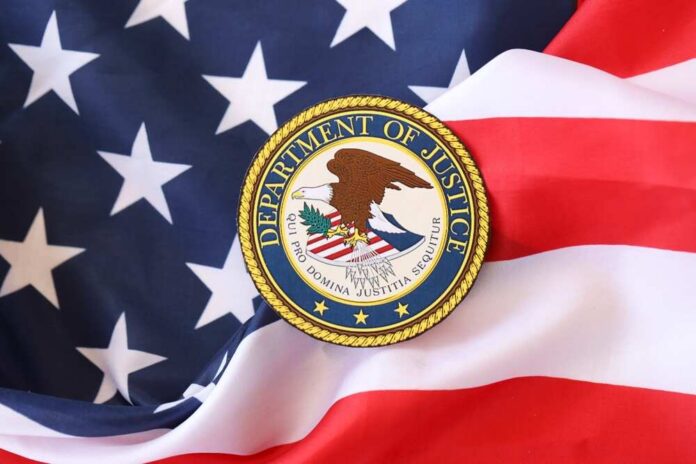
The Justice Department abruptly ended its politically charged criminal investigation into Federal Reserve Chair Jerome Powell, clearing a path for President Trump to install his handpicked nominee while raising troubling questions about the weaponization of federal agencies.
Story Snapshot
- DOJ closes criminal probe into Fed Chair Powell after Senate Republican threatens to block Trump’s nominee
- Investigation into Fed headquarters renovation costs widely viewed as political pressure to influence monetary policy
- Attorney General Jeanine Pirro announced probe closure via social media after Banking Committee member’s ultimatum
- Kevin Warsh, Trump’s Fed Chair nominee, now poised for confirmation with Powell pledging May 15 resignation
Political Pressure Forces DOJ Reversal
Attorney General Jeanine Pirro announced the closure of the criminal investigation into Federal Reserve Chair Jerome Powell through a post on X, ending a probe that began earlier this year into cost overruns at the Fed’s headquarters renovation.
The timing proved critical as Senator Thom Tillis, a North Carolina Republican on the Banking Committee, publicly declared during confirmation hearings he would block Kevin Warsh’s nomination unless the investigation ended. Tillis stated bluntly, “Let’s get rid of this investigation so I can support your confirmation,” connecting his vote directly to the probe’s status.
DOJ drops Powell probe, smoothing path for Warsh to lead Fed https://t.co/dDY7dCfw6D pic.twitter.com/pavDank6mk
— Financial Post (@financialpost) April 25, 2026
Fed Independence Under Siege
The investigation represented an unprecedented escalation in Trump’s long-running campaign against Powell, who has resisted presidential pressure to lower interest rates more aggressively since 2018.
Federal Reserve independence from political interference has been a foundational principle of American monetary policy since World War II, designed to prevent short-term political considerations from undermining economic stability.
This probe, ostensibly focused on renovation spending irregularities, was widely interpreted by analysts and observers as retaliation for Powell’s refusal to bend Fed policy to White House preferences. The episode demonstrates how federal agencies can be deployed as tools of political leverage against independent institutions.
Warsh Confirmation Path Cleared
Kevin Warsh, a former Federal Reserve Governor, now faces smooth confirmation proceedings after the probe’s closure removed the primary obstacle to his appointment. Powell has agreed to step down from the Chair position upon Warsh’s confirmation, with his current term ending May 15.
However, uncertainty remains about whether Powell will continue serving as a Fed Board Governor, a position that could allow him to influence rate decisions even under Warsh’s leadership.
Financial markets are closely monitoring the transition, anticipating Warsh may adopt more dovish monetary policies aligned with Trump’s pro-growth economic agenda. The Senate Banking Committee is expected to advance the nomination quickly.
Troubling Precedent for Government Accountability
The abrupt termination of this investigation sets a dangerous precedent for executive branch pressure on independent agencies and raises serious concerns about selective enforcement of justice.
While Republicans may welcome an Fed chair more sympathetic to economic growth policies, the method of achieving this outcome undermines institutional norms designed to protect American economic stability from political manipulation.
The episode exemplifies growing public frustration with how the powerful in Washington operate by different rules, using federal law enforcement as a bargaining chip rather than an impartial tool of justice.
Powell has remained silent on the probe’s closure, while Trump has uncharacteristically avoided public comment despite his history of vocal criticism of the Fed chair. The transition is expected to be complete by the Fed’s June meeting, marking a significant shift in the central bank’s leadership and potentially its policy direction.
The long-term implications extend beyond monetary policy, signaling that even supposedly independent federal institutions remain vulnerable to political pressure when the executive branch controls investigative powers.
Sources:
DOJ Drops Powell Probe, Paving the Way to Confirm Kevin Warsh
DOJ Drops Powell Probe: Warsh Path