
A new DOJ action against the Federal Reserve Chair threatens the central bank’s independence, raising alarms among conservatives.
Story Highlights
- DOJ subpoenas Federal Reserve Chair Jerome Powell over building renovation testimony.
- Former Fed Chairs and Treasury Secretaries condemn the move as undermining Fed independence.
- President Trump seeks to enforce rate cuts, conflicting with Powell’s cautious approach on inflation.
- This escalation poses significant risks to U.S. economic stability and the rule of law.
DOJ Subpoenas and Fed Independence
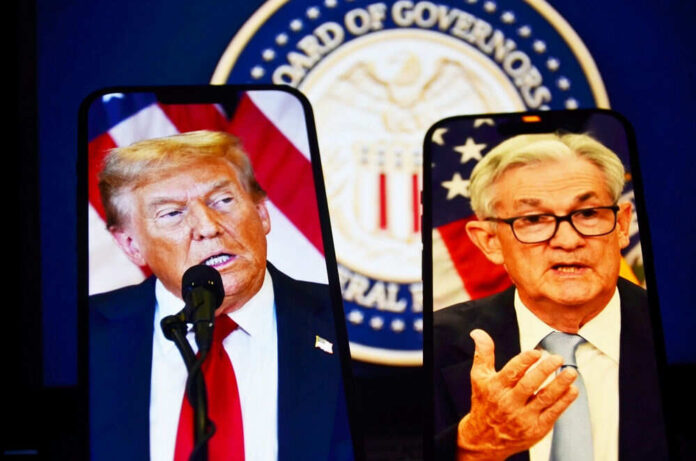
The Department of Justice recently issued subpoenas to Federal Reserve Chair Jerome Powell, citing his Senate testimony on a $2.5 billion renovation project for the Fed’s headquarters. This legal action is seen by many as a tactic to coerce the Fed into implementing rate cuts as demanded by President Trump.
Former Fed Chairs Alan Greenspan, Ben Bernanke, and Janet Yellen, along with ex-Treasury Secretaries, have criticized this move, labeling it as a dangerous precedent that threatens the independence of the central bank.
Greenspan, Bernanke, Yellen and other past officials say Trump using 'prosecutorial attacks' to undermine Fed https://t.co/yADzRLwCWj
— CNBC (@CNBC) January 12, 2026
Powell, who testified in June 2025, has maintained that the Fed’s focus should remain on price stability and employment, rather than succumbing to political pressures. This stance is at odds with the Trump administration’s push for aggressive rate cuts, particularly in light of ongoing inflation concerns linked to Trump’s tariff policies.
The DOJ’s actions have prompted a bipartisan backlash, with notable figures voicing concerns over the implications for the Fed’s autonomy.
Historical Context and Recent Criticisms
The independence of the Federal Reserve is a long-standing principle established to shield monetary policy from political influence, ensuring decisions are made for the long-term benefit of the economy.
This independence was solidified after the inflation crises of the 1970s. However, President Trump has been critical of Powell since 2018 for not reducing interest rates to his satisfaction, thereby exacerbating tensions between the executive branch and the central bank.
The latest developments mark an unprecedented escalation in these tensions, with the DOJ’s subpoenas representing a significant legal threat to Powell. Critics argue that this mirrors tactics used in unstable emerging markets and could undermine confidence in U.S. economic governance.
The stakes are further heightened by Powell’s potential to extend his influence as a Fed governor until 2028, complicating Trump’s plans to appoint a successor more aligned with his views.
Implications for Economic Stability
The potential consequences of this conflict are significant. In the short term, financial markets have already reacted negatively, with stock indices dropping following the announcement of the subpoenas.
Long-term implications could include a compromised Federal Reserve, which may lead to politicized monetary policy, higher inflation rates, and instability in loans and employment. Such outcomes would threaten the core mandates of the Fed, which include maintaining stable prices and maximizing employment.
Beyond the economic implications, the ongoing conflict tests the separation of powers within the U.S. government, highlighting the challenges of maintaining institutional independence in the face of political pressure.
As this story continues to develop, all eyes remain on how Powell will navigate these challenges and whether the Trump administration will succeed in its efforts to influence monetary policy.
Sources:
Trump’s legal attack on Powell underscores his aim for full control of Fed