

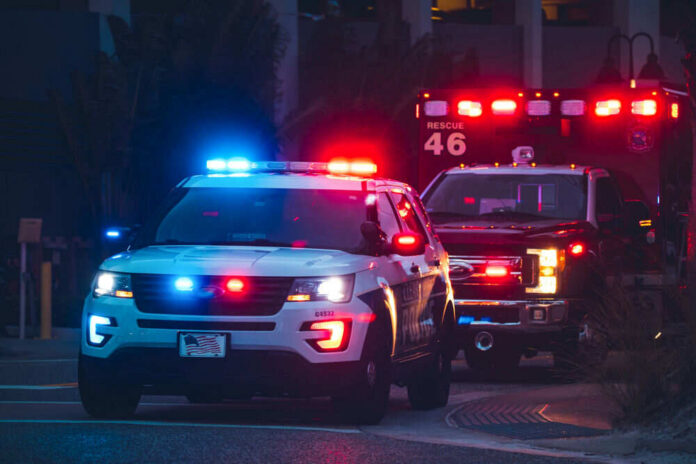
Police say a family fight in Billings turned into gunfire, a burning home, and multiple deaths, including children.
Story Snapshot
- Officials reported multiple adults and children dead inside a Billings home.
- Police first labeled the call a family disturbance before shots and fire.
- A male suspect died from a self-inflicted gunshot wound after the attack.
- Investigators are working a complex fire and homicide scene with multiple agencies.
What Police Found And Confirmed
Billings officers rushed to White Star Circle after a shots-fired call on Sunday evening. When they arrived, the house was engulfed in flames and responders faced gunfire in the area, according to local reports.
Authorities later confirmed that multiple adults and multiple juveniles were dead at the home. Officials withheld names and counts until next of kin could be told. Police identified a male suspect who was found with a self-inflicted gunshot wound and later died.
Montana police say multiple children and adults were killed after a shooting and house fire in West Billings End on Sunday.
Authorities say the male suspect is dead. pic.twitter.com/gvZquRjGqp
— Breaking911 (@Breaking911) August 25, 2026
Police described the first call as a family disturbance on the city’s West End. That label fits the pattern when a domestic conflict turns violent fast. The fire burned much of the scene, which makes evidence work slower and harder.
Several agencies responded, including sheriff’s deputies, state patrol, and fire crews, to secure the block and manage the blaze. Investigators kept the area closed while they started cause-and-origin and ballistics work on site.
Why The Fire Complicates The Case
Fire does more than destroy walls; it erases timelines. Heat, water, and collapse can bury shell casings, warp metal, and smear blood patterns. That is why investigators work in layers, map burn patterns, and collect debris for lab study.
Federal guidance lays out methods to protect and read what survives, from “V” burn marks to char depth to ventilation clues. These steps help place the gunfire in time with the fire, instead of guessing from rumors.
Domestic killings followed by suicide often play out in the home and involve guns, according to peer-reviewed and law enforcement analyses. Studies describe a recurring shape: a personal crisis, a firearm used on family members, and a quick suicide by the killer.
Most happen in private spaces, away from witnesses, which limits live testimony and makes scene science vital. Those patterns do not decide this case; they explain why detectives lean on methodical, evidence-first work when families and neighbors want answers now.
How The Pattern Informs The Probe
Researchers who study murder-suicide warn that early stories can miss sequence and motive. A blast of violence can unfold in minutes.
Shots may come before a fire, or a fire may be set to hide evidence. Forensic teams piece it back together from wounds, residue, and burn spread.
The National Institute of Justice’s field guide stresses strict evidence control to avoid lost leads and cross-contamination. That is why officials hold back details until they can back them with lab results, not guesses.
Common sense values demand two things at once here: compassion for the victims and a clean, careful case. That serves public safety now and in court later. Clear facts matter more than speed.
The confirmed points are stark and stable: multiple adults and children died in one home, the event began as a family disturbance, and the suspected shooter took his own life after the attack. The rest gets built brick by brick from tested evidence, not press clips or social posts.
Sources:
cbsnews.com, nbcnews.com, cedarnews.net, youtube.com