
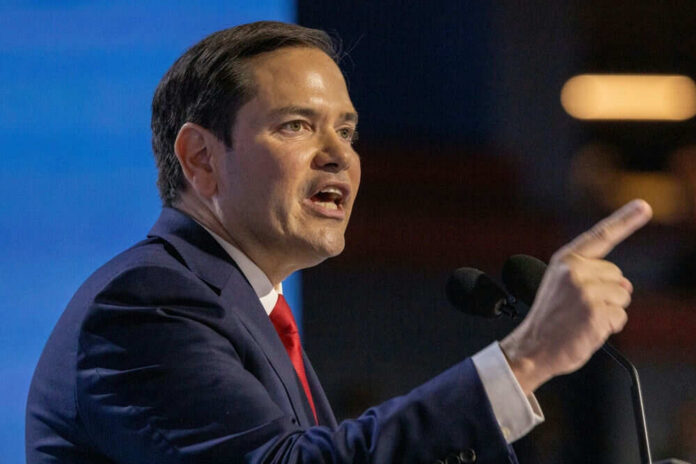
Secretary of State Marco Rubio staunchly defended President Trump’s decisive Venezuela raid, reassuring Congress that no quagmire looms while pushing NATO reforms that prioritize American interests over endless globalist spending.
See the video further down this report.
Story Highlights
- U.S. military captured narco-terrorist Nicolás Maduro on January 3, 2026, halting the Russia and Iran-backed shadow oil fleet.
- Rubio vows no further offensive action in Venezuela but reserves self-defense rights against threats like Iranian drones.
- The Trump administration controls Venezuelan oil exports through licensing, thereby stabilizing the economy and supporting a democratic transition, benefiting the people.
- Senate Democrats criticize the lack of consultation and NATO “reimagining,” while Republicans back the ouster but seek better briefings.
- 15,000 U.S. troops in the Caribbean signal strength without boots on the ground in Venezuela beyond the embassy Marines.
Rubio’s Senate Testimony Defends Trump Raid
Secretary of State Marco Rubio testified before the Senate Foreign Relations Committee, his first public hearing since the U.S. raid captured Nicolás Maduro and his wife on January 3. Rubio ruled out further military action beyond self-defense, countering fears of endless entanglement.
The operation originated from planning in late December 2025 and was unbriefable to Congress for security reasons.
This decisive strike ended Maduro’s narco-terrorist rule, which fueled economic collapse under U.S. sanctions. Trump supporters see it as restoring hemisphere security against leftist dictators.
Venezuela Oil Control Stabilizes Transition
U.S. forces now manage Venezuelan oil exports through licenses that direct proceeds to the people, not the fallen regime. Post-raid, no illegal shadow fleet ships from Russia or Iran reach Venezuela ports. America supplies 100% of the needed oil and fertilizer, previously sourced from adversaries.
Ongoing strikes on drug boats, dozens since last year, killing 126 traffickers, disrupted narco networks. With USS Gerald R. Ford deployed and 15,000 troops in the Caribbean, the focus shifts to free elections. Timeline remains urgent but undefined, avoiding forever wars that drained past administrations.
NATO Reimagining Amid Democratic Pushback
Rubio addressed NATO concerns, stating that the alliance needs to be reimagined to align obligations with capabilities, echoing Trump’s long-standing burden-sharing demands.
Democrats like Senators Chris Coons, Chris Murphy, Brian Schatz, and Jeanne Shaheen decried the rhetoric as harming security post-9/11 Article 5 invocations.
Republican Senator John Curtis praised Maduro’s ouster but faulted info-sharing. Rubio clarified that Cuba’s regime faces pressure without Venezuelan oil, potentially collapsing naturally, without U.S. invasion plans. This aligns conservative priorities: strong alliances without freeloading on American taxpayers.
Rubio defends Trump on Venezuela while trying to allay fears about Greenland and NATOhttps://t.co/bJbPjsVWkn
— WSFA 12 News (@wsfa12news) January 29, 2026
Executive-branch dominance in operations highlights oversight tensions, as prior classified briefings are ignored. Democrats fear escalation to Cuba or Iran, while Republicans endorse ends but refine processes. A stable, democratic Venezuela bolsters U.S. security, counters foreign influence, and protects prosperity.
Broader Impacts on U.S. Interests
In the short term, halting shadow fleets curbs Iran-Russia meddling; oil redirection aids Venezuelans while taxpayer funds remain secure.
In the long term, success enhances hemispheric stability, but failure risks a quagmire that would hinder America’s post-Biden recovery.
Troops remain regional; only Marines guard the embassy. Signals U.S. resolve to preserve liberty and limited government abroad through targeted raids. Conservative values triumph as Trump delivers on draining socialist swamps without globalist overreach.
Sources:
Rubio vows no further military action in Venezuela
Rubio rules out military action in Venezuela for now