A hand-crafted replica of the White House now sits buzzing with 70,000 potential residents on the South Lawn, where honey production isn’t just about sweetness—it’s about sustaining a tradition that bridges presidential administrations and feeds both foreign dignitaries and local food banks.
Story Snapshot
- First Lady Melania Trump unveiled a White House-shaped beehive on April 24, 2026, adding two new bee colonies to the existing South Lawn apiary
- The artisan-crafted hive will boost annual honey production by 30 pounds, increasing total output to approximately 255 pounds
- White House honey serves official state dinners, presidential gifts, and charitable donations to local food kitchens
- The beekeeping program, launched in 2009, supports pollination across the White House Kitchen Garden and National Mall vegetation
The Architectural Beehive That Doubles as Diplomacy
The newest addition to the White House grounds isn’t a sculpture or monument, but a functional work of art hand-crafted by a Virginia artisan. The beehive mirrors the iconic executive mansion in miniature, housing two new colonies that will join the existing apiary established during the Obama administration.
The Trust for the National Mall funded this expansion, which coincides strategically with the state visit of King Charles III and Queen Camilla. The timing suggests the First Lady understands that substance and symbolism can coexist—something Washington often forgets.
From Carpenter’s Hobby to Presidential Tradition
The White House beekeeping program began informally when carpenter Charlie Brandt started keeping bees on the complex as a personal hobby years before 2009.
What started as one man’s passion became official policy when the first two hives were installed on the south grounds, eventually producing between 200 and 225 pounds of honey annually.
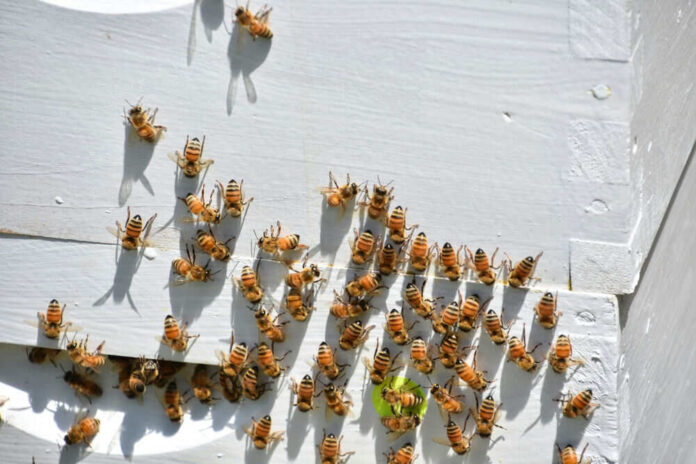
During peak summer months, these colonies swell to approximately 70,000 bees. The hives are operated under the stewardship of White House Chief Horticulturist Dale Haney, with support from local apiarists who provide technical expertise.
.@FLOTUS @MELANIATRUMP announced the expansion of the @WhiteHouse honey program with the addition of a newly installed and fully functioning beehive on the South Lawn.
Hand-crafted by a local artisan in the image of the White House, the beautiful, new hive will add two new bee… pic.twitter.com/5lJpdzXcRY
— Office of the First Lady (@FirstLadyOffice) April 24, 2026
More Than Just Honey for the Pantry
The expanded production serves multiple purposes, reflecting thoughtful resource management. White House chefs incorporate the honey into culinary dishes served at official functions, including state dinners for visiting heads of state.
The President and First Lady also distribute honey as official gifts, offering something genuinely produced on the grounds rather than purchased tokens.
Perhaps most importantly, surplus honey goes to local food kitchens, turning presidential productivity into community support. The additional 30 pounds from the new hive may seem modest, but scarcity often enhances value—especially when the product carries the White House provenance.
Pollination Politics and Practical Conservation
The beehives serve an ecological function beyond honey production. The colonies pollinate the White House Kitchen Garden, originally established by Michelle Obama in 2009, along with the Flower Cutting Garden and the vegetation that stretches to the National Mall. This creates a reciprocal relationship where bees support plant health while gardens provide nectar sources.
The new hive also serves as an educational feature, allowing visitors to observe a working colony and learn about the role of pollination in food production. This represents conservation through demonstration rather than legislation—showing rather than mandating environmental stewardship.
Continuity Across Administrations
The beekeeping expansion demonstrates how certain initiatives transcend political transitions. While partisan battles dominate headlines, the South Lawn bees have thrived through multiple administrations representing both parties.
The First Lady’s decision to expand rather than eliminate the program shows respect for worthwhile precedents regardless of their origin.
This approach reflects practical governance. The White House residence staff designed the new hive and base, showcasing in-house expertise rather than outsourcing to consultants. That kind of self-sufficiency and institutional knowledge deserves recognition in an era of endless contractors and consultants.
What’s all the buzz about? Melania Trump is growing the White House honey program with a new beehive: https://t.co/RvvWEMJ7dG
— Daily Press (@Daily_Press) April 25, 2026
The White House replica beehive stands as a working monument to sustainability, continuity, and the intersection of tradition with innovation.
When 70,000 bees take up residence in a structure mirroring the building nearby, they’ll be producing more than honey—they’ll be demonstrating that stewardship doesn’t require reinventing everything, just improving what already works.
Whether that honey ends up on the state dinner table or in a food kitchen donation, it represents the best of what happens when symbolism serves substance instead of replacing it.
Sources:
Melania Trump unveils White House replica beehive with buzzing new colonies on South Lawn
What’s all the buzz about? Melania Trump is growing the White House honey program with a new beehive
Melania Trump expands White House honey program with new beehive
First Lady Melania Trump Unveils New Beehive on South Lawn
Melania Trump adds new beehive to the growing WH honey program
Melania Trump expands honey program, adds White House-shaped beehive to South Lawn