
Armed federal agents knocked on doors across swing states to ask Americans about their citizenship and voting — days before ballots are cast.
Story Snapshot
- Department of Homeland Security (DHS) agents conducted home visits tied to a “Criminal Voter Fraud” push in multiple states.
- Nevada shows the risk of bad data: a public claim of nearly 16,000 potential noncitizen voters fell to 185, then to zero after review.
- Advocates say armed home checks intimidate lawful voters and could violate the Voting Rights Act’s ban on coercion.
- Experts warn that database flags are not proof of illegal voting and often collapse on scrutiny.
What Happened And Where It’s Happening
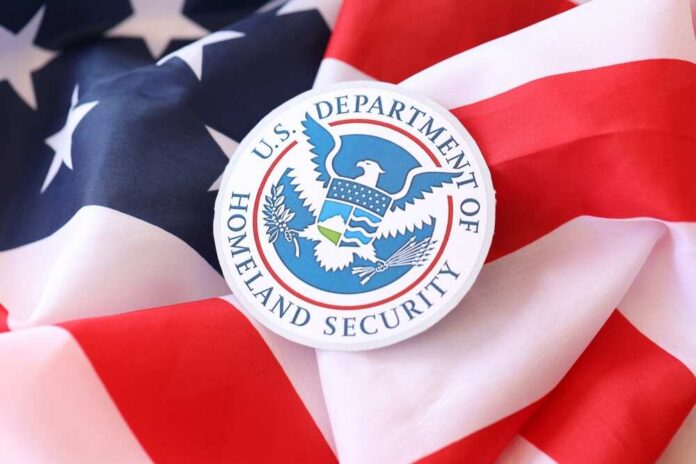
Department of Homeland Security agents, armed and in uniform, made door-to-door visits in California, Georgia, Missouri, Pennsylvania, Washington, and Wisconsin. They asked residents about immigration status, voter registration, and whether they had voted. Internal materials described a “Criminal Voter Fraud” initiative behind the effort, according to a CBS News investigation. This shows an organized federal operation, not a one-off sweep. The timing before midterms makes stakes and optics hard to ignore.
Homeland Security also spotlighted Nevada as a noncitizen voter hot spot. The public headline number — almost 16,000 flagged registrations — shifted fast. After talks with the state, the federal list shrank to 185 “potential” cases. State officials then reported that all 185 were citizens. The once-massive claim ended at zero confirmed noncitizens on the rolls, according to news and state statements cited by national outlets.
Why The Numbers Swing So Widely
Database flags travel a long road before proving anything. A match can link to someone who never voted, to a citizen with a name twin, or to a person who later naturalized. That is why experts caution that sweeping claims about noncitizen registration or voting often arise from misunderstandings or misreads of complex records. When investigators drill down case by case, the big totals usually collapse to a small number — or to none at all.
This does not mean the law should ignore ineligible registrations. It means precision matters more than press releases. American conservative values prize both election integrity and equal treatment under the law. That balance demands hard evidence before public accusations. It also demands methods that correct errors quickly without tarring lawful voters who did nothing wrong.
The Intimidation Charge And The Law’s Bright Lines
Voting-rights groups say the home visits with armed agents cross a line. Protect Democracy argues the practice intimidates voters and may violate Section 11(b) of the Voting Rights Act, which bars efforts to threaten, coerce, or intimidate people over voting. The group says naturalized citizens and mixed-status families face special risk from these tactics. A federal case summary from California-based plaintiffs echoes that claim, alleging flawed target lists and face-to-face interrogations during early voting.
Armed and in uniform, agents from the Department of Homeland Security have been knocking on doors to ask residents about their immigration status whether they're registered to vote. https://t.co/lK9zZJblDy
— CBS News (@CBSNews) October 21, 2026
The government’s job is to enforce the law, including against illegal voting. But the government also must avoid chilling legal votes. The Nevada whiplash — from 16,000 to zero — weakens the case for armed knock-and-talk checks as a first step. Based on the public record, the factual backbone for mass ineligibility is thin. When big claims shrink under review, common sense says fix the data and narrow the scope before sending a badge to the porch.
What A Better Path Looks Like
Start with cleaner data and quiet audits, not raids. Use narrow, well-tested checks with clear error handling. Confirm status with multiple sources before any field contact. If contact is needed, schedule a civil interview by mail or phone, not a surprise armed visit. Reserve criminal tools for cases with verified intent and evidence. These steps respect citizens’ rights, conserve agent time, and still deter real fraud. They also keep headlines from outpacing facts.
How Voters And States Can Respond Now
Voters should keep records handy: passport, naturalization certificate, or state-issued proof of citizenship. If an agent appears, ask for identification and a supervisor’s contact. You can request to schedule a later interview and have counsel present. State officials should document each federal lead and track error rates. If the false-positive rate spikes, pause the feed and demand a fix. Trust grows when the scoreboard shows errors going down and confirmed cases, if any, proven with care.
Bottom Line
DHS framed these visits as a lawful push to protect elections, and that goal matters. But the Nevada reversal and expert analyses show a larger lesson: database suspicion does not equal voter fraud. In a tight election season, tactics must match facts. Guard the ballot box. Guard civil liberty. And do both with methods that stand up when the cameras and the courts look closely.
Sources:
cbsnews.com, npr.org, yahoo.com, newsweek.com, reviewjournal.com