
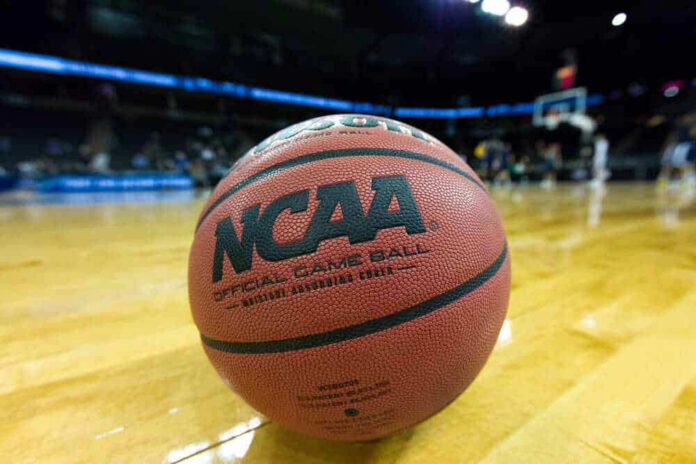
Federal prosecutors say a fixer who helped rig college basketball games just got six years in prison, and the money trail shows why it mattered.
At a Glance
- Jalen Smith pleaded guilty and received 72 months in federal prison in Philadelphia
- Prosecutors called him a fixer who bribed players and bet against their teams
- The court imposed about $1.1 million in restitution and $75,000 in forfeiture
- The broader probe charged 26 people and spanned dozens of NCAA games
What The Court Decided And Why It Matters
United States District Judge Nitza I. Quiñones Alejandro sentenced Jalen Smith to 72 months in prison, three years of supervised release, about $1.1 million in restitution, and $75,000 in forfeiture. The sentence followed Smith’s guilty plea to bribery in sporting contests, conspiracy to commit wire fraud, wire fraud, and possession of a firearm by a felon. The case was handled by the United States Attorney’s Office for the Eastern District of Pennsylvania. The court’s penalties signal the scale and reach of the criminal scheme.
Prosecutors described Smith as a fixer who helped recruit players, paid bribes, and placed large wagers against the teams whose players agreed to underperform. The conduct, according to the government, touched the 2023–2024 and 2024–2025 National Collegiate Athletic Association Division I seasons. The legal counts address both the manipulation of contests and the fraud used to move money and place bets. The prison term also reflects a firearm offense included in the plea and sentence.
How The Scheme Worked And Who Else Was Involved
Federal filings describe a network, not a lone actor. A December 2025 announcement charged 26 people in an alleged bribery and point-shaving operation that reached across states and even touched the Chinese Basketball Association. Prosecutors alleged more than 39 players on more than 17 National Collegiate Athletic Association Division I teams fixed or tried to fix more than 29 games. Smith’s case grew from that probe and centered on his role as a recruiter and bettor within the group.
The Justice Department said a federal grand jury indictment, unsealed in January 2026, laid out the timeline from about September 2022 to February 2025. Smith entered his guilty plea in March 2026. That plea is a sworn admission in federal court, not just a prosecutor’s claim. The admissions tied him to bribery in sporting contests, wire fraud, conspiracy to commit wire fraud, and possession of a firearm by a felon. The judge later imposed sentence based on those counts.
What The Numbers Tell Us About College Sports Risk
The Smith sentence sits in a long line of college basketball point-shaving cases. Past scandals show why players can be targets: small changes in performance can swing a point spread without changing the winner. That creates profit for bettors and risk for the sport. History offers proof, from the 1950s New York-centered scandal to Boston College in the late 1970s, Arizona State in the 1990s, and Northwestern in the mid-1990s. The playbook repeats; the tools evolve.
Jalen Smith, a fixer in the NCAA basketball betting scheme, was sentenced to 6 years in federal prison for rigging college games in a point-fixing scheme. https://t.co/0Lk60FuLpv pic.twitter.com/Fdgo7d7PzX
— Drew Grimaldi (@Grimillionaire) October 14, 2026
Legal online sportsbooks and fast money movement raise the stakes. Prosecutors said Smith’s group leveraged modern betting markets while using old methods, like bribes and inside access. The reported restitution figure, about $1.1 million, shows real losses to victims in the wagering system, not just theoretical harm. Based on the record, common-sense guardrails are clear: transparent pay for athletes, strong compliance at sportsbooks, and swift federal enforcement when lines get crossed.
What Comes Next For Integrity In College Hoops
Federal cases like this change behavior because they change risk. A six-year sentence, a large restitution order, and supervised release tell would-be fixers that the cost is steep. Athletic departments should drill into betting education and reporting pathways for players. Sportsbooks should sharpen alerts on unusual line moves tied to specific players. Prosecutors should keep using wire fraud and bribery statutes to chase the money and the messages. That mix supports honest competition without choking the game.
Sources:
6abc.com, apnews.com, inquirer.com, justice.gov