
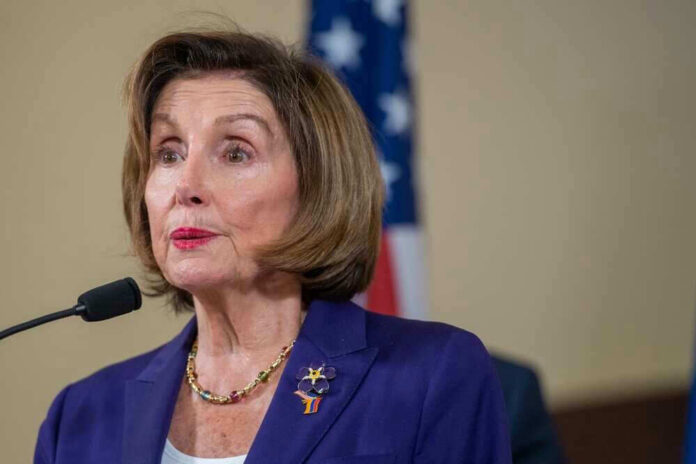
Nancy Pelosi said the quiet part out loud: calling two rising Democrats’ Israel views “wrong,” and drawing a hard party line as ballots near.
Story Snapshot
- Pelosi labeled Zohran Mamdani and Abdul El-Sayed’s reported Israel views “wrong.”
- She said those views do not reflect House Democrats, drawing a bright line.
- The clash centers on Israel’s right to exist as a Jewish state, not just policy.
- Democrats are split on aid to Israel, with many backing sharp cuts.
Pelosi’s line in the sand and why it matters now
Former House Speaker Nancy Pelosi, a four-decade party pillar, said comments attributed to Zohran Mamdani and Abdul El-Sayed on Israel were “more than concerning. It’s wrong. It’s wrong.” She also said those views do not reflect House Democrats in Congress. Her remarks came during a podcast exchange framed around whether denying Israel’s right to be a Jewish state is antisemitic. Pelosi agreed the position was wrong and outside her party’s stance.
Reports describe host Donny Deutsch naming both men in that frame, then Pelosi tying her answer to that claim. The focus was not a narrow policy fight, but Israel’s identity as a Jewish state. That is a red line for many voters and lawmakers. Pelosi’s stature gives the rebuke weight. Voters hear a signal: there is room for debate on policy, but not on Israel’s right to exist as a Jewish state.
What the two men have said — and what we still do not know
The reports do not print the full, original quotes from Mamdani or El-Sayed side by side with Pelosi’s critique. That gap leaves room for argument over what each man meant, and whether their words were about Israel’s legal identity, or about U.S. policy and military aid. El-Sayed has said Israel is not a true friend of the United States and has opposed U.S. military aid to Israel, but that is not the same as denying Israel’s existence as a Jewish state.
Campaign and media coverage link El-Sayed to opposition to U.S. military aid and a tougher U.S.-Israel stance. That is common in the party’s progressive wing. None of that by itself proves he rejects Israel’s right to exist as a Jewish state. The distinction matters because voters often conflate two things: criticism of a government’s policies and rejection of a nation’s core identity. Pelosi’s charge lands on the latter, the most explosive ground.
Inside the party split: aid, alliances, and identity
House Democrats have moved into distinct camps on Israel policy. One camp remains solidly pro-aid. A larger group supports conditioning aid and pressing for changes. A smaller faction wants aid ended. That breakdown showed up this year when 103 House Democrats backed a measure to cut $3.3 billion in aid. The amendment failed, but the vote marked a major shift in the party’s center of gravity.
House Democratic Leader Hakeem Jeffries opposed zeroing out aid, while saying U.S. policy must change for the good of Israelis and Palestinians. That two-part message, tough but not total rupture, now sounds like the mainstream. It contrasts with the left flank that sees aid as leverage that Washington should withhold. Pelosi’s statement places her on firm ground inside that mainstream, where criticism is fine but erasing Israel’s Jewish identity is not.
Election timing, message discipline, and a narrow path
Pelosi’s comments landed as campaigns sprint toward the finish. Reports say she rebuked El-Sayed’s Israel stance, yet still urged support for him. That dual track is hard to miss. Party elders often draw bright lines while trying to keep the tent wide enough to win. Voters can read it two ways: tough love to protect the brand, or a straddle meant to hold a fragile coalition together in November.
🚨 Pelosi rips Abdul El-Sayed, says his views on Israel are "more than concerning":
“This new person in Michigan, we’ll see if he gets elected.” pic.twitter.com/zRtjdLvfPx
— Greg Price (@greg_price11) October 30, 2026
Common sense says leaders must separate debates over policy tools from claims that cut at national legitimacy. Many conservatives will agree with Pelosi’s line on state identity, while also noting that shaky, selective rebukes invite confusion. If a view is disqualifying, say so and act. If not, explain the difference. Parties earn trust when they pair moral clarity with consistent standards voters can see and test.
Sources:
yahoo.com, nytimes.com, timesofisrael.com, cpr.org, arabcenterdc.org, randall.house.gov, fortune.com