
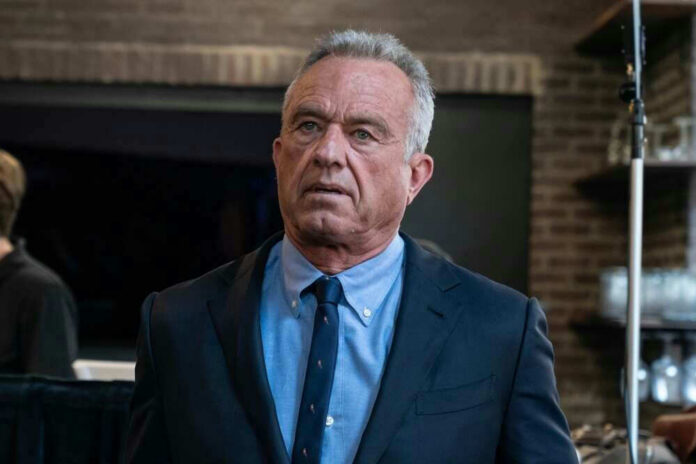
Health Secretary Robert F. Kennedy Jr. told a Michigan crowd that 500 million Arabs “don’t produce science” and never win the Nobel Prize, a claim that falls apart the moment anyone checks the Nobel Prize’s own records.
Quick Take
- Kennedy told a Grand Rapids campaign crowd that Arabs don’t win the Nobel, Fields, or Wolf Prizes or produce science and literature.
- Nobel records show Arab laureates including Ahmed Zewail, Naguib Mahfouz, Omar Yaghi, and Tawakkol Karman, directly contradicting the claim.
- Kennedy blamed the Muslim Brotherhood for what he called centuries of stagnation after an earlier era of Arab intellectual achievement.
- Outlets from Newsweek to the Associated Press and advocacy groups like CAIR called the remarks false, bigoted, or both.
- The comments landed in a Michigan race involving Arab-American candidate Abdul El-Sayed, adding an electoral edge to the backlash.
What Kennedy Actually Said On Stage
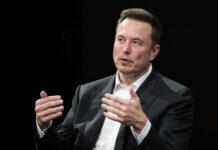
Speaking at a campaign event in Grand Rapids, Kennedy made a sweeping claim about an entire population. “There’s 500 million Arabs in the world, and yet they don’t produce science,” he said. “They don’t win the Nobel Prize. They don’t win the Fields prize. They don’t win the Wolf Prize. They don’t produce literature.” He offered no data, no sourcing, and no definition of who counts as Arab.
Arabs 'don't produce science, they don't win the Nobel Prize… They don't produce literature' — RFK Jr
His statement sparked a heated reaction in the comments pic.twitter.com/fic76EzUjs
— RT (@RT_com) October 27, 2026
Kennedy didn’t stop at a bare assertion. He added a historical theory, claiming Arabs “were the first to make books” and that 13th-century Muslim princes held bigger libraries than all of Europe. He then said that legacy “has been destroyed by the Muslim Brotherhood,” which he described as creating “stagnant societies that do one or two things: hatred, war, and victimization.”
The Nobel Prize Record Tells A Different Story
Fact-checkers moved fast, and the rebuttal was simple: pull up the Nobel Prize’s own list. Egyptian scientist Ahmed Zewail won the 1999 Chemistry prize for pioneering femtochemistry. Egyptian novelist Naguib Mahfouz won the 1988 Literature prize, the first Arabic-language writer so honored, according to the Nobel Prize’s own press release.
The list goes further than two names. Moungi Bawendi and Omar Yaghi both won Chemistry prizes in the past two years. Anwar Sadat, Yasser Arafat, Mohamed El Baradei, and Tawakkol Karman all won Peace Prizes, and mathematician Michael Atiyah won a Fields Medal. That is not an empty trophy case. It is a documented pattern Kennedy’s own words ignored entirely.
Backlash Spread From Newsrooms To Advocacy Groups
NBC News reported the remarks drew “widespread rebuke” within hours, with coverage spreading from mainstream outlets to Middle East-focused media like Al Jazeera and Al-Monitor. The Council on American-Islamic Relations called the comments “a textbook display of unvarnished racism and bigotry,” a line that spread quickly across social media alongside clips of the speech.
Former Centers for Disease Control and Prevention deputy director Nirav Shah called Kennedy “unserious and incurious about the world.” University of Oklahoma Middle East studies professor Samer Shehata described the remarks as “incredibly disappointing” and “bigoted.” Critics zeroed in on Kennedy’s current role as the nation’s top health official, arguing that a sitting cabinet secretary commenting on scientific output carries more weight than an ordinary campaign surrogate, and should be held to a higher factual standard.
Why The Framing Collapses Under Basic Scrutiny
Set aside the politics for a moment and look at the logic. Kennedy cited a population of 500 million but never explained his math, his time frame, or who counts as Arab. That is not a factual claim; it is a slogan dressed up as a statistic. A real argument about research output in Arab-majority nations is worth having. UNESCO itself has flagged low research spending and weak technology transfer in the region as genuine policy problems. But that is an institutional funding story, not evidence that an entire ethnicity is incapable of science or literature.
Conflating a funding gap with a people’s worth is exactly the kind of sloppy, inflammatory rhetoric that conservatives should reject on principle, not just politics. Judging individuals by group stereotypes instead of their actual record runs against basic fairness and common sense. Kennedy had a legitimate point buried somewhere in there about Islamist movements stifling open inquiry. He torched his own credibility by wrapping it in a demonstrably false blanket claim that named laureates instantly disprove.
An Electoral Backdrop That Raised The Stakes
The remarks didn’t happen in a vacuum. Kennedy made them while campaigning in Michigan, a state with a large Arab-American population and a competitive race featuring Arab-American Democrat Abdul El-Sayed. That context turned an already shaky factual claim into something read by many as a targeted political jab, fueling the speed and size of the backlash that followed across news outlets and social platforms alike.
Sources:
nbcnews.com, al-monitor.com, soapcentral.com, bostonglobe.com, huffpost.com, boston25news.com