
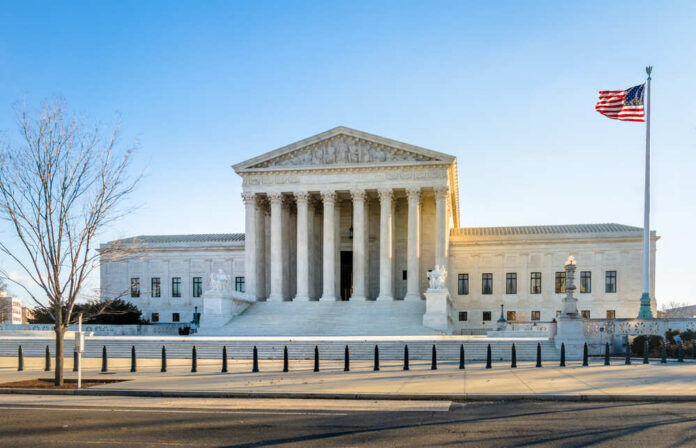
The Supreme Court will now say whether Washington can ban a still in your shed to protect a tax first levied before light bulbs.
Story Snapshot
- The Court will review a Fifth Circuit ruling that struck down the home-distilling location ban as beyond Congress’s taxing power.
- The government says the ban is needed to stop tax evasion tied to spirits, a revenue stream worth billions today.
- Another appeals court, the Sixth Circuit, upheld the restriction, creating a clear split.
- The case asks if Congress can outlaw distilling at a home or attached structure as “necessary and proper” to collect taxes.
What the Fifth Circuit actually decided
The Fifth Circuit held that the federal rule banning distilling “in a dwelling house or in any shed, yard, or enclosure connected with such dwelling” went beyond Congress’s listed powers. The judges said the law did not plainly help collect taxes and was not consistent with the Constitution’s design to limit federal police power. The court stressed a mismatch: the rule stops all home distilling rather than regulating it to gather revenue.
The panel also flagged a slippery slope. If the government can outlaw any in-home act that might ease tax evasion, it gains a general police power the Constitution does not grant. That logic would let Congress police your kitchen or garage for any activity linked to a tax, which clashes with federalism and basic common sense limits on Washington’s reach.
The Supreme Court’s narrow but weighty question
The Supreme Court took the case to answer a tight question with big stakes: Is the home-location ban “necessary and proper” to carry out the taxing power? The filings frame it as an enumerated powers dispute, not a freestanding right to make whiskey. The respondents include individuals and the Hobby Distillers Association who want to make small-batch spirits at home for personal use, not to sell.
The Court now sits over a clean split. The Fifth Circuit said the rule goes too far. The Sixth Circuit saw the same rule as a fitting tool to collect the spirits tax. That conflict is the classic reason for review. A clear answer will set one nationwide rule and end the patchwork of outcomes across regions.
The government’s tax-enforcement case
The Justice Department argues that Congress adopted the ban after rampant fraud in the 1800s and that the same risks persist. The government says a still is easier to hide in a home, and inspectors face unique barriers at a dwelling. It also notes that hiding a spirit’s true strength can dodge the proper rate. The department cites the long history of the excise tax and current billions in yearly revenue to show a strong interest.
The government’s core theory rests on a familiar test: a measure is “necessary and proper” if it is convenient or useful and plainly adapted to a listed power. On that view, the ban makes sense because it makes evasion harder where it is easiest. The Sixth Circuit’s earlier decision accepted that logic and upheld the rule as a fit means to secure the excise tax on spirits.
Why this case resonates beyond whiskey
This fight is bigger than a copper pot in a backyard. Congress often ties rules to taxes. The Fifth Circuit warned that when the tie is too loose, the rule stops being about revenue and starts looking like a broad police ban. That is where limited government values press hardest. If the Supreme Court agrees, Congress will need tighter, more targeted tools to collect taxes without sweeping into the states’ lane.
Conservatives should watch for a limiting principle that guards both tax collection and home liberty. A smart line would allow permits, reporting, and audits where they actually help collect revenue, but block blanket bans that erase lawful home activity. The Fifth Circuit hinted at this kind of balance: regulate to tax, do not prohibit to control. If the Court adopts that frame, it reins in Washington without opening a black market.
What changes now, and what does not
Nothing is final until the Supreme Court rules. The Fifth Circuit decision did not legalize unpermitted distilling nationwide. Federal permits and taxes still apply, and state and local laws still matter. The Supreme Court’s answer will decide whether a location-based federal ban can stand at all, or whether Congress must use other, narrower tools to secure the spirits tax. The docket centers that precise constitutional line, not lifestyle debates.
Sources:
cbsnews.com, supremecourt.report, thespiritsbusiness.com, washingtonpost.com, supremecourt.gov, scotusblog.com