

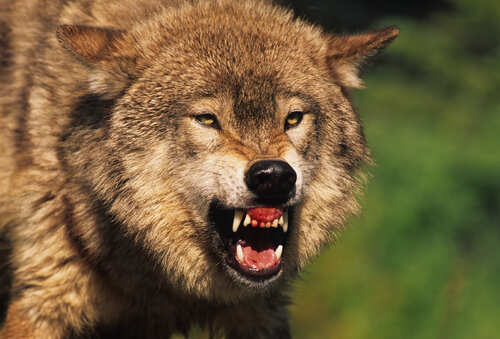
Inside a wolf enclosure during a children’s program, an eight-year-old was mauled and airlifted to a Berlin hospital.
Story Snapshot
- Police say at least one wolf attacked an eight-year-old inside an enclosure.
- The incident occurred at Wildpark Johannismühle in Brandenburg during a kids’ animal-care day.
- The girl suffered serious injuries and was flown by helicopter for treatment.
- Authorities are probing possible negligent bodily injury by a staff member.
What Happened Inside the Enclosure
Police and district officials reported that an eight-year-old girl was attacked by at least one wolf while inside an enclosure at Wildpark Johannismühle, a wildlife park south of Berlin. The attack happened during a booked children’s animal-care day, with a staff member and two other children present in the enclosure when the incident began. Officials said rescuers stabilized the child and a helicopter flew her to a Berlin-area hospital for urgent care due to serious injuries.
Authorities have not publicly identified a specific animal. Police described the attacker as “at least one” wolf, which leaves open whether more than one animal made contact. That level of caution is standard during an active inquiry. The park closed temporarily and said it is cooperating fully with investigators, which matches common safety protocol after a serious animal incident.
The Investigation and Duty of Care
Police opened an investigation into suspected negligent bodily injury tied to a park employee. That step tests whether staff followed rules for taking children into a predator enclosure and whether barriers, gates, and handling protocols worked as designed. An investigation does not prove fault. It preserves evidence, secures statements, and maps the exact sequence. Officials also aim to learn how the group entered, who controlled gates, and how fast staff responded once the wolf engaged.
Conservative common sense says adults must keep children away from obvious danger. Predator enclosures demand strict controls, because one lapse can turn seconds into a life-or-death scramble. German safety guidance for high-risk enclosures stresses layered barriers, clear separation, and fail-safe procedures for keepers. Those principles exist to stop contact before it starts, especially when minors are involved.
Captive Wolves Versus Wild Wolves
Reports framed the event within a broader debate about wolves in Germany, but this case involves a captive setting, not a wild, free-ranging pack. Data and field reviews show attacks on people by wild wolves remain rare, and unusual behavior often links to captivity, food conditioning, or disease. Captive or human-habituated wolves are a distinct management challenge, because fences and routine feeding can blunt the animal’s natural avoidance of people.
An 8-year-old girl was airlifted to a hospital after being seriously injured in a wolf attack during a special children's event at a German zoo on Wednesday.
The attach happened inside an Arctic wolf enclosure at Johannismühle Wildlife Park, south of Berlin. pic.twitter.com/0Lv5tcMwvB
— Gage Goulding (@GageGoulding) October 29, 2026
Several recent summaries underline this split. A review of verified wolf attacks between 2002 and 2020 counted 75 cases worldwide and noted that captive and habituated animals form a key risk category. That pattern suggests policy should draw a bright line between wildlife management in forests and safety protocols inside parks and zoos. Failure inside a facility is not proof that wild-living wolves pose a new or general threat to the public.
What Comes Next for Accountability and Safety
Prosecutors will assess whether staff decisions, training, or park rules met the duty of care during the kids’ program. Investigators will seek logs, rosters, and any camera footage to confirm gate positions, staff-to-child ratios, and the timing of the response. If officials confirm that a keeper stopped further attacks on the two other children, that detail will matter to both accountability and lessons learned for drills, tools on hand, and enclosure design for predator encounters.
Parks that invite children behind the scenes must aim for zero contact with predators. That means double-gated entries, no unsecured feed, clear escape lanes, and a hard rule that the public never shares space with animals that can inflict catastrophic harm. These controls are not anti-nature. They are pro-reality. Wolves are powerful, fast, and reactive. Respect the animal, respect the risk, and design the day so one moment of surprise does not become a helicopter flight.
Sources:
abcnews.com, tagesschau.de, bbc.com, pnp.de, sn.at, spiegel.de