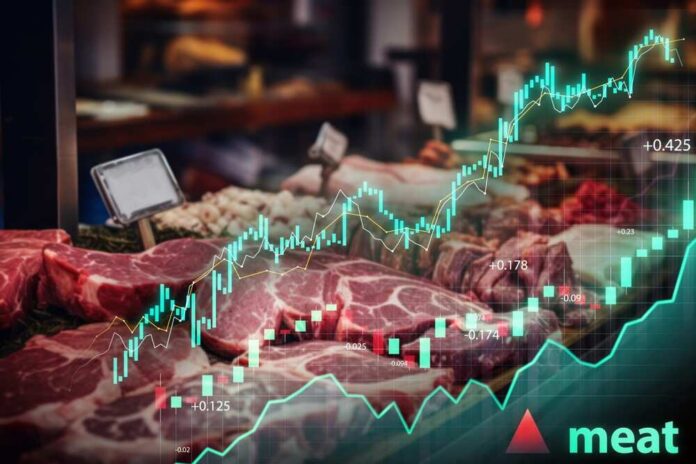
As beef prices reach unprecedented heights, American families struggle to afford their favorite steaks and burgers.
Story Highlights
- Beef prices surged 16.4% annually, outpacing overall inflation.
- Cattle inventories hit 70-year lows due to drought and high costs.
- Tariffs on Brazilian imports exacerbate supply shortages.
- Consumers are facing significant price increases on staple proteins.
Beef Prices Surge Amidst Supply Shortages
In 2025, beef prices surged 16.4% annually, significantly outpacing the overall inflation rate of 2.7%. Consumers experienced price increases across various cuts, with steaks up 17.8%, ground beef up 15.5%, and roasts up 17.5%.
This price escalation is largely attributed to cattle inventories reaching 70-year lows, driven by prolonged drought conditions and rising production costs. This shortage has severely impacted American households, particularly during peak grilling seasons.
Beef prices soar as American families pay steep prices for steaks and burgers nationwide https://t.co/O7l1YMnHzL
— FOX Business (@FoxBusiness) January 15, 2026
With cattle herds at their lowest since 1951, the market faces unprecedented challenges. Tariffs on Brazilian beef imports, which rose to 50% in August 2025, have further strained supply chains.
These tariffs disrupted around 23% of U.S. beef imports, compounding the shortage and driving prices even higher. Despite these constraints, consumer demand for beef remains strong, with minimal shift to more affordable proteins like pork and chicken.
Impact on Consumers and the Economy
The ongoing beef price surge has placed a significant burden on American families, particularly those with lower and middle incomes. With beef prices now four times higher than chicken, many consumers find their budgets stretched to the limit.
This has led to increased pressure on restaurants and food service businesses, as they struggle to manage rising input costs. The inflationary impact of these price hikes distorts economic figures, complicating the Federal Reserve’s efforts to maintain its targets.
Long-term effects of this surge are expected to persist beyond 2026, as cattle herds require years to recover. Economic analysts predict a potential shift in market dominance towards poultry and pork, assuming beef prices remain elevated. However, beef demand continues to hold strong, driven by consumer preferences and cultural factors.
Policy and Industry Challenges
Government trade policies, including tariffs, play a crucial role in the ongoing supply crisis. As the U.S. grapples with potential global supply risks, particularly concerning Brazilian imports and Middle Eastern tensions, industry stakeholders face significant uncertainty.
Ranchers remain cautious about expanding herds due to volatile market conditions and high production costs, further delaying potential recovery.
Experts like Glynn Tonsor and Courtney Schmidt highlight the challenges of rebuilding herds and the inherent costs associated with beef production.
With no immediate relief in sight, consumers and industry players alike must brace for continued volatility and high prices in the coming years. Policymakers and industry leaders must navigate these challenges carefully to stabilize the market and ensure sustainable supply chains.
Sources:
Beef Prices Soar to Record Highs in June
Beef Prices Could Surge Again in 2026 as US Cattle Herd Hits 70-Year Low
Beef Prices Soar as American Families Pay Steep Prices for Steaks and Burgers Nationwide
Beef Demand is Hot, Herd Rebuilding is Not