One injured 12-year-old at Yellowstone forces a blunt question: are America’s parks failing us, or are we failing to respect the wild?
Story Snapshot
- Bison injure more visitors at Yellowstone than any other animal, and this case fits a long, troubling pattern.
- The park clearly warns people to stay at least 25 yards from large wildlife such as bison, yet injuries keep occurring.
- Investigators have not released details of what the child or adults did in the moments before the encounter.
- The gap between clear rules and risky behavior raises hard questions about personal responsibility in public lands.
A child, a massive bison, and a few missing seconds
A 12-year-old visitor was injured by a bison near the Mud Volcano area of Yellowstone around 9:15 a.m., and taken by emergency crews to a nearby hospital.[4]
Officials confirm the child was hurt in an “encounter” with a bison, but they have not said how close the child was, what the group did, or the exact nature of the injuries.[6]
The incident is under investigation, and the park has held back further details.[4] That silence leaves the most important few seconds of the story blank.
12-year-old hospitalized after being injured by bison in Yellowstone National Park https://t.co/CLJoovR849 pic.twitter.com/IpuzbVvlQ7
— New York Post (@nypost) June 28, 2026
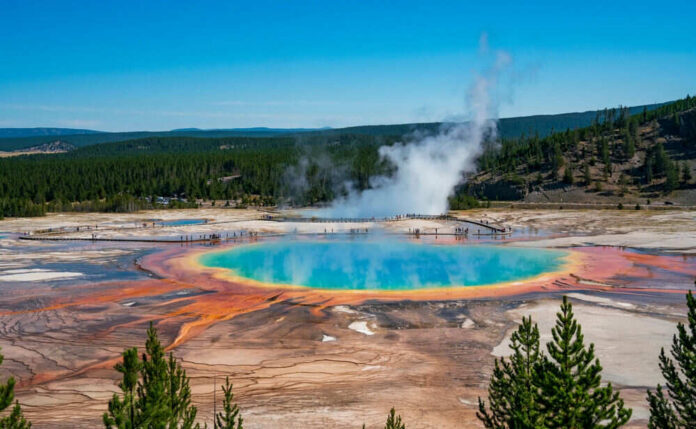
The spot itself is a classic Yellowstone trap for the unwary. Mud Volcano is a short, boardwalk-style area packed with steam vents, tourists, and cameras.[6]
Bison move through that landscape like two-thousand-pound tanks, often looking calm, even sleepy, until they do not. Rangers say bison have injured more people there than any other animal and can run three times faster than humans while defending their space when they feel threatened.[4] That is not park folklore; it is a repeated safety warning.
The rules are not vague, and they are not new
Yellowstone’s guidance is blunt: stay at least 25 yards away from all large animals, including bison, elk, deer, moose, bighorn sheep and coyotes, and 100 yards from bears, wolves and cougars.[4] If an animal approaches, you are told to move away and keep that distance.[4] These rules exist because injuries are not random.
A Centers for Disease Control and Prevention review of bison injuries found every recorded case involved people failing to maintain the required distance of about 75 feet.[7]
Researchers who studied bison encounters between 2000 and 2015 found that most injured visitors had walked toward the animals themselves.[2] About eighty percent actively approached bison before they were hurt, and another group did not back off when bison moved closer.[2]
What we know, what we do not, and why that gap matters
In this case, the park has not said the child or family broke the rules. Officials have only repeated the standard reminder that wild animals “can be aggressive when people do not respect their space.”[6]
They have not claimed the child ran up to the bison, ignored signs, or posed for selfies. Without witness statements, video, or distance measurements, anyone who insists the park is clearly at fault, or that the child clearly behaved recklessly, is filling an information vacuum with guesswork.
Yet the broader record around Yellowstone points in one direction. Federal data show bison have injured more pedestrian visitors than any other animal at the park since 1980.[7] After a spike of more than 30 injuries in just a few years, new educational efforts cut that number to fewer than 1 per year.[8]
That change did not come from fencing off the wild. It came from people learning to keep their distance and from the park stressing how fast and unpredictable bison really are.[7] When rules are followed, injuries plummet. When they are ignored, the pattern returns.
Responsibility, freedom, and the cost of pretending nature is a theme park
Many media headlines frame this story mainly as “a 12-year-old injured” and leave the human decisions around the animal almost untouched.[1] That tugs the heart but misses the larger issue. Yellowstone does not hide the risks.
Rangers hand out flyers that literally show a person being flung into the air by a bison and warn visitors not to get within roughly 70 feet.[5] Signs, brochures, and websites echo the same message: the animals are wild, they will defend their space, and you must stay back.[4][17]
‼️ BISON INJURY: A 12-year-old was hospitalized after being injured by a bison on Friday morning while visiting Yellowstone National Park. This is the first reported bison attack in Yellowstone this year.
Read more: https://t.co/gV7bIICZGQ pic.twitter.com/OEoNg3N7F6— FOX Weather (@foxweather) June 27, 2026
Citizens then choose how to behave. Freedom here includes the freedom to make foolish choices, but it also carries the duty not to drag a twelve-year-old into a danger you have been warned about. Blaming the park for an animal doing what wild animals do fits a broader cultural habit of dodging personal responsibility.
What needs to change before the next siren wails
The open questions around this case still matter. Did the group stand on the boardwalk and watch from a proper distance, only to have the bison charge suddenly? Were there clear signs right where the encounter happened? Did crowds box the animal in?
Those details will tell us whether this was a freak event inside the rules, or another instance of people pushing too close until the odds caught up with them.
Either way, the risk picture is clear enough for anyone planning a visit. Yellowstone is not a zoo. Bison are not props.
Data from past injuries and the park’s firm rules show that the safest path is simple: keep your kids and your camera lenses out of the danger zone, even when that big shaggy animal looks like a harmless rug on legs.[2][7] The wild will stay wild. Our job, on the human side of the rail, is to stay wise.
Sources:
[1] Web – 12-year-old visitor injured by bison at Yellowstone National Park
[2] Web – 12-year-old injured by bison at Yellowstone National Park – 6ABC
[4] YouTube – Bison injures 12 year old visitor in Yellowstone near Mud Volcano
[5] Web – 12-year-old hospitalized after encounter with bison at Yellowstone …
[6] Web – A child visiting Yellowstone National Park in Wyoming was injured …
[7] Web – Yellowstone – (NEWS RELEASE) A 12-year-old visitor was injured …
[8] Web – 12-year-old injured by bison in Yellowstone National Park. https …
[17] Web – 12-year-old injured by bison in Yellowstone National Park