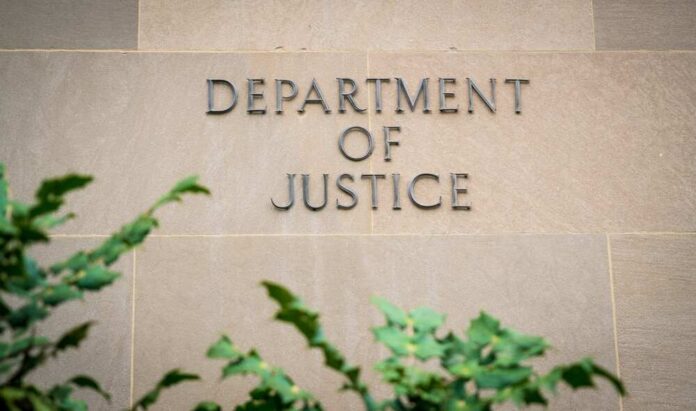
The United States Department of Justice is preparing to walk away from its own $722 million crypto Ponzi case against the man it once called the mastermind.
Story Snapshot
- Federal prosecutors plan to drop all charges against alleged BitClub Network leader Matthew Goettsche
- The dismissal will be “with prejudice,” meaning the case can never be refiled
- BitClub Network was accused of taking about $722 million in bitcoin from investors worldwide
- The move reflects a broader Justice Department shift in how it handles cryptocurrency cases
Justice Department abandons a flagship crypto fraud case
Federal prosecutors in New Jersey once built BitClub Network into a showcase example of cryptocurrency fraud. They said Colorado resident Matthew Goettsche helped run a bitcoin mining operation that was actually a Ponzi scheme, raising roughly $722 million from investors between 2014 and 2019.
Now, after years of litigation and a trial date on the calendar, the United States Department of Justice is moving to dismiss every charge against him with prejudice.
Federal prosecutors to drop charges against alleged mastermind of $722 million crypto Ponzi scheme https://t.co/U3NG9JnH6Y
— FOX Business (@FoxBusiness) July 11, 2026
Reports say the order did not come from the local prosecutor who first brought the case. It came from Washington. Two people familiar with internal discussions told Bloomberg Law that the deputy attorney general’s office instructed the United States Attorney’s Office in New Jersey to drop the Goettsche prosecution and close the book so it can never be reopened.
Defense lawyers quickly filed a motion saying they had “reached an agreement in principle” with the government to resolve the pending charges.
What BitClub Network promised and what investors got
BitClub Network pitched itself as a way for regular people to earn money from bitcoin mining. Investors were told they could buy shares in mining pools and enjoy passive “mining dividends” as powerful computers did the work.
Government filings and later plea agreements painted a different picture. Prosecutors said BitClub greatly overstated how much bitcoin it was mining and used money from new members to pay older ones, the classic sign of a Ponzi structure.
A key insider, Romanian programmer Silviu Catalin Balaci, admitted in a signed plea that the network stole at least $722 million in bitcoin from investors.
Balaci said he helped build BitClub’s software and even warned Goettsche in 2015 that increasing reported returns by 60% would push the operation into “Ponzi territory.” Other defendants, including co-founder Jobadiah Weeks, also pleaded guilty to crimes linked to unregistered securities and wire fraud.
The quiet collapse of a once high-profile prosecution
In December 2019, federal agents arrested Goettsche along with Weeks and promoter Joseph Frank Abel. The Justice Department announced sweeping charges, accusing Goettsche of conspiracy to commit wire fraud and conspiracy to offer and sell unregistered securities, with potential prison sentences of up to 20 years.
Over the next few years, several co-defendants entered guilty pleas. Sentencings were repeatedly delayed, but the case against Goettsche moved slowly toward trial.
Media and court records show that by 2024, Goettsche had at one point pleaded guilty, then fought to have that plea undone. His sentencing never happened. Instead, the matter drifted, with formal plea talks described as breaking down in early 2026.
The sudden decision by Washington to drop all charges just months before trial marks a sharp turn from the earlier aggressive stance, especially given government statements that tied him directly to key decisions within BitClub.
A window into the Justice Department’s new crypto playbook
The Justice Department’s explanation is simple on the surface. Officials say they want to focus on recovering money for victims rather than spend more years in court arguing over one defendant’s intent and role.
That sounds reasonable, but it also reflects a deeper policy shift that should matter to anyone watching how Washington handles digital assets. In 2025, the department disbanded its National Cryptocurrency Enforcement Team and said it was ending “regulation by prosecution” for digital assets.
Top Trump DOJ officials plan to drop charges against alleged $722 million crypto fraudster Matthew Goettsche, who was indicted in Trump I and was scheduled to go to trial in October”
Unbridled corruptionhttps://t.co/LDV85NBDEO
— Angry Donkey News – REVO7 Core Ecosystem (@AngryDonkey2) July 13, 2026
A memo from the deputy attorney general directed prosecutors to stop using criminal cases to enforce technical rules on registration or money transmission when there is no clear proof of willful criminal intent.
The department said it would focus its firepower on terrorism finance, sanctions evasion, hacking, and straightforward fraud, and back off from borderline cases built on complex crypto regulations. Several earlier crypto prosecutions based on licensing violations have already been dropped or scaled down under this new standard.
What this means for victims, investors, and the rule of law
To victims, this outcome looks brutal. People were told that BitClub would provide them with steady bitcoin returns. Many lost savings and retirement funds when the scheme collapsed. They now see the alleged mastermind walk free while lower-level players carry felony convictions.
The Justice Department insists it is not giving crypto fraudsters a free pass. Officials say they are narrowing their focus so they can hit clear criminals harder and avoid muddy cases that may rely on shifting regulations. The hard question is whether BitClub belongs in that “muddy” category.
With insider emails, guilty pleas by close partners, and huge documented losses, many Americans will wonder whether the government has grown too cautious about taking tough white-collar cases to trial when the defendant has skilled counsel and political connections.
Sources:
foxbusiness.com, forklog.com, x.com, loveisbitcoin.com, newsbreak.com, bingx.com, casemine.com, ostrzezenia-publiczne.pl, defendme.global, news.bloomberglaw.com, natlawreview.com, taxaid.com, cnbc.com, wsj.com, reuters.com, armstrongbradylyons.com