
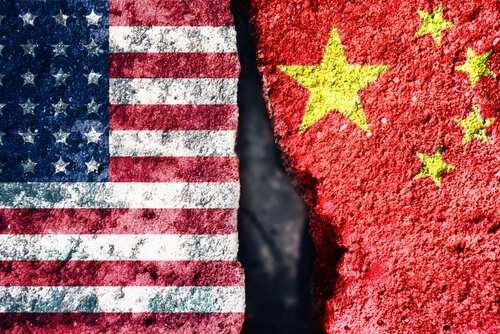
The hackers did not just knock on America’s door; they mapped the hallways, copied the keys, and tried them on our most sensitive locks.
Story Snapshot
- Justice Department and FBI seized platforms tied to a China-backed group called QTFY.
- Court filings and agencies link targets to federal networks and critical infrastructure.
- Pentagon advisory details tools used to mask origin and probe U.S. systems.
- Chinese embassies publicly deny state ties and reject the accusations.
What U.S. Authorities Say Happened
The Department of Justice and the Federal Bureau of Investigation said they took down internet platforms that a China-backed hacking group used to target U.S. critical infrastructure. The action followed a multi-year investigation into intrusions at federal agencies and key sectors nationwide.
Reporters who reviewed court records said an affidavit identified the group as QTFY and listed victims that include energy, health, and technology entities, as well as federal networks. The seizure aimed to cut off the attackers’ traffic and expose their methods.
China’s hacking campaign targeted NASA, the Federal Reserve, the US Senate, the Justice Department, and more, according to the DOJ. https://t.co/3Kdpl4RA4j
— WIRED (@WIRED) August 26, 2026
Federal court documents and agency statements describe a campaign that has been running since at least 2018. The filings point to repeated attempts against parts of the federal government, including the Justice Department, the National Aeronautics and Space Administration, the Federal Reserve, and the Senate.
They also cite successful breaches in 2024 at three Department of Energy labs and several health agencies. The attackers probed hospitals, telecom firms, power companies, and defense contractors, indicating a broad focus on systems Americans rely on daily.
How The Tools Worked And Why That Matters
A Defense Department advisory ties the activity to a China-linked outfit associated with Nanjing Xinjiuwei Network Technology Company. The advisory says the group offered two core tools: QScan and QTRouter. QScan helped find and exploit weak spots.
QTRouter hid the origin of the attack traffic. Together, these tools made intrusions harder to trace and easier to repeat across many targets. The advisory lists scans and attempts against a U.S. state government, a water district, the U.S. Senate, a hospital system, and even an election system.
Prosecutors and reporters also say the group marketed these services through intermediaries. According to press accounts citing the affidavit, access to QScan and QTRouter was sold to Chinese security services through a private company, a pattern that blurs lines between state direction and contractor support.
That setup tracks with recent trends in Chinese cyber operations that use private firms as force multipliers. It also gives the state distance and deniability while keeping capability on tap.
China’s Public Response And The Credibility Test
The Chinese embassy in Washington rejected the allegations. It said China opposes all forms of hacking and urged the United States not to use cybersecurity to smear China.
China’s embassy in Singapore used similar language in a separate case, calling such claims baseless slanders and repeating that China neither endorses nor tolerates hacking.
Denials are expected in these disputes, and they should be heard. But they must meet the weight of specific facts with specific rebuttals. Broad statements, without technical counter-evidence, do not meet that test.
🔴 U.S. Says Chinese State-Sponsored Hackers Targeted NASA, Federal Reserve, DOJ and Senate
📍WASHINGTON — August 26, 2026 | HewadPress
The U.S. Justice Department and FBI announced Wednesday that they have dismantled two hacking platforms allegedly operated by a Chinese… pic.twitter.com/ktsFL3IYXG
— HewadPress (@HewadPress) August 26, 2026
American agencies, by contrast, placed documents, seizures, and technical detail on the table. The Department of Justice announced real-world actions and pointed to sworn filings. The Defense Department advisory named tools and targets. Reporters cited court records and identified victim sets. The mosaic is not perfect, but it is concrete and consistent across institutions.
Why This Hits Home And What Comes Next
The targets tell the story. Federal networks store policy and law-enforcement data. Energy labs and power companies support the grid and research that drives American strength. Hospitals and health agencies serve patients and manage life-and-death systems.
A campaign that touches those areas is not routine theft. It is preparation and pressure. It scouts the terrain, tests defenses, and stores access for a time when leverage matters most. That should focus leaders in every sector.
Policy should match the threat with firm, lawful steps. Keep seizing hostile infrastructure at scale. Expose the technical playbooks fast so defenders can act. Sanction companies that sell deniable services for foreign spy services.
Demand clear security baselines for contractors that touch government systems. Equip locals who run water, power, and hospitals with simple, funded guidance. None of this is partisan. It is national risk management that protects families, paychecks, and public safety.
Sources:
nypost.com, cnbc.com, yahoo.com, berndpulch.org, reuters.com, justice.gov