

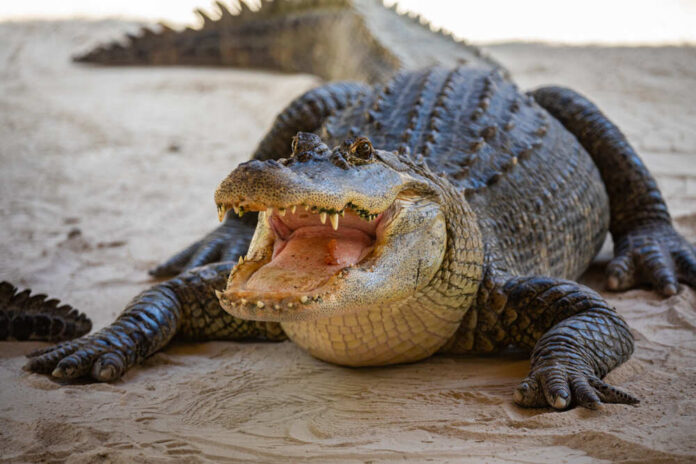
Florida’s latest deadly alligator weekend should finally force a hard question: are we treating a powerful predator like background scenery instead of a real risk?
Story Snapshot
- Three Florida alligator attacks in one week left a woman dead and two others injured, including a child.
- Officials repeat the same safety script: keep your distance, leash pets, and swim only in posted daylight areas.[1]
- Attacks stay statistically rare, yet they cluster in warm months and shallow water where people feel safe.[10]
- The real gap may be less about data and more about human behavior, signage, and comfortable denial.[4]
A deadly week that shatters the “it won’t happen to me” myth
Florida officials did not call the press because of one freak encounter. They spoke up because three separate people crossed paths with alligators in a single week and lost. On June 21, a snorkeler on the Rainbow River in Marion County was bitten, forcing deputies to close the river. Days later, a child fishing from shore at Nelson Fish Camp was bitten on the hand.
Then a 31-year-old woman cooling off in the Econlockhatchee River in Little Big Econ State Forest was attacked so violently her arms were torn off; she died on the way to the hospital. Each case happened in a place families treat as a playground, not a hunting ground.[1][2][3][8]
13-foot alligator captured after woman dies in attack in Central Florida https://t.co/qHResSbNSb
— WWL-TV (@WWLTV) June 29, 2026
Florida Fish and Wildlife Conservation Commission officials rushed out the usual warning: serious injuries are rare, but you must pay attention near water. They reminded people to keep a safe distance from alligators, never feed them, leash pets, and swim only in designated areas during the day.
They also pointed back to their Statewide Nuisance Alligator Program, which sends trappers when people call a dedicated hotline about an aggressive animal. On paper, the system looks reasonable. In real life, it collides with heat, crowds, and that stubborn voice that says, “It’s probably fine.”[1][3][5]
How dangerous are alligators really, by the numbers?
Most Floridians have never seen a serious attack, and the statistics explain why. Between 1948 and 2021, the state recorded 442 unprovoked alligator bites and only 26 fatalities, a fatality rate of about six percent. Recent data show an average of seven to ten unprovoked attacks per year across Florida’s millions of residents and visitors.
Put simply, your odds of serious injury from a random alligator encounter are roughly one in millions. That low number feeds the idea that fear is overblown.
Large males over ten feet cause most serious incidents. Attacks cluster in warmer months, especially May through August, which lines up with mating season and heavy human use of rivers, lakes, and trails. Many victims are within about ten feet of the water’s edge when struck.
This is where personal responsibility comes in. Staying back, avoiding dusk and dawn swims, and keeping pets away are not abstract rules. They line up directly with what the data show about where and when trouble happens.[10][11][12][13]
Behavior, warning signs, and the limits of government protection
The hot argument after every deadly attack is simple: did the state warn people enough, and should areas be closed? In Little Big Econ State Forest, forestry officials have not confirmed whether alligator warning signs were posted at the Barr Street Trailhead before the 31-year-old woman entered the river.
That silence leaves families wondering if the danger was clearly marked or if she walked into the water with no hint of risk. In Collier County, a separate case cuts the other way. A woman hiking Bird Rookery Swamp was bitten on the arm and leg even though trails there have alligator warning signs posted.[3][4]
Signs do not always translate into changed behavior, especially when the sun is blazing and the water looks inviting. Florida Fish and Wildlife Conservation Commission officials say they cannot close every river, pond, or creek in sixty-seven counties just because alligators live there.
That scale reality matters. Expecting the state to fence off nature ignores common sense limits on government and cost. The state must warn clearly in high-use spots and then citizens must choose wisely.[3]
Feeding, pets, and the way we train predators to approach us
Wildlife scientists have tracked a disturbing pattern: alligators quickly learn to connect people with food when fed, which erases their natural caution. Florida law makes feeding an alligator a crime for that reason. Yet people still toss scraps or let dogs splash at the edge of ponds.
Florida Fish and Wildlife Conservation Commission guidance stresses that pets look like natural prey, which is why so many attacks start with a dog next to the water. The Gloria Serge case in 2023, where an 85-year-old woman died trying to save her dog from an alligator next to a retirement community pond, is a tragic example.[5][10][11][14]
This is where basic, almost old-fashioned values matter. If you live or vacation in a state known for large reptiles, you treat wild water with respect. You assume there is an alligator you cannot see. You keep children and animals back.
Common sense cannot be legislated. But it can keep reminding residents and visitors that feeding predators or treating wild banks like suburban pools turns rare risks into preventable tragedies.
Why this matters beyond one tragic weekend
Some commentators rush to sensationalize every attack, while others swing hard the other way and insist the risk is so small we should stop talking about it. Both extremes miss the point. The real story is how a modern, crowded, free society lives alongside a native predator.
Florida has logged about thirty fatal alligator attacks since 1948, yet each one shatters a family and sparks the same questions. When people keep treating rivers and retention ponds as harmless relief from heat, clusters of attacks like this June’s will keep happening, even if the annual statewide numbers stay low.[8][18]
For a reader who hikes, paddles, or lets kids wade on Florida trips, the takeaway is not panic. It is discipline. Read the signs. Ask locals about recent sightings. Stay back from the edge, especially in summer. Swim only where managers say it is safe in daylight, and leave pets at home.
Florida officials are clear: serious injuries are rare, but they are not random. They follow patterns that responsible adults can understand and avoid. The question is whether we will.[3][10]
Sources:
[1] Web – Florida alligator attacks leave woman dead, 2 others injured, …
[2] Web – What You Need to Know About Alligators Before Hiking or Paddling …
[3] Web – Alligator Safety – Visit Gainesville
[4] Web – Alligator Safety Tips in Florida Whether you’re kayaking, swimming …
[5] YouTube – Deadly wildlife encounters spark safety warnings ahead of July 4th
[8] Web – Alligators in Florida and safety precautions – Facebook
[10] Web – 31 year old woman killed in alligator attack on the econlockhatchee …
[11] YouTube – Trail closed after gator attack in Florida river leaves 31-year-old …
[12] Web – Hiker Safety – Florida Trail Association
[13] Web – A woman was killed on June 28 after she was swimming … – Facebook
[14] Web – What to do when encountering an alligator on a trail in Florida?
[18] Web – [PDF] ALLIGATOR ATTACKS ON HUMANS IN FLORIDA – SEAFWA