

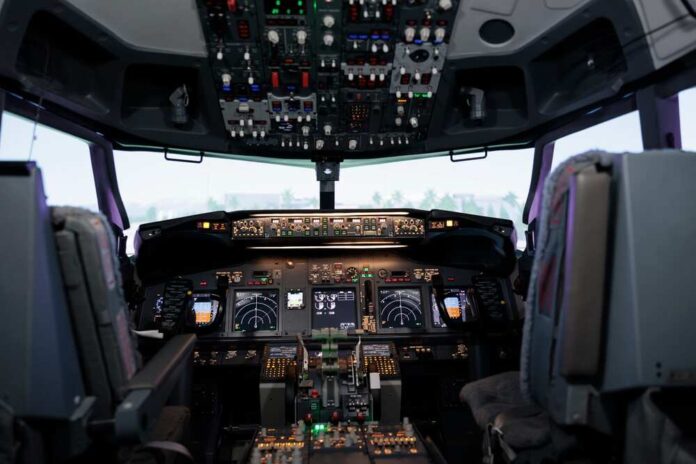
American innovation saves lives as Garmin’s revolutionary Autoland system successfully completes its first real-world emergency landing, proving that private-sector ingenuity delivers life-saving solutions when it matters most.
Story Highlights
- Garmin’s Autoland system makes historic first emergency activation, safely landing an aircraft with an incapacitated pilot.
- Two passengers aboard a Beechcraft Super King Air were saved after the pilot lost communication following a pressurization failure
- Innovative technology navigated the weather and selected the optimal runway without human intervention
- American private sector innovation proves superior to government bureaucracy in delivering life-saving aviation safety
Historic First Emergency Landing Showcases American Innovation
Beechcraft Super King Air made aviation history at Colorado’s Rocky Mountain Metropolitan Airport when Garmin’s Autoland system executed its first real-world emergency landing.
The aircraft landed safely at approximately 2:20 p.m. after the pilot became incapacitated following a pressurization failure over the Denver Metro area. Two passengers aboard the Buffalo River Aviation charter flight survived what could have been a fatal incident, thanks to American technological innovation.
On Saturday, Dec. 20 at approximately 2 p.m., North Metro Fire responded to an Alert II airplane incident at Rocky Mountain Metropolitan Airport in Jefferson County with ARFF65, BC61, E61, E64, E65, E68 and M61.
From Westminster Fire Department, SAM11, WFDBC1, WFDM4 and WFDTRK5… pic.twitter.com/7hgQrwVen2
— North Metro Fire (@NMFirePIO) December 22, 2025
Technology Responds When Human Pilot Cannot
Air traffic control recordings captured a robotic voice announcing “Pilot incapacitation, two miles south… emergency Autoland in 19 minutes on runway 3-0.” The system activated after the pilot reported pressurization problems shortly after departing Aspen’s airport. Cases of pilot incapacitation typically prove fatal, making this successful intervention particularly significant.
The Autoland system can be manually activated by any passenger or automatically engage when detecting prolonged pilot inactivity, demonstrating thoughtful engineering design.
Private Sector Delivers Where Government Falls Short
Garmin developed this life-saving technology in 2019 and received FAA approval through private-sector research and development. Aviation journalist Larry Anglisano explains the system as “a smart computer that’s smart enough to know the pilot is incapacitated and smart enough to know where to put the airplane down for a safe landing.”
This represents exactly the kind of innovation that thrives when American companies operate with minimal government interference, focusing on practical solutions rather than bureaucratic red tape.
Proven Technology Validates Free Market Solutions
Local flight instructor Adam Lendi witnessed the historic landing, describing the event as “pretty cool” and expressing confidence in the technology’s potential.
The Autoland system demonstrated sophisticated decision-making capabilities, navigating around weather patterns and selecting appropriate runway length for the aircraft type. Lendi noted the reassurance this technology provides to aviators, knowing passengers have survival options during pilot emergencies. The FAA confirmed the successful landing while launching a standard investigation.
This remarkable achievement underscores how American entrepreneurship and technological innovation save lives through practical engineering solutions. Rather than relying on expanding government programs or regulations, companies like Garmin invest in research that delivers tangible safety improvements.
The successful Autoland activation proves that free market competition drives meaningful progress, creating technologies that protect American families and travelers when emergencies strike unexpectedly.