
The Supreme Court’s decision to finally hear challenges to assault weapon bans could reshape the meaning of the Second Amendment for every American gun owner.
Story Snapshot
- The Supreme Court will review assault weapon bans in Connecticut and Cook County, Illinois, for the first time.
- These laws target popular semi-automatic rifles like the AR-15, despite their wide lawful use.
- Lower courts have upheld bans using tests that conflict with the Supreme Court’s newer Bruen standard.
- The Court’s ruling could either protect “America’s rifle” or invite wider bans in blue states.
Supreme Court Steps Into the Assault Weapon Ban Fight
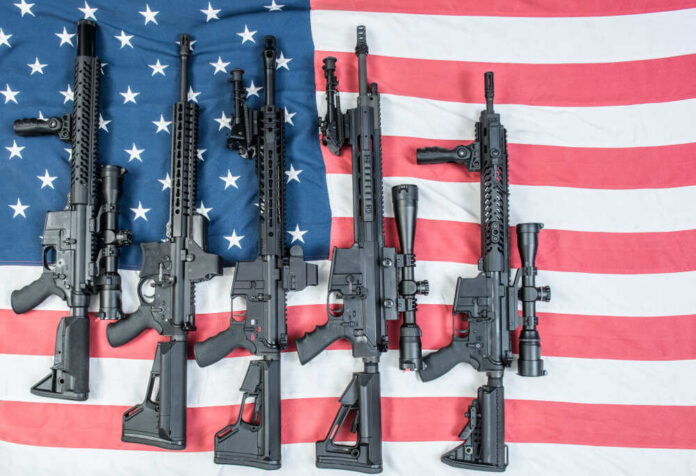
The Supreme Court has agreed to hear two key cases that challenge assault weapon bans in Connecticut and Cook County, Illinois. These laws restrict semi-automatic rifles such as the AR-15, which millions of Americans own for home defense, sport, and hunting.
The Court, which holds a six-to-three conservative majority, will decide whether governments can ban weapons that are in common lawful use while still claiming to respect the Second Amendment. For gun owners, this is the long-awaited test of where the line really stands.
The Connecticut law was rewritten after the Sandy Hook school shooting and framed by supporters as a life-saving measure. Cook County’s ordinance followed the same pattern, branding semi-automatic rifles and standard magazines as “assault weapons” based on cosmetic features like pistol grips and adjustable stocks.
Critics argue that the term assault weapon is a political label, not a true technical category, which lets lawmakers ban ordinary rifles by dressing them up as “weapons of war.” These cases now force the Court to say how far that political language can go.
Lower Courts Versus Heller and Bruen
For years, federal appeals courts have upheld assault weapon bans by using interest-balancing tests that weigh supposed public safety benefits against gun rights.
That approach clashes with the Supreme Court’s rulings in District of Columbia v. Heller and New York State Rifle and Pistol Association v. Bruen, which say judges must look to the text, history, and tradition of the Second Amendment instead of balancing away rights.
In several cases, courts admitted these rifles are in common use but still treated them as unprotected, directly sidestepping Heller’s command that arms in common lawful use cannot be banned.
US Supreme Court to hear challenge to state-level assault rifle bans https://t.co/FrA8hDV4DX https://t.co/FrA8hDV4DX
— Reuters (@Reuters) July 1, 2026
Gun control advocates now claim that Bruen’s history test still allows bans on weapons they call “dangerous and unusual,” pointing to older rules on especially hazardous arms. Yet modern semi-automatic rifles like the AR-15 fire one round per trigger pull and operate like many other legal guns.
They are among the most popular rifles in the country, which under Heller’s logic weighs toward protection, not prohibition. This gap between what lower courts have done and what Supreme Court precedent suggests is one reason these new cases are so important for every citizen who values the right to keep and bear arms.
What Is at Stake for Gun Owners and the Constitution
Gun rights scholars warn that calling common semi-automatic rifles “military-style” is a backdoor way to hollow out the Second Amendment while claiming to respect it.
If governments can ban the most popular rifles based on vague labels and emotional reactions to tragic crimes, then nothing stops them from moving next against common handguns, magazines, or other everyday tools of self-defense.
Justice Brett Kavanaugh, while on the lower court, wrote that the Second Amendment protects an individual’s right to own and use these so-called assault weapons, stressing that courts should follow Heller’s in-common-use rule instead of inventing new tests.
𝐒𝐔𝐏𝐑𝐄𝐌𝐄 𝐂𝐎𝐔𝐑𝐓 𝐀𝐆𝐑𝐄𝐄𝐒 𝐓𝐎 𝐃𝐄𝐂𝐈𝐃𝐄 𝐈𝐅 𝐓𝐇𝐄 𝐂𝐎𝐍𝐒𝐓𝐈𝐓𝐔𝐓𝐈𝐎𝐍 𝐏𝐑𝐎𝐓𝐄𝐂𝐓𝐒 𝐀𝐑-𝟏𝟓 𝐎𝐖𝐍𝐄𝐑𝐒𝐇𝐈𝐏
The Court announced it will take up whether cities and states can ban Americans from owning AR-15s and similar semi-automatic rifles — a… pic.twitter.com/HfbBFwIlm9
— M.A. Rothman (@MichaelARothman) July 1, 2026
Supporters of bans argue they reduce mass shooting deaths and fit within a tradition of regulating “dangerous and unusual” weapons, but the earlier federal assault weapon ban was never tested under the Second Amendment and expired in 2004.
Since then, blue states and local governments have pushed new bans after high-profile shootings, while gun owners have lived under a patchwork of rules that change at state borders.
With the Court finally taking these cases, conservative Americans now face a clear moment of truth: either the justices affirm that widely owned rifles are protected, or they open the door to broader state-level gun bans that could chip away at core Second Amendment freedoms for years to come.
Sources:
apnews.com, youtube.com, x.com, instagram.com, supreme.justia.com, reddit.com