President Trump ordered the federal government to replace “artificial intelligence” with “super intelligence,” then stood with tech titans as they signed a separate accord on how to handle it.
Story Snapshot
- Trump directed agencies to use “super intelligence” in place of AI across federal documents.
- State Department leaders told diplomats to adopt the term immediately in remarks and guidance.
- Tech leaders met Trump in Washington and signed an industry accord alongside the rename push.
- Trump tied the rename to a pro-innovation, lighter-regulation stance and a new government site.
What the order changes across government
President Trump said he signed an executive order that renames artificial intelligence as “super intelligence” across federal documents and public communications. Reporting describes the order as directing agencies to use the new term, including on websites and in reports.
Trump framed the shift as aligning language with ambition. He argued “artificial” sounds fake and that “super intelligence” better matches the scale of the technology he wants the United States to drive.
The State Department moved first. A deputy assistant secretary emailed staff to change all references from “Artificial Intelligence” to “Super Intelligence” in documents, positions, and press materials. The note said the department would use “SI” in all remarks going forward.
That message signals fast adoption inside at least one cabinet agency. Agencies with large tech footprints will face style updates, search changes, and policy edits to track the new language.
The White House stagecraft and the Silicon Valley handshake
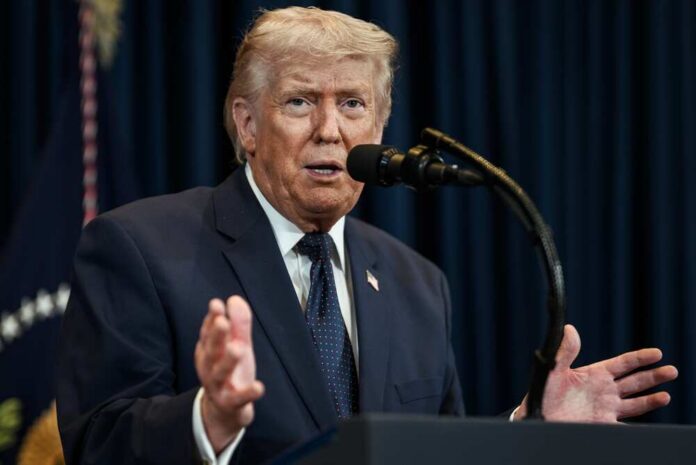
Trump paired the rename with a show of alignment from industry. At a Washington event, he presented a new government website and hailed it as a sign of what “super intelligence” can deliver.
He then stood with technology leaders who signed a separate accord that leans on companies to self-police advanced systems. The event design backed a single theme: push innovation, avoid heavy-handed red tape, and let American firms lead the race.
Several outlets reported Trump used the United Nations week to amplify the rename and America-first framing. He said that, “from this point forward,” United States documents would use the new term and urged others to follow.
The message ran through his public remarks across multiple stops. The White House also cast the move as part of a broader policy posture that favors speed and private sector responsibility over dense rulebooks.
BREAKING: President Trump says that he and tech leaders have officially changed the name of AI to 'Super Intelligence.' pic.twitter.com/MkuWluXqEu
— Fox News (@FoxNews) September 29, 2026
Why the term fight matters beyond branding
Words set guardrails. Policy choices often start with definitions, and definitions steer where money, rules, and blame go. “Super intelligence” lifts the concept out of a lab vibe and into a moonshot. That can energize investment and public interest.
It also can raise expectations for real gains in defense, health, and infrastructure. That framing lines up with these goals: win the strategic tech race, keep Washington lean, and hold companies, not new agencies, first in line to solve problems.
Some coverage noted the term “superintelligence” has a specific meaning in tech debates, often tied to systems beyond human ability. That background makes the rename unusual, since it places an aspirational label on today’s tools.
But as a political choice, it fits a pattern used in energy and space policy: name the target, rally the team, and let markets run. That approach can work if procurement, security, and research pipelines stay focused on results that matter to families and national defense.
What changes next for agencies and companies
Agencies will update glossaries, policy memos, and public sites. Grant and contract language will likely follow. Training materials for frontline staff and diplomats will need new examples and terms.
Search and records systems may add cross-references so the public can still find older “AI” content while learning “super intelligence.” The effort is not just cosmetic. Shared language can smooth interagency work and speed decisions when emergencies demand fast, tech-heavy responses.
Companies now face two tracks. The public-private accord points to industry-led safety practices. The rename points to a White House that wants momentum, not moratoriums. Firms that ship real tools to government customers will benefit most.
They should map their products to mission wins: safer borders, better veterans’ care, and fraud cuts that save tax dollars. That proof will matter more than any label, and it will decide if “super intelligence” becomes more than a headline.
Sources:
townhall.com, bbc.com, defenseone.com, afp.com, cnet.com