

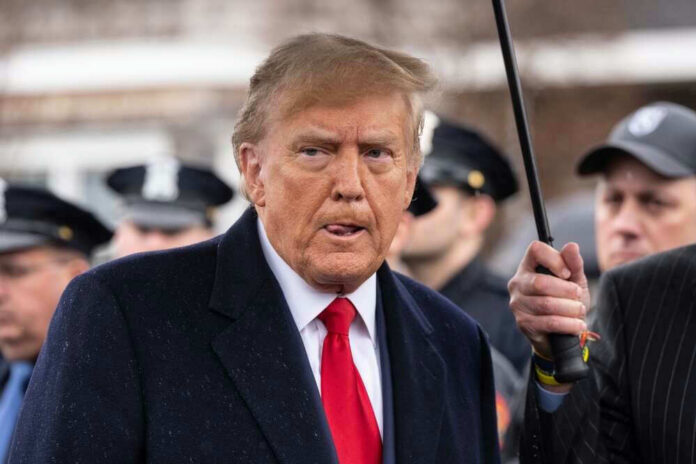
President Trump and his sons are taking the federal government to court for $10 billion after the IRS and Treasury Department failed to protect their confidential tax returns from being leaked by a politically motivated contractor to left-wing media outlets.
Story Snapshot
- Trump, Donald Jr., Eric, and the Trump Organization filed a federal lawsuit in Miami on January 29, 2026, seeking at least $10 billion in damages from the IRS and Treasury Department
- Lawsuit stems from 2019-2020 leaks by IRS contractor Charles Littlejohn, who disclosed tax returns to The New York Times and ProPublica before being convicted and sentenced to five years in prison
- Suit alleges government negligence caused reputational harm, financial damage, and public embarrassment through failure to safeguard taxpayer privacy
- Treasury Department recently canceled all contracts with Booz Allen Hamilton, Littlejohn’s firm, following security failures that enabled the unauthorized disclosures
Government Failure to Protect Taxpayer Privacy
The lawsuit filed in Miami federal court targets the very agencies Trump now oversees as president, alleging catastrophic failures in protecting confidential taxpayer information. Charles Littlejohn, an IRS contractor working for Booz Allen Hamilton, accessed and leaked tax returns from thousands of Americans between 2019 and 2020, including Trump family members and wealthy individuals. The leaked data revealed Trump paid $750 in federal income taxes in 2016 and 2021, information weaponized by The New York Times and ProPublica for political purposes. This egregious breach exemplifies government incompetence that conservative Americans have long warned about when bureaucracies prioritize ideology over duty.
Politically Motivated Attack on Constitutional Rights
Trump’s legal team characterizes the leaks as a “rogue, politically-motivated” operation targeting conservative leaders through left-wing media outlets. Littlejohn pleaded guilty in 2023 to unauthorized disclosure of tax information, with prosecutors stating he “weaponized” his access to advance a “personal political agenda” while believing himself “above the law.” A federal judge at his 2024 sentencing described the breach as “an attack on our constitutional democracy.” The five-year prison sentence Littlejohn received underscores the severity of his crimes, yet the government agencies that enabled his access through negligent oversight have faced no accountability until this lawsuit. This pattern reflects the deep state dysfunction that frustrates law-abiding Americans who expect government institutions to remain neutral.
Reputational and Financial Damages Claimed
The lawsuit seeks compensation for substantial harm inflicted on the Trump family’s personal reputations and business interests. The plaintiffs argue the unauthorized disclosures caused public embarrassment and tarnished the Trump Organization’s business reputation at a critical time. Unlike billionaire Ken Griffin, who sued the IRS in 2024 but dropped his case after the agency implemented security improvements and issued an apology, Trump is pressing forward with his claims. The $10 billion figure reflects the massive scope of damage stemming from years of leaked information being exploited for political attacks. For Americans who value privacy rights and government accountability, this case highlights how bureaucratic failures can weaponize sensitive information against citizens who challenge the establishment.
Trump and his eldest sons file $10B lawsuit against IRS, Treasury Departent over leaked tax records https://t.co/ciJurkWzAa pic.twitter.com/5RJAIWC2lk
— NY Post Business (@nypostbiz) January 30, 2026
Treasury Contractor Accountability Failures
The federal government’s reliance on contractors like Booz Allen Hamilton created vulnerabilities that Littlejohn exploited systematically. In early 2026, before the lawsuit was filed, the Treasury Department canceled all contracts with Booz Allen Hamilton due to inadequate data safeguards that enabled the breaches. The IRS issued an apology in 2024 to Trump and other victims, claiming it had made “substantial investments” in security improvements following the scandal. However, the lawsuit argues these belated measures cannot undo the damage caused by years of negligence. This case exposes how government contracting often prioritizes cost and convenience over security, leaving Americans’ private information vulnerable to ideologically driven employees who view rules as optional when pursuing their political objectives.
The lawsuit represents a pivotal moment in holding government agencies accountable for protecting taxpayer confidentiality, a fundamental right that transcends political affiliation. Whether the case succeeds in court or not, it forces overdue scrutiny on contractor oversight practices and the IRS’s documented failures to prevent politically motivated breaches. For conservative Americans who have endured years of institutional bias and government overreach, Trump’s willingness to challenge his own administration’s agencies demonstrates a commitment to constitutional principles over bureaucratic protection. The outcome could establish important precedents for taxpayers seeking damages when government negligence enables privacy violations, potentially spurring reforms that prevent future weaponization of confidential information by rogue actors within the federal system.
Sources:
Trump sues IRS, Treasury for $10 billion over tax returns leaked to media – ABC News
Trump sues IRS for $10 billion over leaked tax returns – Politico